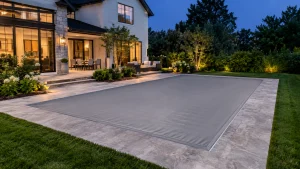
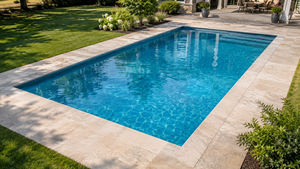
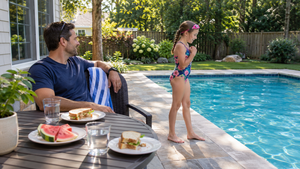
You wake up on a chilly morning, walk outside with your coffee, and find your pool colder than expected. Leaves have collected in the skimmer, and the water isn’t quite as inviting as it was the day before. It’s a familiar frustration for pool owners, especially when heat loss and debris become recurring problems throughout the season.
So, should you cover your pool every night? With these concerns adding up over time, it’s worth looking at what a cover can actually do. This guide explores what happens to an uncovered pool overnight, when covering makes sense, how different covers compare, and which safety precautions you shouldn’t overlook.
If you’re wondering do I need to cover my pool every night, it comes down to your priorities. Nightly covering is especially useful for heated pools, those in windy or tree-filled yards, and during cooler seasons. It helps retain heat, reduce evaporation, and keep debris out while the pool isn’t in use.
Leaving your pool uncovered can increase heating costs and water loss, but covering isn’t always necessary. Despite the potential benefits, regular cover use remains uncommon. According to the EPA’s Jump Into Pool Water Efficiency guide, only 15% of pool owners had and regularly used a pool cover, based on research from 2016.
Ultimately, the decision depends on your pool’s conditions and how often you use it. Whatever you choose, follow the cover manufacturer’s instructions, as they take priority over general advice.
Overnight, an uncovered pool can lose significant heat as temperatures drop. Heat escapes through evaporation, convection, and radiation, gradually cooling the water. A pool cover can help reduce these losses, although its effectiveness depends on the cover’s material and design.
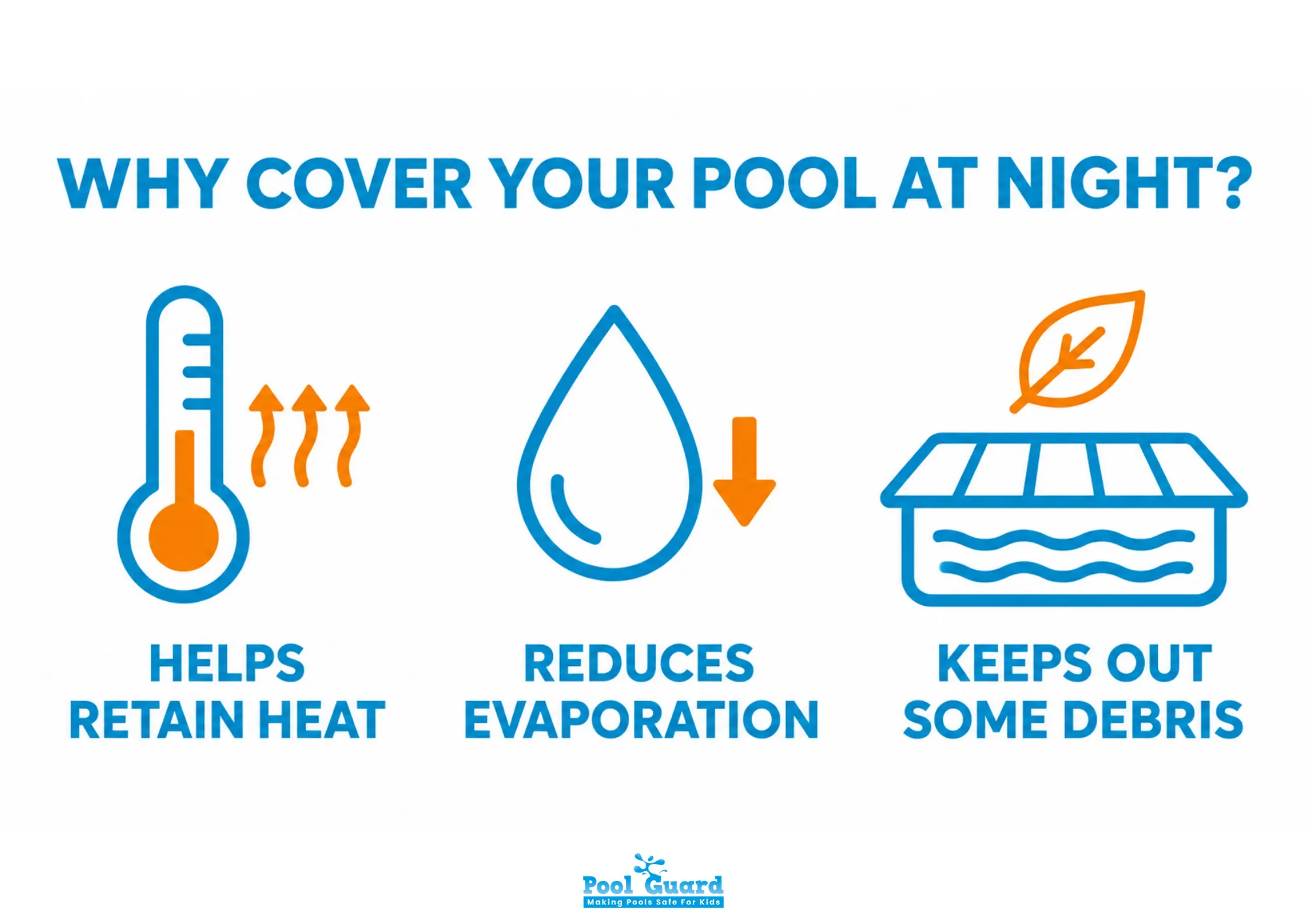
According to NREL, about 95% of a pool’s heat loss occurs at the surface, mainly through evaporation and radiation to the sky. A cover helps reduce these losses by limiting evaporation. The U.S. Department of Energy reports that pool covers can save 50-70% on heating costs. However, actual savings depend on climate, wind, pool size, cover type, and heating conditions.
The U.S. Department of Energy identifies evaporation as the largest source of swimming pool energy loss. It also reduces water levels, with temperature, humidity, and wind influencing how much water a pool loses.
According to EPA WaterSense, solid pool covers can reduce evaporation by more than 90% when in use. However, effectiveness varies by cover type, with mesh covers allowing more evaporation than solid alternatives. Reducing water loss means fewer refills, less heat loss, and potentially lower chemical consumption.
A cover blocks leaves, bugs, and dust, so your skimmer basket and filter work less. It doesn’t eliminate cleaning. Debris and dirty water can still collect on top of the cover, and you’ll still brush, test, and balance the water.
Whether nightly covering makes sense depends on the type of cover you own. The different types of pool covers serve different purposes, and not all are designed for regular overnight use.
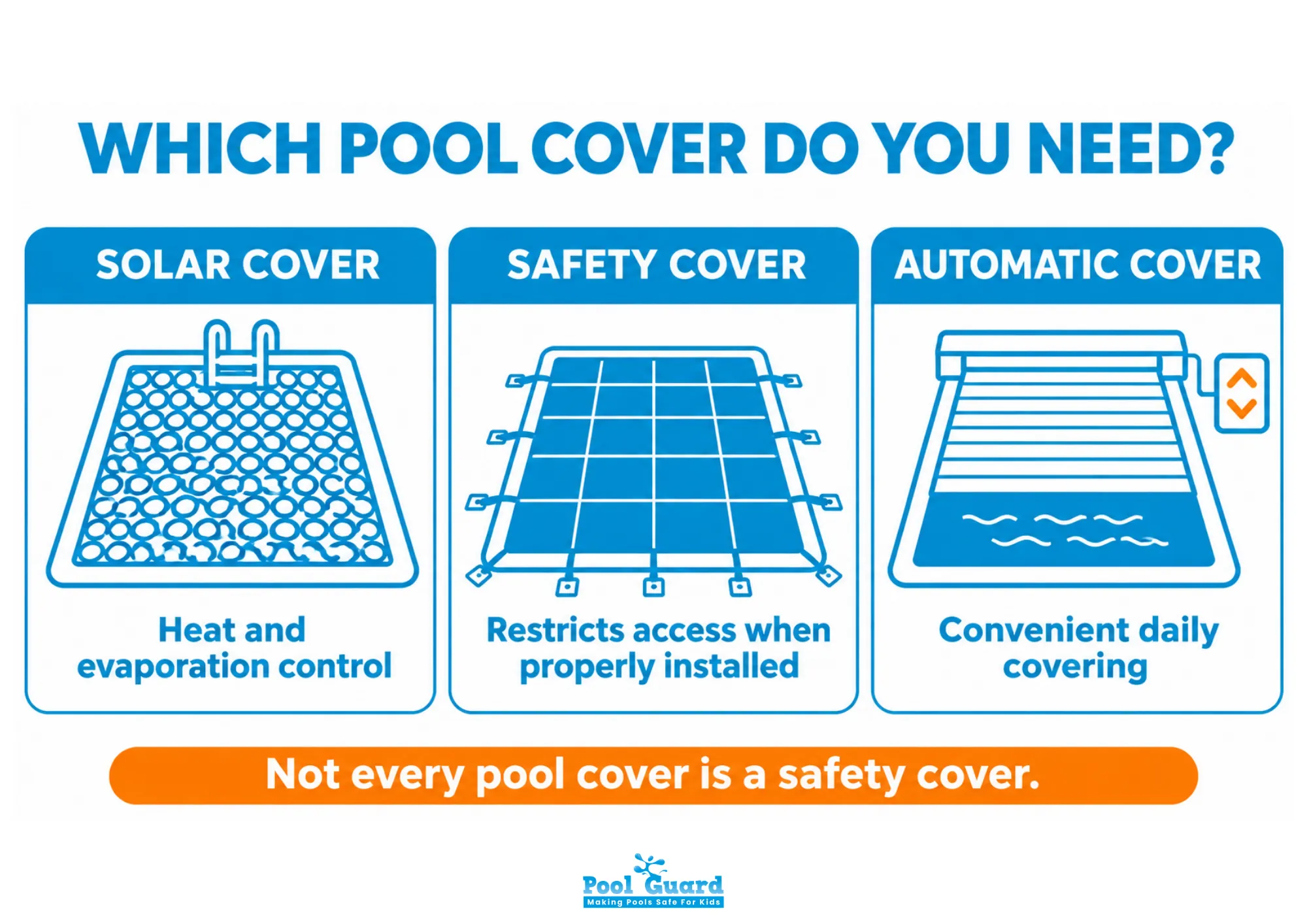
Solar (bubble) covers are built to hold heat and slow evaporation. They are not safety covers. They float on the water and can’t support a person. Remove them completely before anyone swims.
Safety covers are engineered to restrict access when properly selected, installed, and maintained. ASTM F1346 is the standard performance specification for safety covers and labeling of all pool covers. Look for that standard on the product label. Don’t assume every safety cover suits daily use. Some are designed for closing the pool for the season, so check the manufacturer’s instructions.
Automatic covers make regular covering a one-touch routine, which helps you stay consistent. When comparing automatic and manual pool covers, consider how often you’ll use them and how much effort each requires. Automatic systems still need correct operation, clear tracks, and regular care. Follow the maker’s guidance on operation and keep the pool clear of people before closing.
| Cover Type | Best For | Not For |
| Solar Banket | Heat and evaporation control in swim season | Child or pet protection |
| Safety Cover | Closed or unattended pools, per manufacturer | Assuming daily-use suitability |
| Automatic Cover | Easy daily covering | Skipping upkeep and clear-pool checks |
Skipping a night is reasonable in these cases:
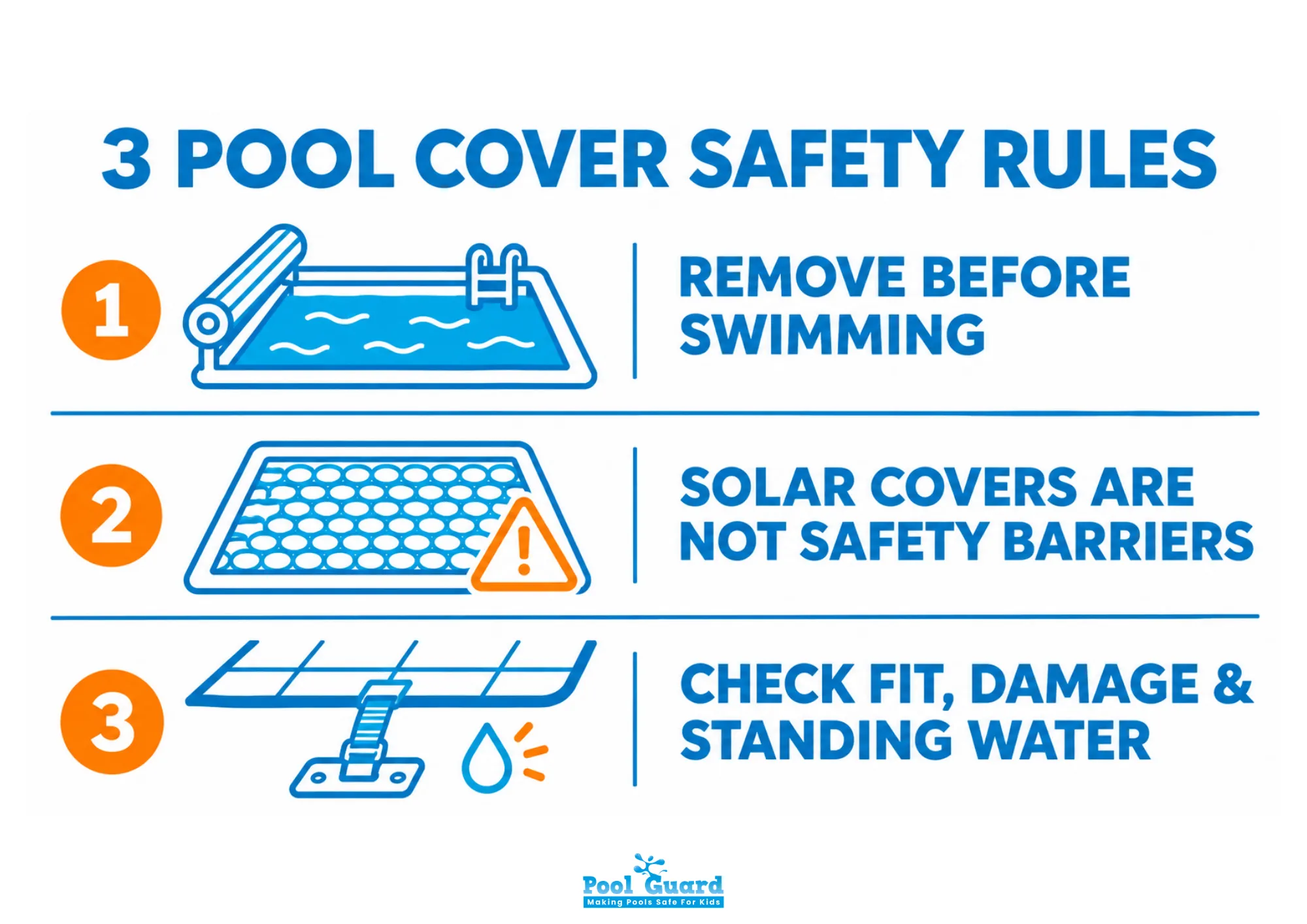
A solar cover can hide the water beneath it, creating a dangerous sense of security. In 1980, the Consumer Product Safety Commission (CPSC) warned against swimming in partially covered pools following a triple-drowning incident. The agency also reported a dog drowning beneath a solar cover, highlighting the risks to pets.
These incidents reflect broader pool hazards associated with improper cover use. In a 1986 report, CPSC staff identified two main drowning risks – becoming trapped beneath a cover and drowning in water accumulated on top of one. Solar covers should never be treated as substitutes for properly installed safety barriers.
Never let anyone swim with a cover on or partly on the pool. Pull it off completely or open the automatic cover all the way, and confirm the water is clear before anyone enters.
Follow your cover maker’s inspection and care instructions. Regular pool cover maintenance includes checking for tears, worn straps or anchors, loose edges and standing water. Remove standing water as the manufacturer directs.
Yes, covering your pool overnight can help retain heat, reduce evaporation, and keep leaves and debris out, even if you plan to swim the next morning. This is especially useful for heated pools or during cooler weather. Always remove the cover completely before entering the water.
You can skip it. If the water is already warm, trapping more heat may make it uncomfortable. You’ll still lose some water to evaporation, so weigh that against the heat.
It can help keep debris out, but follow the manufacturer’s guidance. Solar covers aren’t designed to handle heavy water loads, and standing water on any cover can be a hazard.
No. A solar cover offers no protection. Even a certified safety cover works best as one layer among several, alongside barriers like fencing and active supervision. Check your local pool-barrier rules.
So, should you cover your pool every night? It can be worthwhile, especially if your pool is heated, temperatures drop overnight, or your yard collects plenty of debris. The right routine depends on your cover type, local weather, and how often you swim.
A consistent covering routine can save water, energy, and cleaning time without adding much effort to pool maintenance. Just be sure to remove the cover completely before swimming and follow the manufacturer’s instructions for safe use. For added protection when your pool isn’t in use, Pool Guard USA offers custom safety pool covers designed to help prevent accidental access.
Find your local dealer by entering your zip code above.
Please fill out the form below with your information. Your local dealer will be notified about your inquiry.