Most pool owners know how deep their pool is, but not how much water it holds. This can make everyday maintenance more difficult, especially when adding chemicals, choosing equipment, or planning a refill. A pool volume calculator helps make these decisions easier, but getting a reliable estimate requires more than guesswork.
Knowing where to start and which measurements matter can make a difference in the final result. This guide explains how to measure your pool, choose the right formula for its shape, and convert the results into gallons or liters. You’ll also learn what can affect the accuracy of your calculations.
Pool Volume Calculator
Choose your pool shape, enter the inside measurements and water depth, and calculate an estimated volume.
Worked examples:
| Pool | Dimensions | Avg. Depth | Volume |
| Rectangular | 24 × 12 ft | 4.5 ft | ≈ 9,694 gal (36,692 L) |
| Round Above-Ground | 15 ft diameter | 4 ft | ≈ 5,287 gal (20,012 L) |
Measure the inside dimensions at the waterline, not the outside of the wall or the deck. Then pick your shape and enter the numbers.
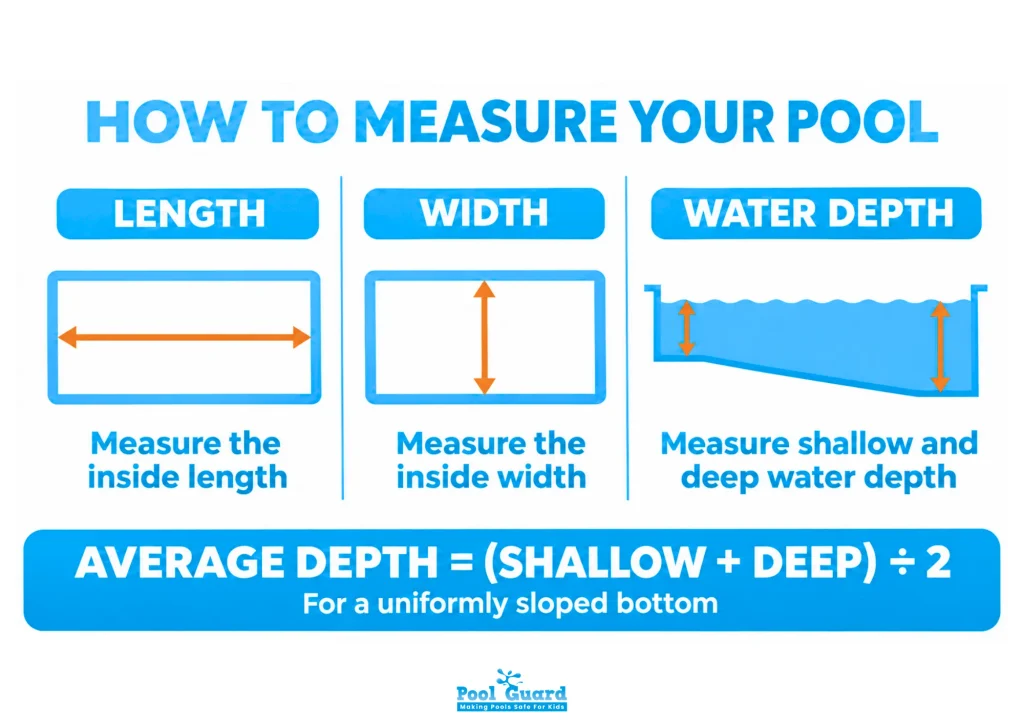
For pools with a level bottom, enter the same water depth for both the shallow and deep ends. If the bottom slopes evenly, enter both measurements to calculate the average depth using the formula (shallow + deep) ÷ 2.
Always measure from the water surface to the pool floor rather than using the full wall height. Pools with uneven slopes or multiple depth levels may require separate calculations for a more accurate estimate.
Every swimming pool volume calculator uses the same basic formula of surface area multiplied by average depth.
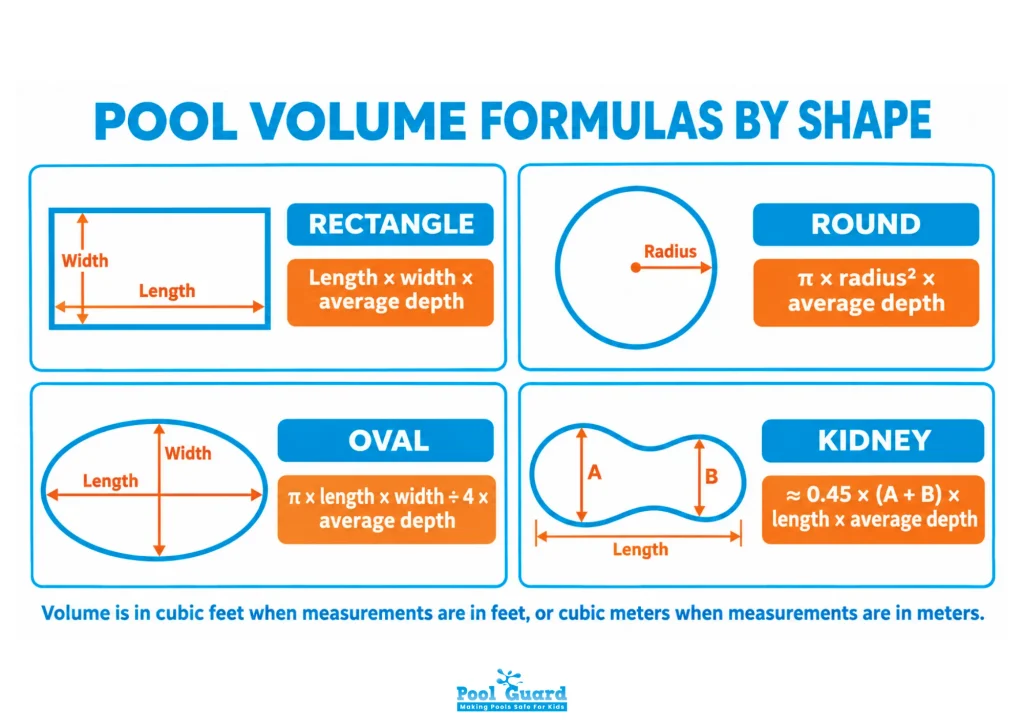
The above ground pool volume calculator uses the same formulas. Select the shape (usually round or oval) and measure the inside dimensions.
The calculator converts it for you, but here is the math if you're new to pool ownership:
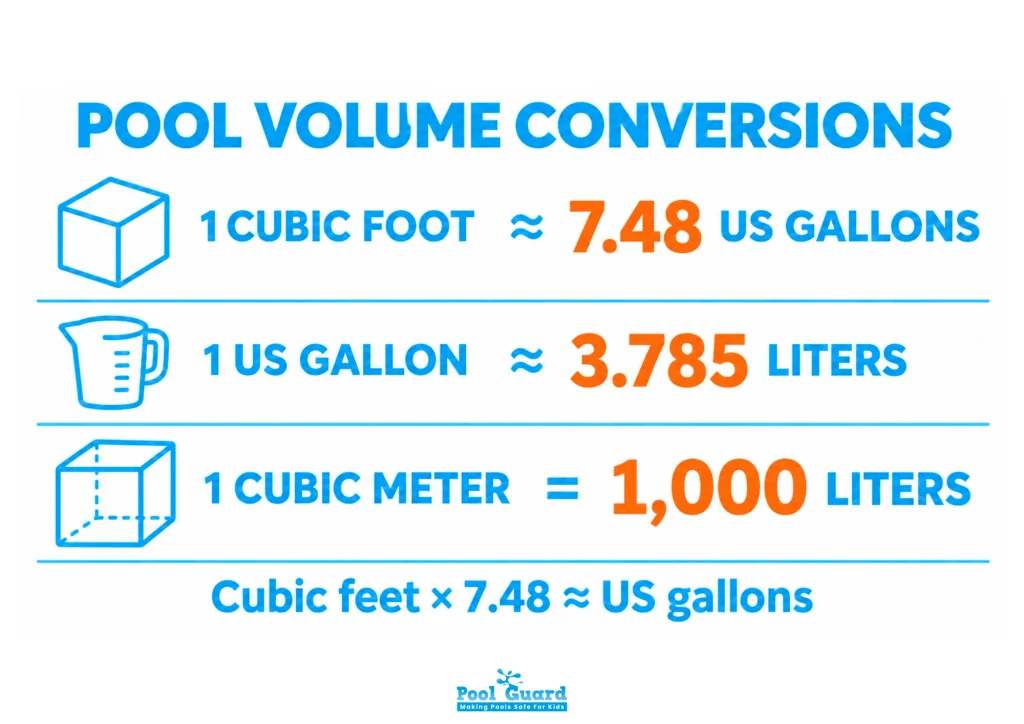
For a pool water volume calculator in gallons, multiply cubic feet by 7.48. For a pool volume calculator in liters, multiply gallons by 3.785, or multiply cubic meters by 1,000.
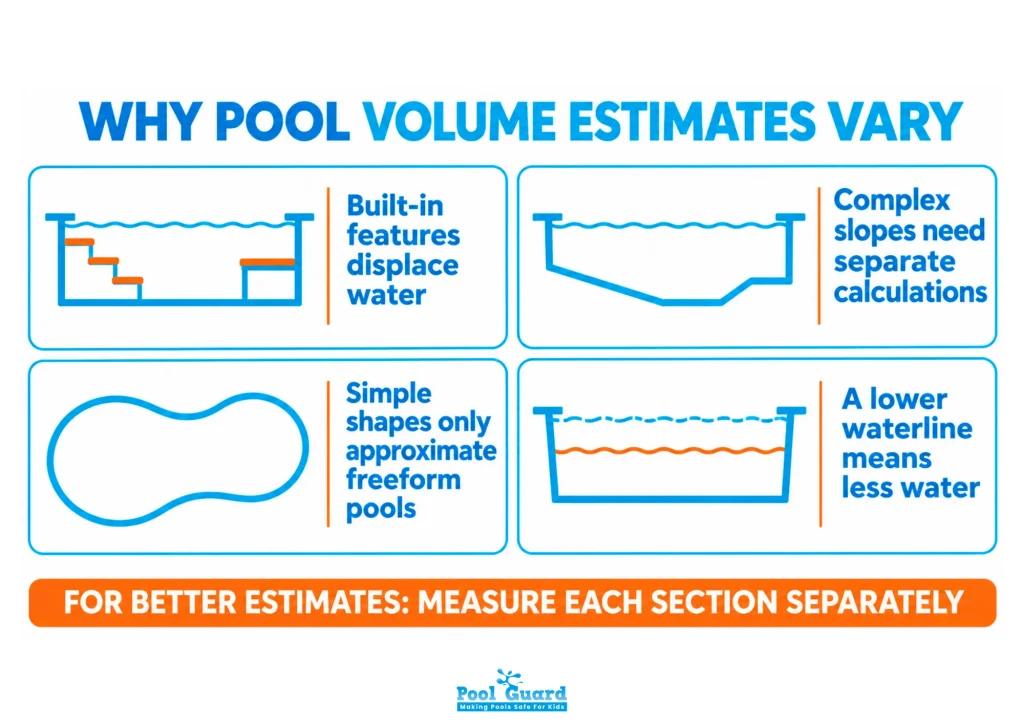
Average-depth math gives a solid estimate, not a lab measurement. Steps, benches, and tanning ledges reduce the true volume, while uneven slopes, a deep “hopper” section, or curved contours can shift it in either direction.
For a pool volume calculator for irregular shapes, divide the pool into sections, calculate each with its own average depth, and add them up. This is far more accurate than treating the whole pool as one shape.
If the result seems inaccurate, double-check your figures. Even a small depth error can affect the calculation by hundreds of gallons, depending on pool size. Also, keep in mind that pool water evaporation can gradually lower the water level, reducing the amount of water in your pool.
Knowing your pool's volume makes routine care easier, from measuring chemicals to selecting equipment and estimating water costs. Once you have a reliable estimate, you can calculate pool chemical amounts based on your water test results and the products you're using.
Getting the dosage right is important, as too many chemicals can irritate swimmers, while too little sanitizer can encourage algae growth. To avoid these problems, always follow product labels and water test results when adjusting chlorine levels.
Beyond chemical treatment, determining your pool's capacity helps you select suitable pumps, filters, and heaters. It also makes it easier to estimate water bills when filling, draining, or topping up your pool.
Understanding how much water your pool holds makes regular maintenance easier to manage. A reliable pool volume calculator provides a useful starting point for managing chemical levels, choosing pool equipment, and estimating refill costs.
Whether you have a small above-ground pool or a large freeform design, taking accurate measurements makes these decisions easier. Keep in mind that the final calculation is an estimate, so always consider your water test results and follow product instructions. This way, you can maintain clean, balanced water with greater confidence and less effort.

Find your local dealer by entering your zip code above.
Please fill out the form below with your information. Your local dealer will be notified about your inquiry.