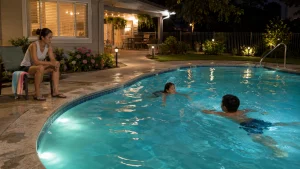
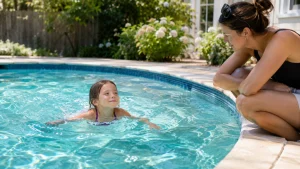
A quiet evening by the pool can be the perfect way to unwind. With the lights on and the water calm, taking a swim after sunset might seem like a great idea. But is swimming at night dangerous, even in a familiar backyard pool? It’s a question worth considering before getting into the water.
Swimming after dark introduces risks that are easy to overlook, especially when visibility is limited. This guide explores the main safety concerns of nighttime swimming and explains how proper lighting, supervision, and pool barriers can help make evening swims safer.
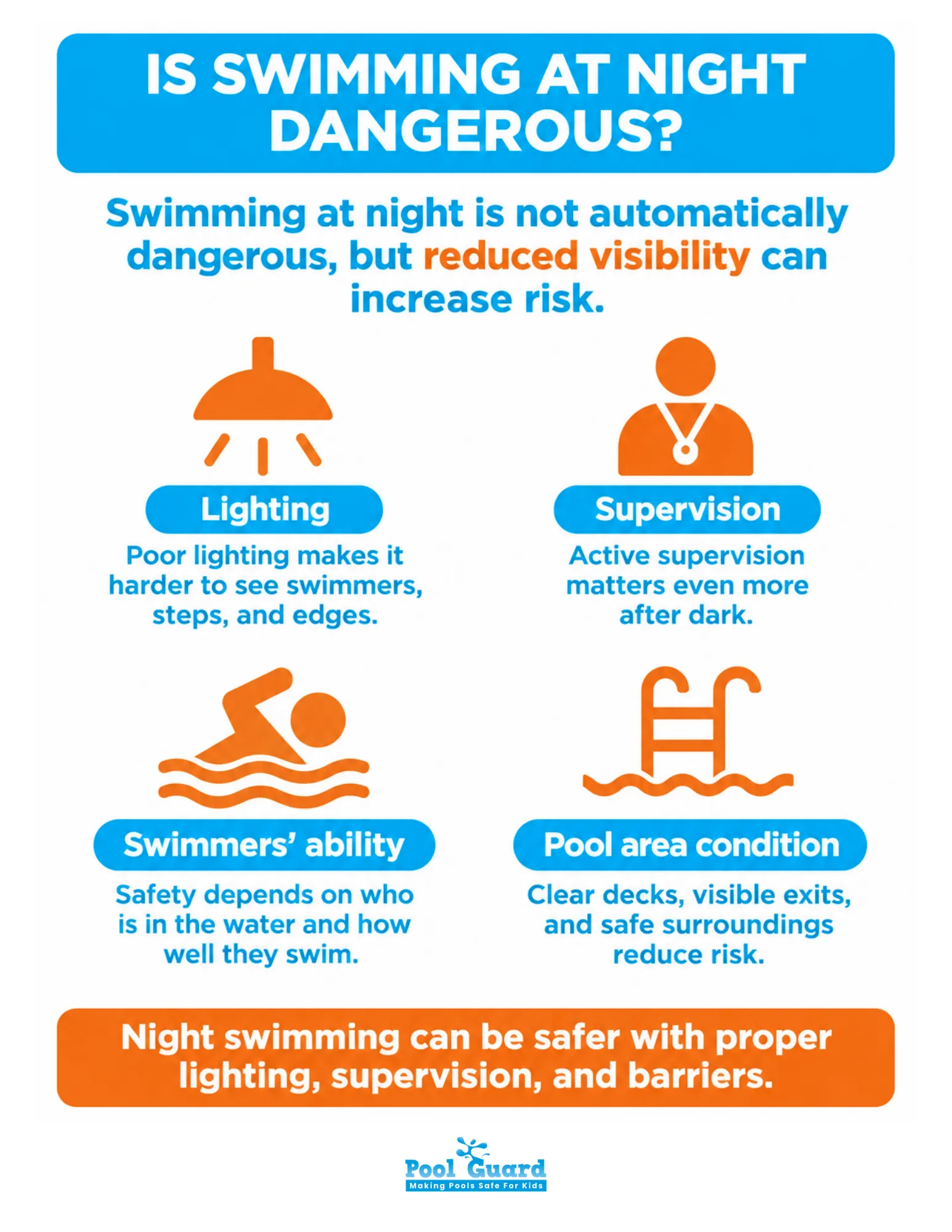
Swimming at night isn’t automatically dangerous, but reduced visibility can increase the risks. Poor lighting makes it harder to see swimmers, identify pool steps and edges, or notice obstacles on the deck. Safety depends largely on four factors: adequate lighting, active supervision, swimmers’ abilities, and the condition of the pool area.
Although national drowning statistics don’t establish how much risk increases specifically at night, they highlight the importance of pool safety. According to the CDC, drowning is the leading cause of death among children ages 1-4. More than 4,500 people died from drowning annually in the U.S. between 2020 and 2022. The drowning death rate among children ages 1-4 was also 28% higher in 2022 than in 2019.
The CPSC’s 2026 report found that most reported pool and spa drowning deaths involving children under 15 occurred in residential settings. Its 2023 report also found that children under five accounted for 75% of reported pool- and spa-related childhood drowning fatalities.
Reduced visibility after dark can make emergencies harder to spot, while unattended pools remain a risk if children can access them. Proper lighting, active supervision, and secure pool barriers help reduce these dangers.
Both backyard pools and open water can be dangerous at night, but the risks differ. Lakes, rivers, and oceans may have currents, waves, uneven bottoms, and changing water conditions that become harder to recognize after dark. Backyard pools offer a more controlled environment, with defined boundaries, predictable depths, and easier access to safety equipment.
However, poor visibility and inadequate supervision remain serious concerns in both settings. Understanding the differences between pool and open-water safety can help swimmers recognize potential hazards and take appropriate precautions before entering the water at night.
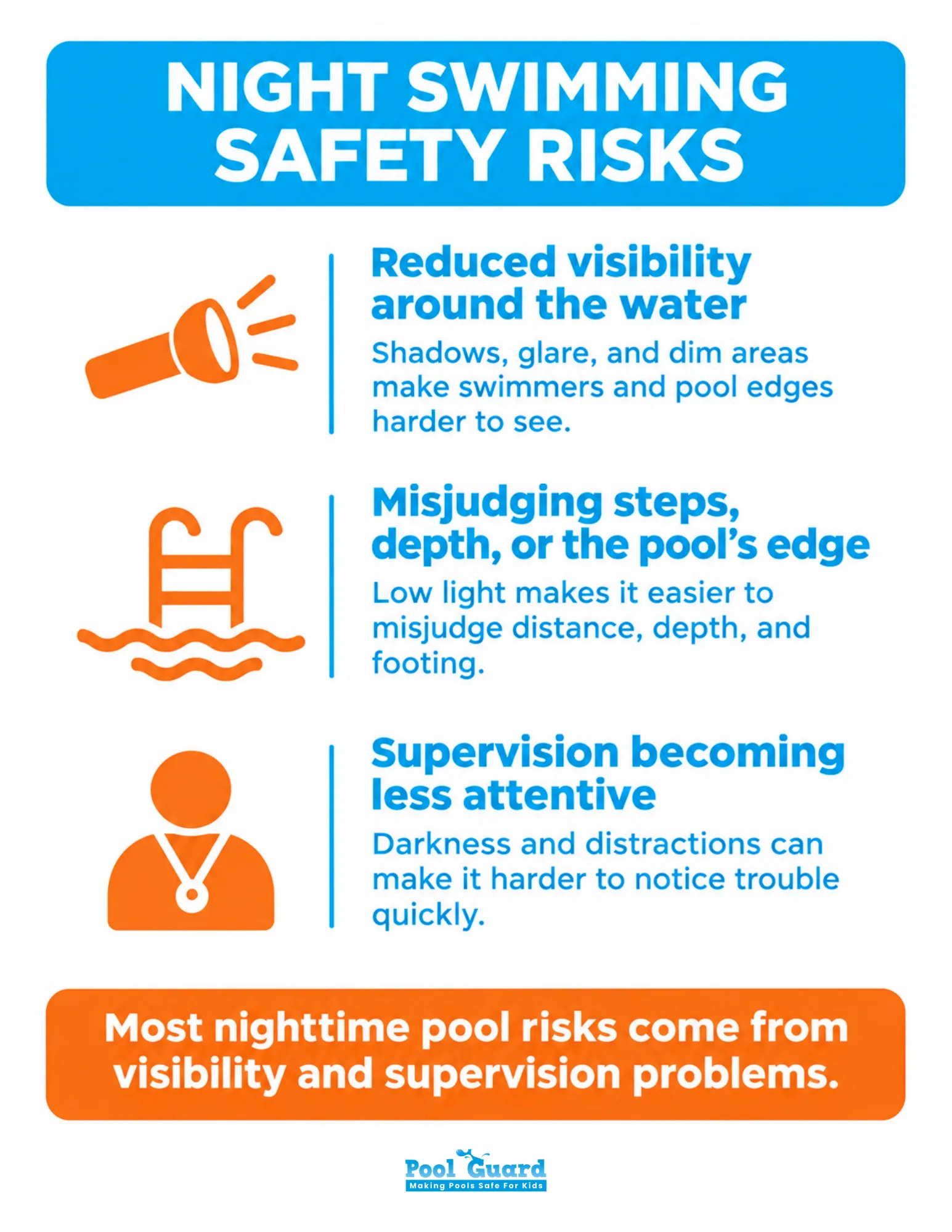
Dim corners, glare, reflections, and shadows all make it harder to see a pool’s edge or notice that someone is in trouble. A single underwater light can leave the deck and the walk to the house in the dark. A bright light can also create glare that hides a swimmer from the far side.
Low light makes it harder to judge water depth and distance, even in a familiar pool. Night swimming safety also depends on how you behave around the water. Walk instead of running, and avoid diving, rough play, or jumping into areas where visibility is limited.
Poor lighting and distractions like conversations or phones can make it harder to supervise swimmers. Drowning can happen quickly and quietly, often without obvious signs of distress. The American Red Cross recommends active supervision and multiple layers of protection around home pools to reduce these risks.
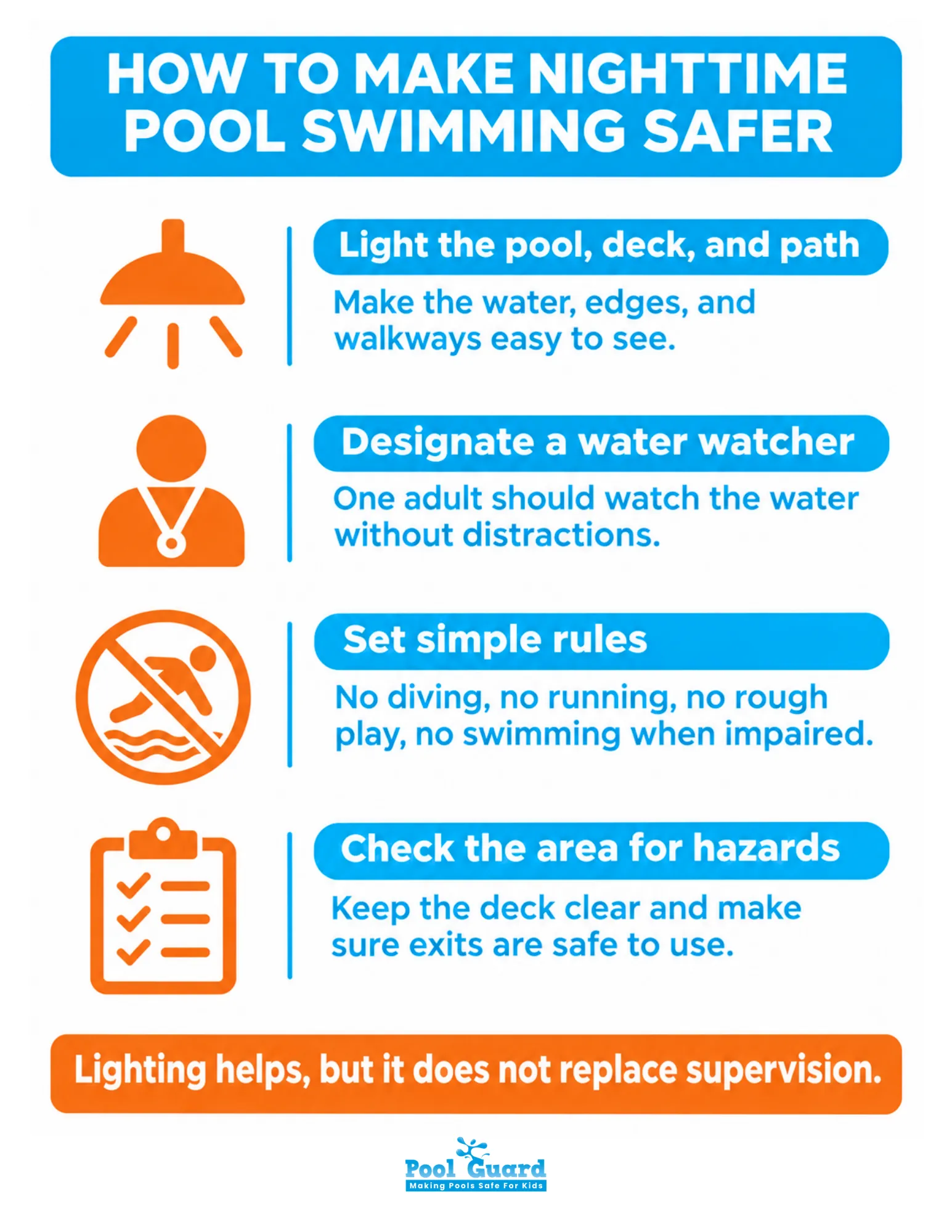
Proper lighting makes it easier to monitor swimmers and spot potential hazards after dark. To improve visibility, make sure the lighting covers the entire pool area, including the surrounding deck and walkways.
Underwater lights can help illuminate the water, but they may leave nearby areas poorly lit. That’s why it’s also worth adding path lighting for safer movement, using solar lights for extra convenience, and keeping a bright floodlight available for emergencies.
Have a licensed electrician install any pool lighting, and make sure the circuit has GFCI protection. Keep extension cords and portable electrical devices away from the water, and follow proper swimming pool electrical safety guidelines to reduce the risk of electric shock.
Designate one adult to focus entirely on watching the pool. KidsHealth notes that supervisors should avoid phones, socializing, and alcohol while monitoring swimmers. Young children and inexperienced swimmers need an adult within arm’s reach. During gatherings, rotate supervision duties and clearly communicate each handoff so someone is always responsible for watching the water.
Keep pool walkways clear of toys, cords, furniture, and equipment to prevent trips and falls. Check entry points for slippery surfaces and make sure swimmers can exit easily. Include pool ladder safety by inspecting steps and handrails for looseness or instability.
Supervision ends when the swim does, but the risk of unsupervised access doesn’t. CPSC has tied many child drownings to gaps in adult supervision and to ‘non-swim times’, when a child wanders to the water unnoticed. Close that gap as soon as the last swimmer is out:
Yes, under the right conditions. Lights improve visibility, but they don’t replace a water watcher or a barrier. Lit water can also lull people into feeling safer than they are. Aim light at the dark spots around the deck, steps, and gate, as well as the pool itself, since slips and missteps often happen out of the water.
So, is swimming at night dangerous? It can be, especially when poor visibility and limited supervision increase the risks. However, proper lighting, active supervision, and clear safety rules can make evening swimming safer and more enjoyable.
Safety also matters after everyone leaves the water. Securing the gate, using pool alarms, and maintaining proper barriers can help prevent unauthorized access. With the right precautions and reliable safety solutions from Pool Guard USA, you can enjoy nighttime swimming while keeping your pool area secure when it’s not in use.
Find your local dealer by entering your zip code above.
Recent Articles
Please fill out the form below with your information. Your local dealer will be notified about your inquiry.