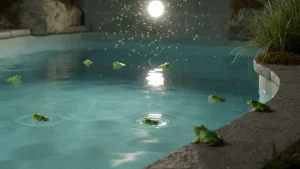
You step outside for an early swim, and something small is paddling near the skimmer. It’s a frog, and it has clearly been there all night. Most of us laugh, scoop it out, and move on. Honestly, it’s a little funny the first time. But the frogs keep coming back, and each visit leaves a little more mess behind.
If that sounds familiar, you’re not alone. Knowing how to keep frogs out of pool takes more than a quick scoop. The cause is rarely the water itself. In this guide, you’ll learn why frogs visit, what they do to your water, and which fixes actually hold up.
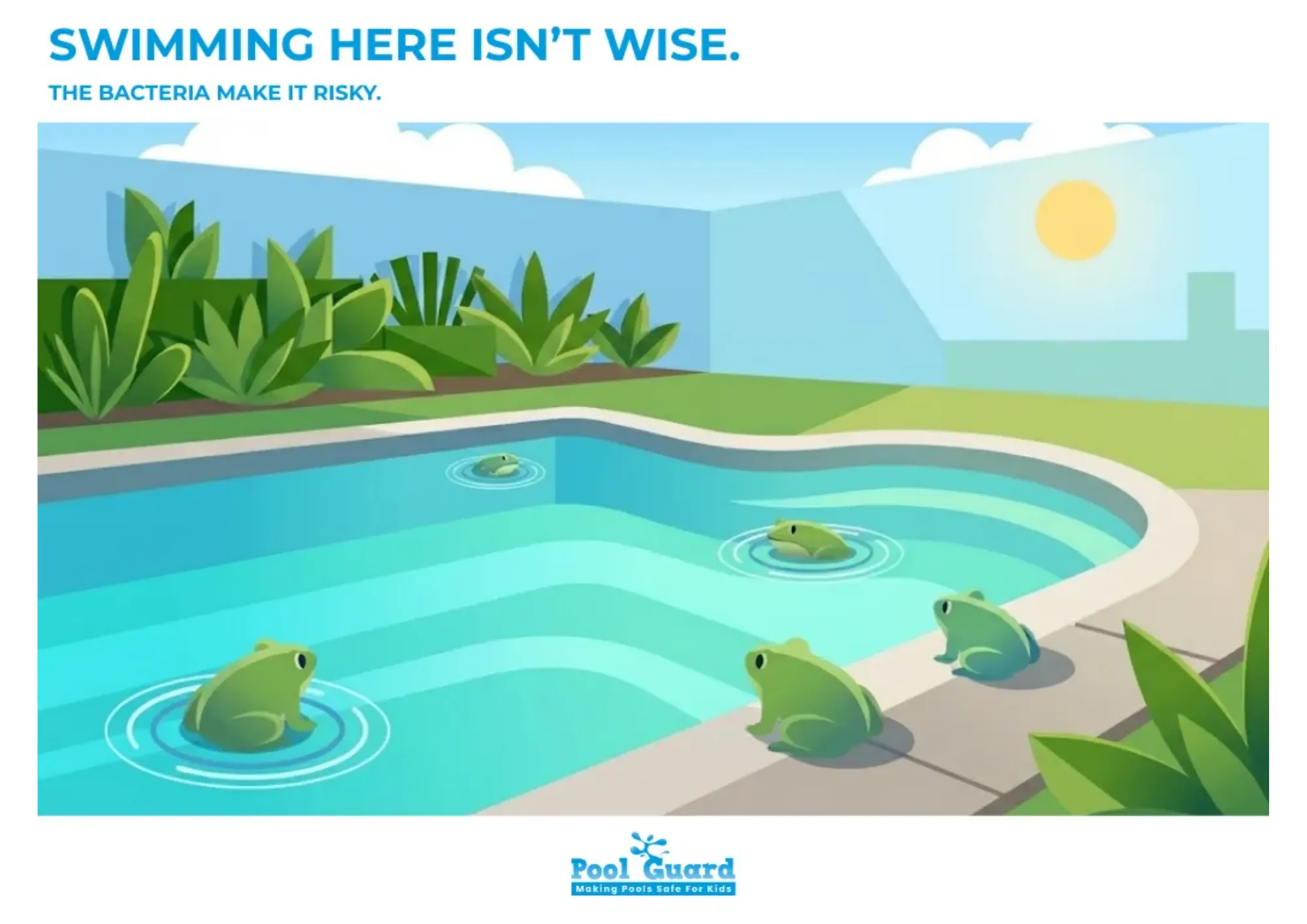
When considering how to keep frogs out of pool areas, physical barriers should be your first line of defense. Repellents, lights, and plants can make your yard less attractive to frogs, while barriers help prevent them from reaching the water.
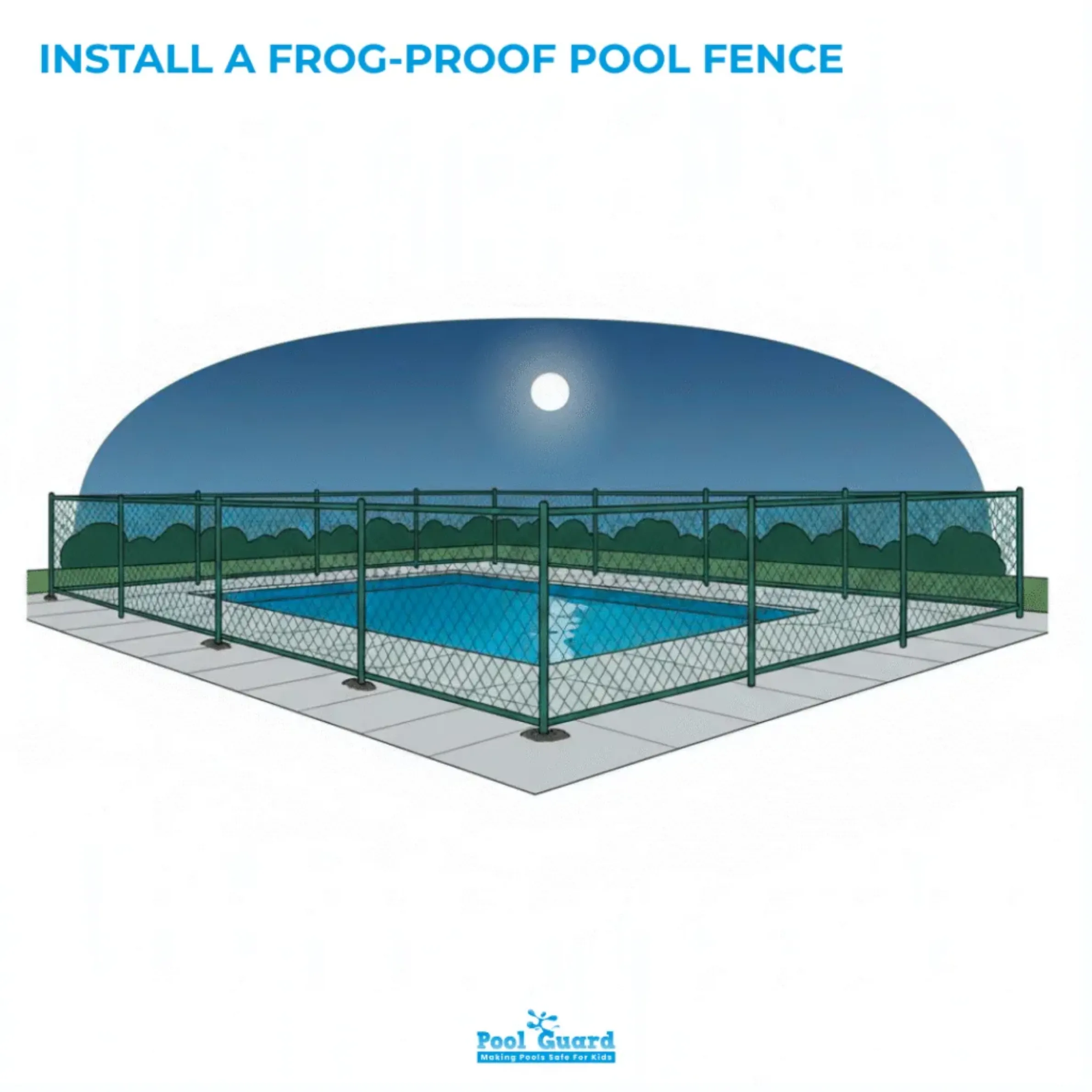
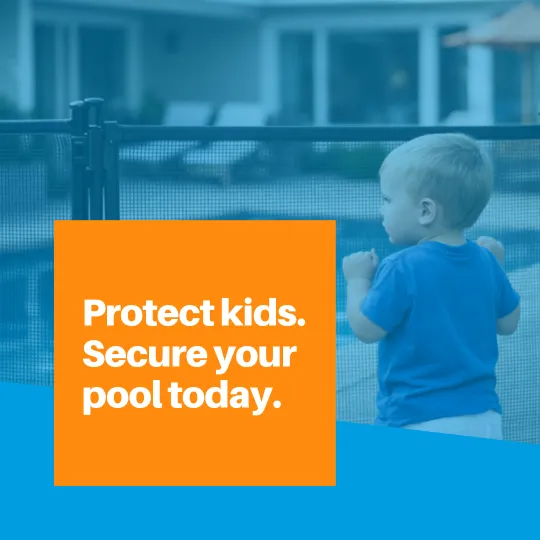
A solid or tightly spaced pool safety fence keeps frogs out and keeps children safe. Chain link and widely spaced bars don’t stop small amphibians. Here’s an original angle: child-safety codes typically allow a gap of up to about four inches under a pool barrier, and a frog can clear that easily.
For frog-proofing, aim for panels that sit flush to the ground, or add a solid kickboard or mesh skirt along the bottom. If you have tree frogs, note that their sticky toe pads let them climb smooth surfaces like vinyl panels, glass, and siding. A fence helps most with ground-dwelling frogs and toads, so pair it with a cover and a lighting plan.
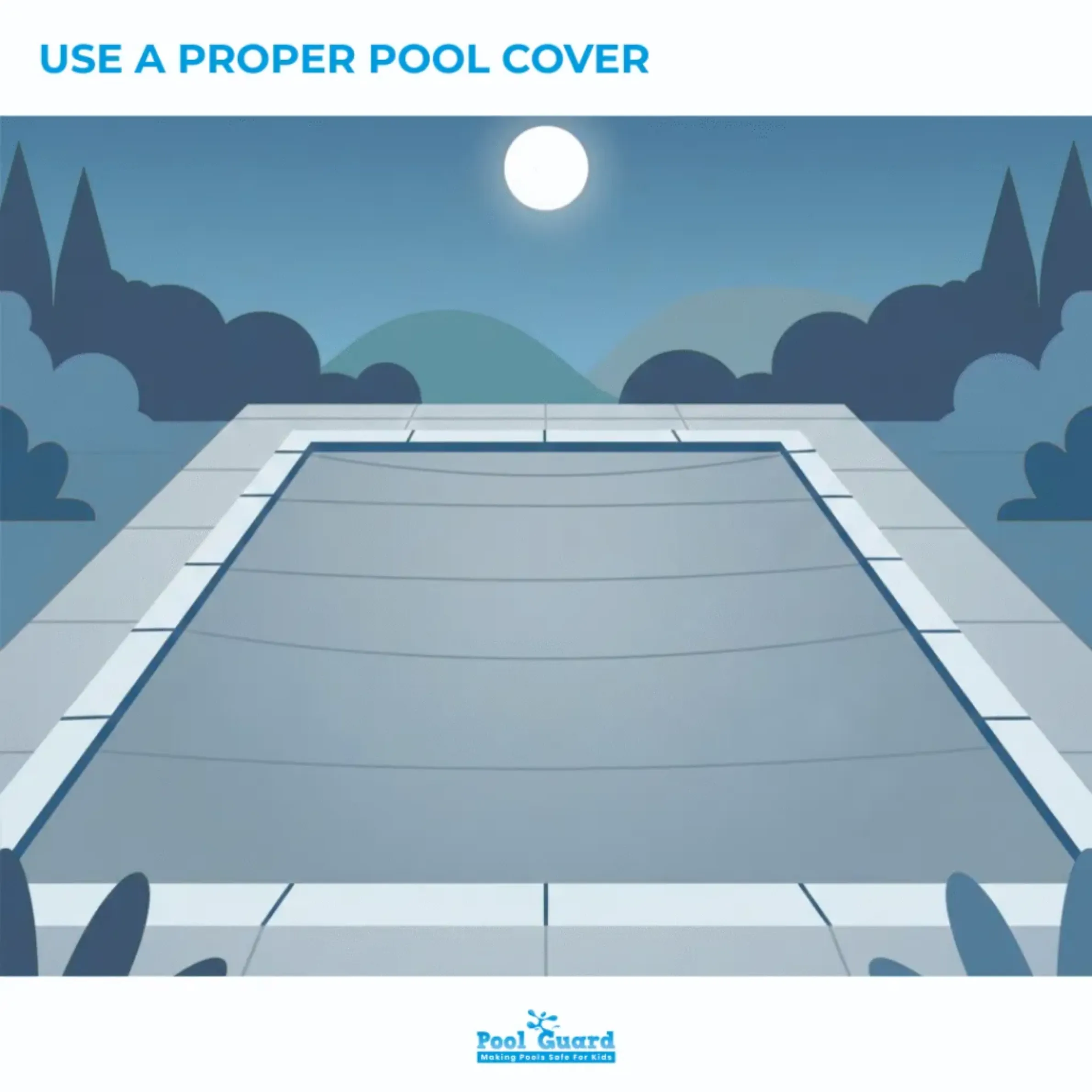
A pool safety cover is one of the strongest barriers against frogs entering the water. Properly fitted safety covers help restrict access, unlike loose-fitting solar or leaf covers. Look for covers that meet ASTM F1346, the performance standard for safety covers.
Mesh covers let rainwater drain through, while solid covers block more debris and light. These differences matter when comparing different types of pool covers, especially if standing water and small gaps are recurring problems. Check any cover regularly for puddles, tears, and loose edges, because frogs can exploit openings.
A fine pool safety net over the water can serve as a secondary barrier, particularly during peak insect season. It allows visibility and airflow, although its effectiveness depends on the mesh size and how securely it fits. Understanding the differences between a pool net and a pool cover also matters for child safety, since a standard debris net doesn’t provide the same protection as a properly rated safety cover or safety net.
Night is when frogs are most active, so this is where small changes pay off.
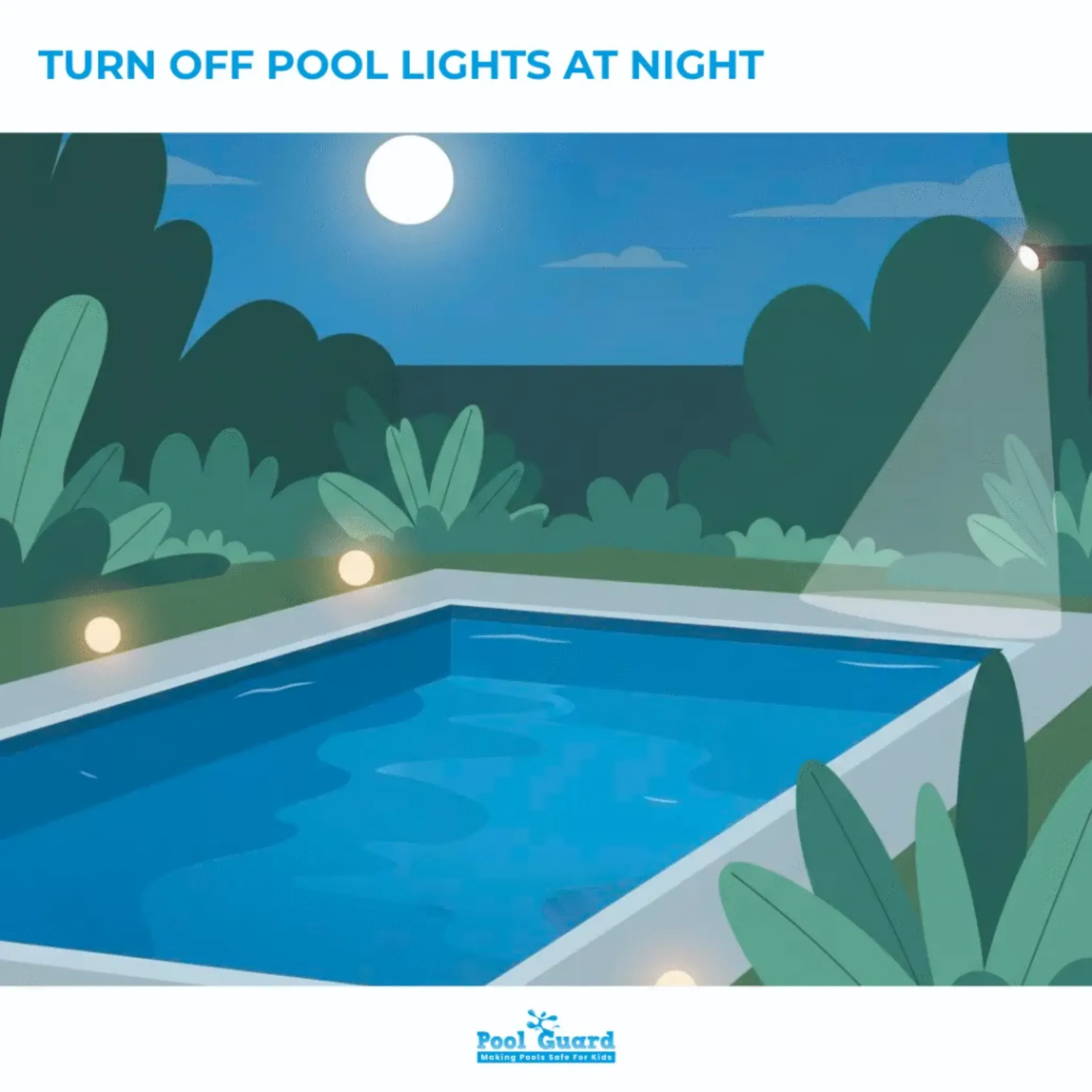
Turn off pool and patio lights when nobody is using them. If you need security lighting, use motion-activated fixtures with warm amber bulbs. They give you visibility without a nightly bug-and-frog feeding zone.
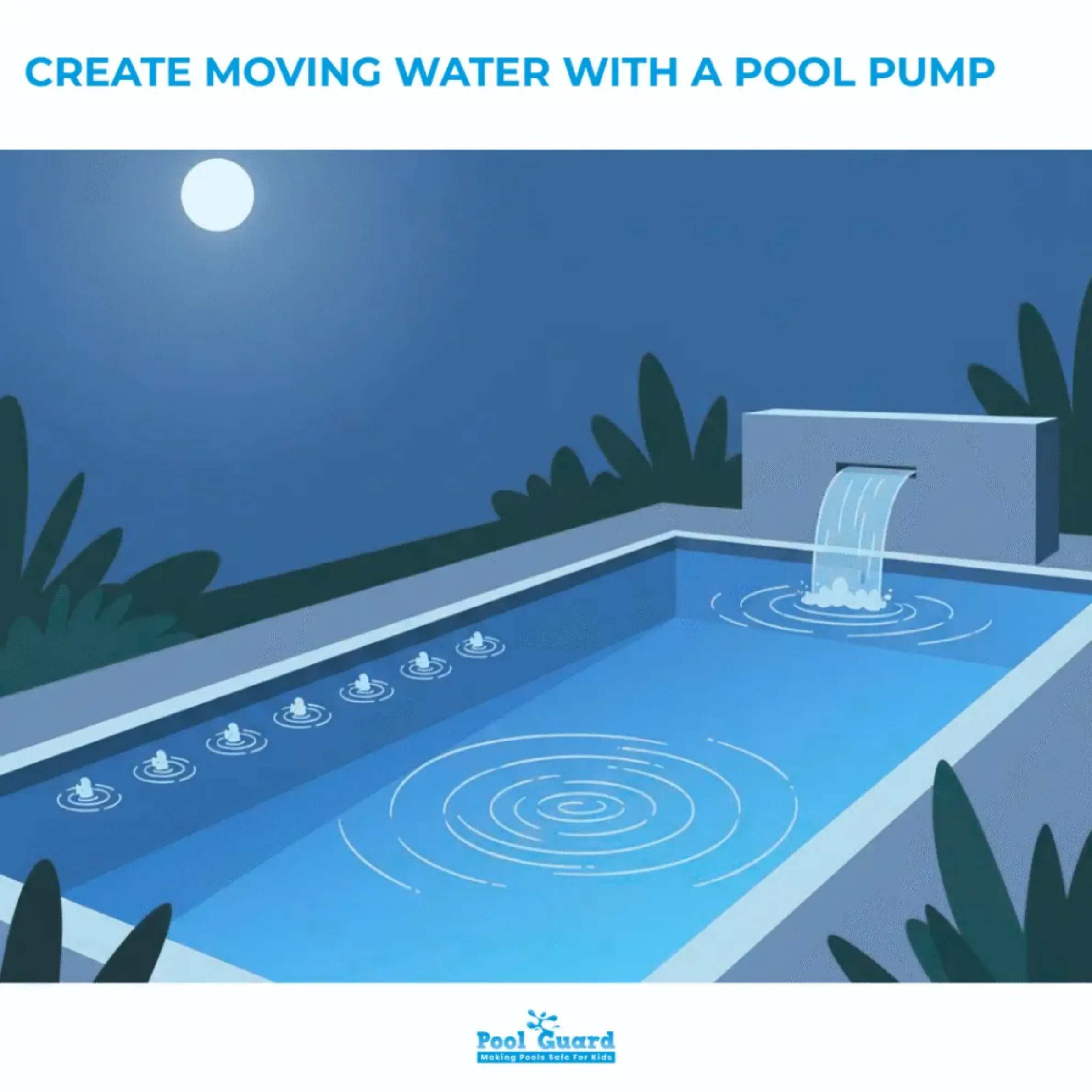
A flowing, rippled surface is less attractive to frogs than glassy calm water. Run the pump or a circulation feature overnight in warm months. One caution – running the pump also pulls things toward the skimmer, so keep the next step in place.
An escape ramp won’t keep frogs out of your pool, but it gives trapped animals a way to climb out, reducing the risk of drowning and water contamination. Place ramps along the pool edge, away from skimmer openings, and check them regularly to ensure they remain accessible.
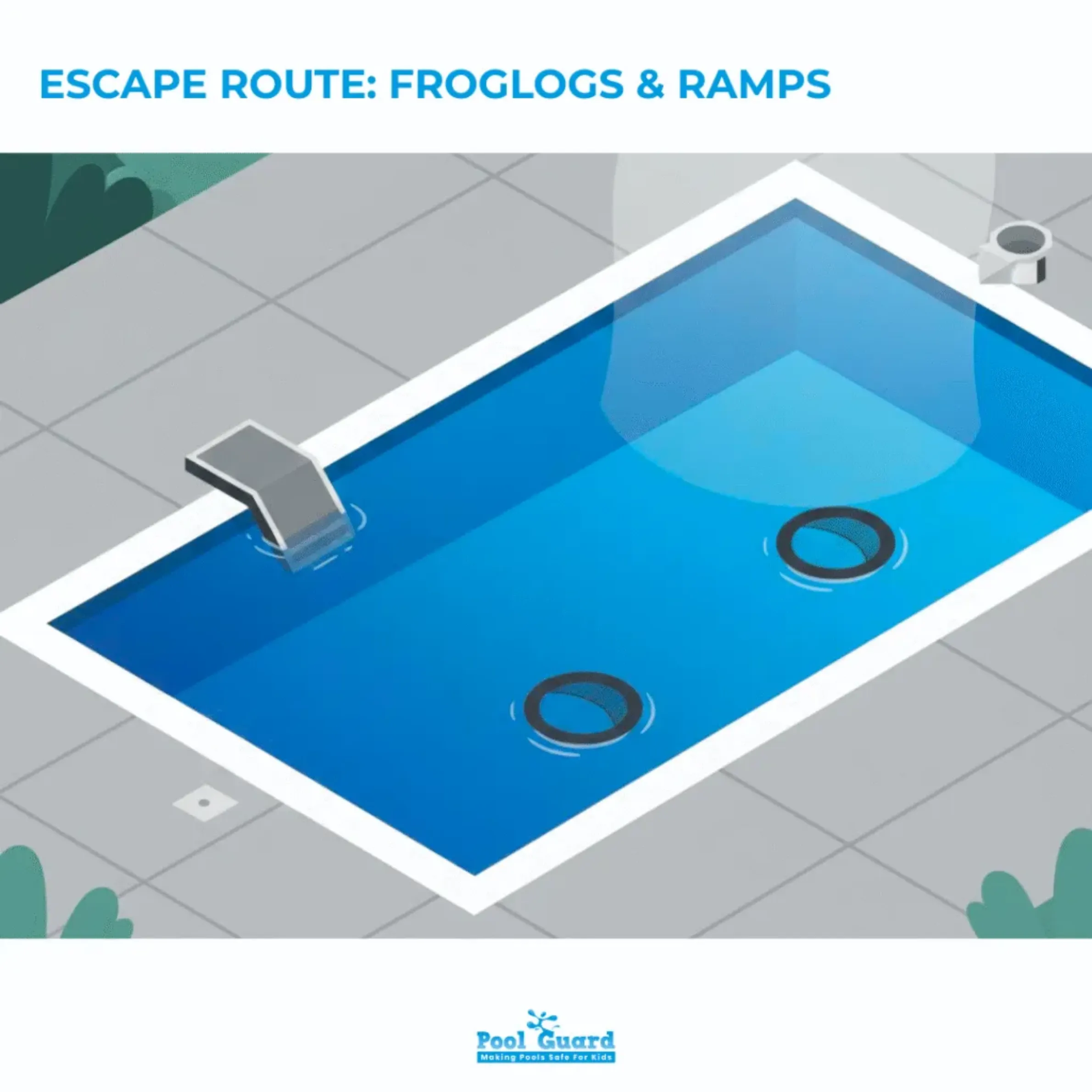
If frogs keep arriving, the problem is usually the yard, not the pool.
Check buckets, plant saucers, children’s toys, drainage dips, and leaking irrigation heads. Standing water provides breeding grounds for mosquitoes and certain frog species, making damp areas around your pool particularly attractive to amphibians.
According to the CDC, certain mosquito species develop from eggs into adults in just 7–10 days. Empty and scrub water-holding containers at least once a week to reduce mosquito breeding and limit potential food sources for frogs.
Cut back plants that touch the deck, thin dense beds near the coping, and clear leaf piles and clutter. Frogs rest in cool, shaded, moist places, so a drier and more open perimeter gives them fewer reasons to stay.
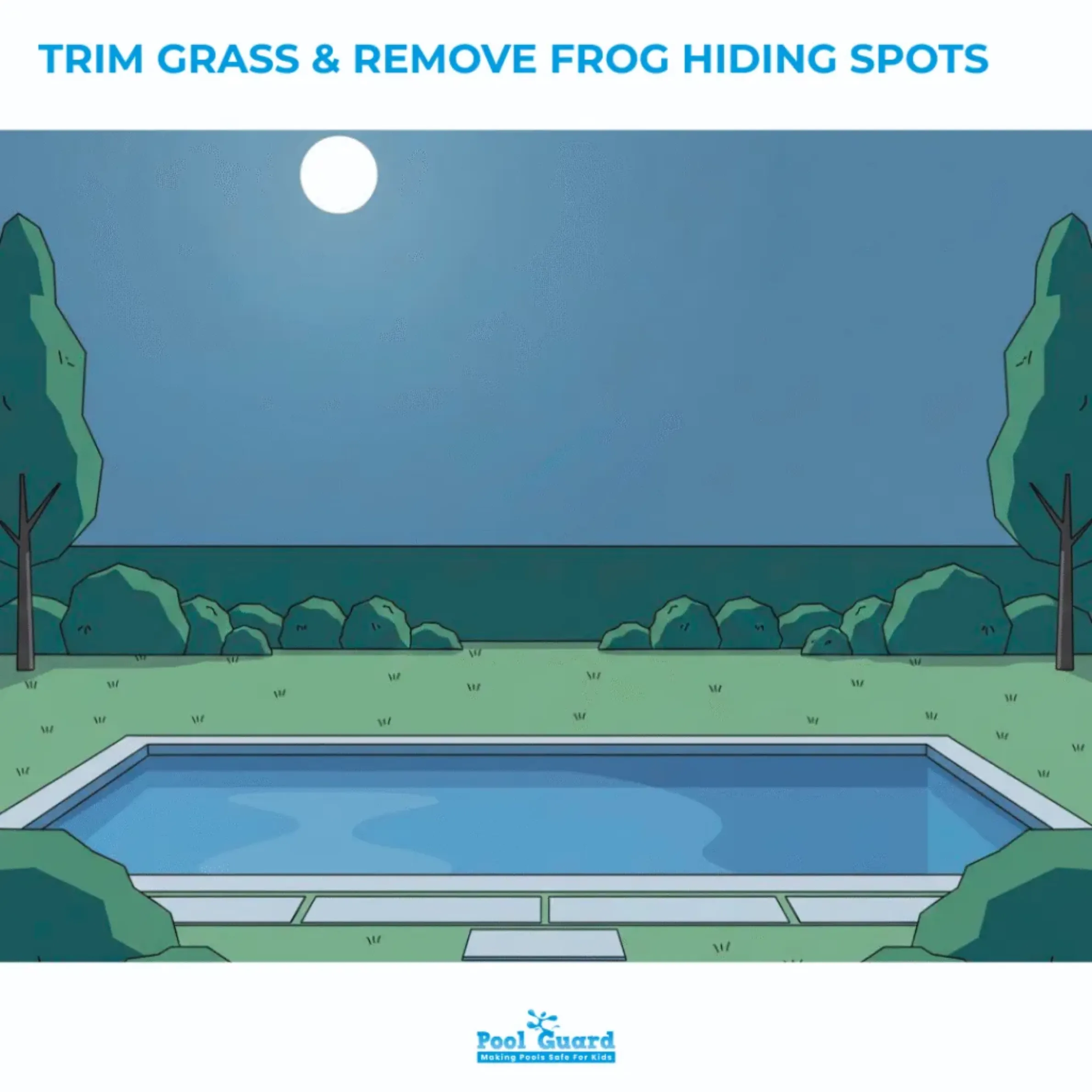
Fewer bugs means fewer frogs. Skim insects daily and use warm bulbs. Plants like citronella and lemongrass may help a little with bugs, though don’t expect them to repel frogs. Mosquito dunks work in ponds and rain barrels, not in the pool.
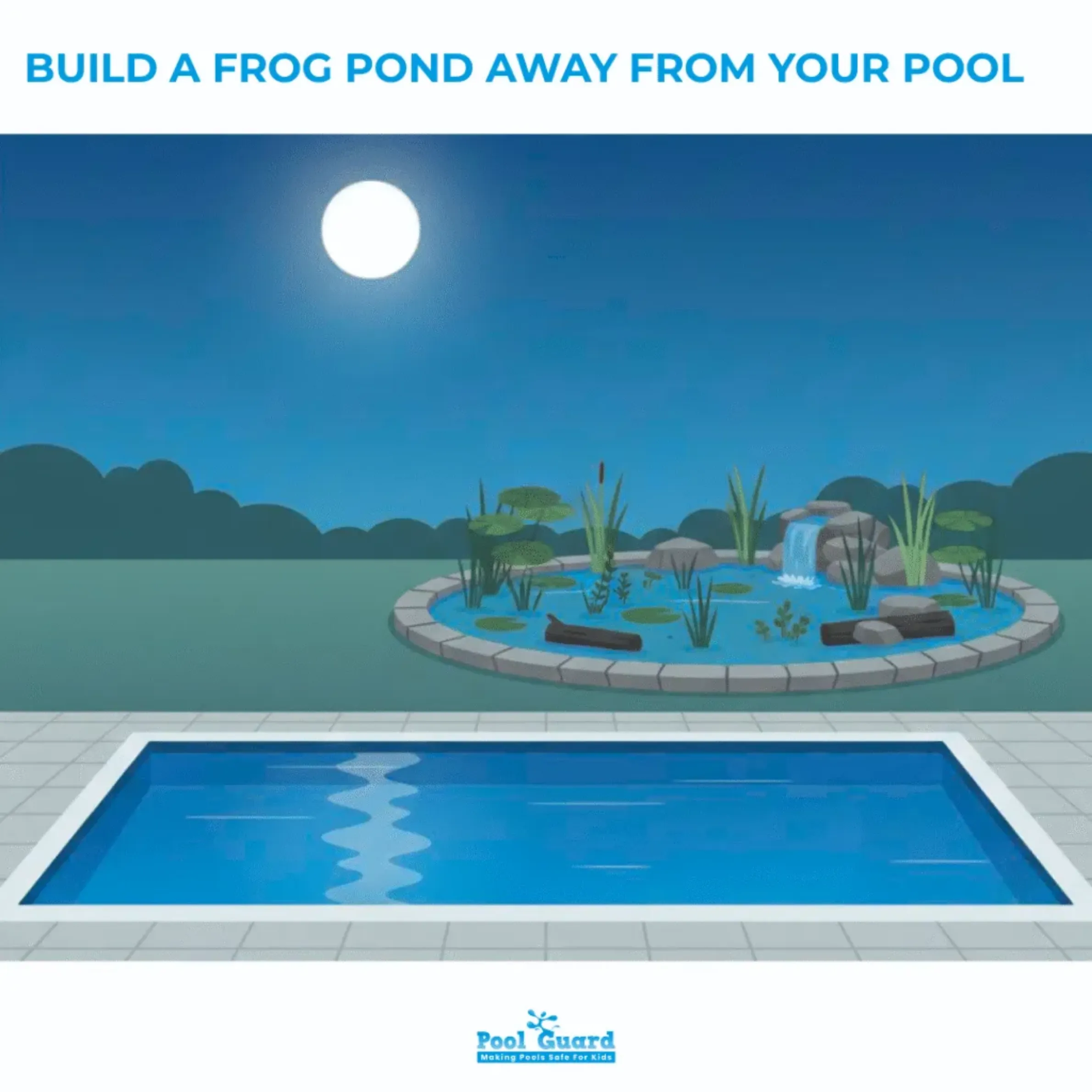
A small frog pond or damp, planted in a corner far from the pool can redirect amphibians and give them a better home. Keep it well away from your deck, and keep it clean.
Frogs aren’t looking for a swim. They want food, moisture, and safety, and a backyard pool can offer all three.
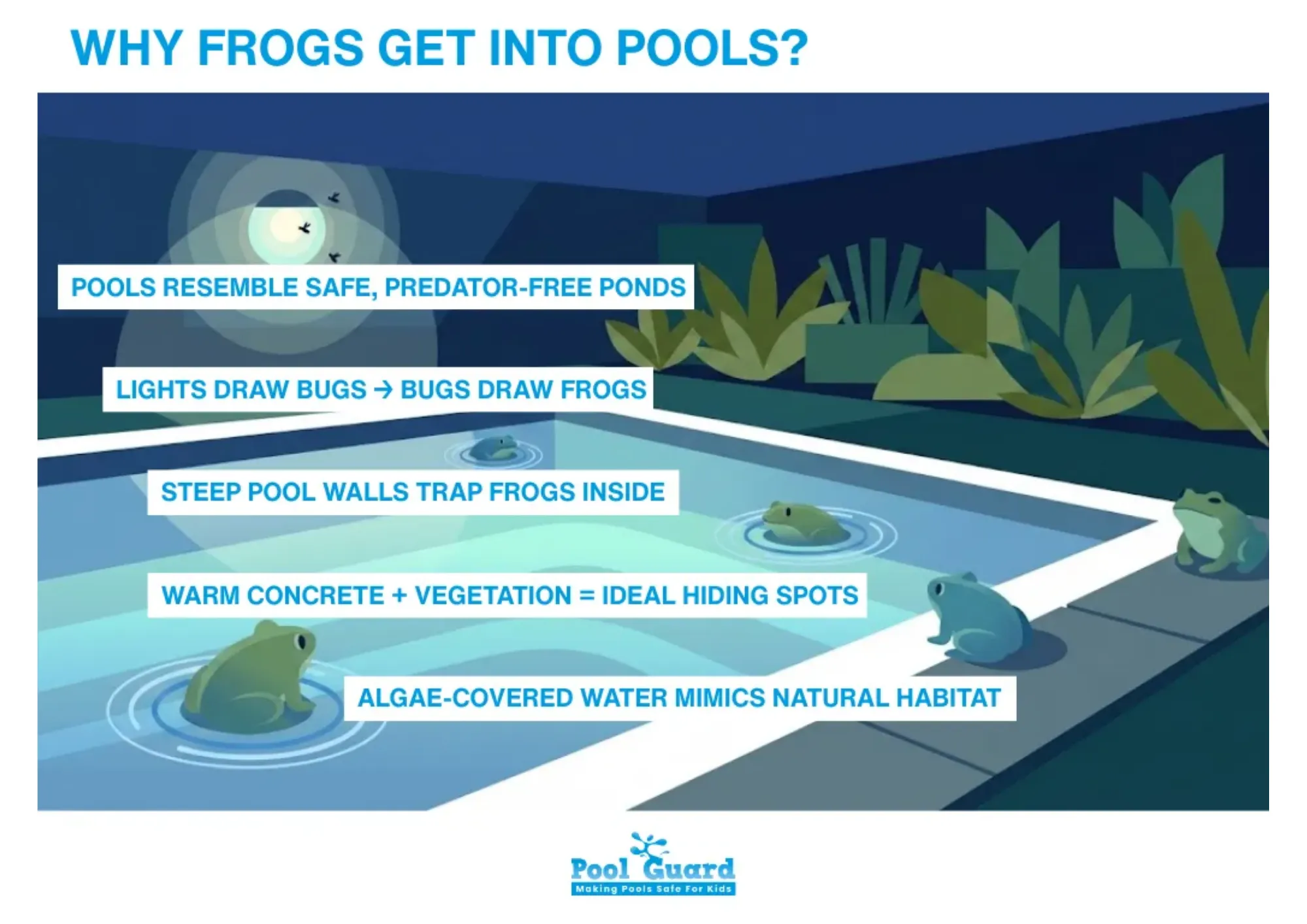
Amphibians favor calm surfaces. A pool with the pump off overnight, a stagnant cover puddle, or a quiet corner behind a spa spillway looks a lot like a pond edge. Chlorine doesn’t change that. Frogs will happily sit in properly sanitized water, which is why chemistry alone won’t solve the problem.
Lights draw insects, and insects draw frogs. Bugs gather around bright fixtures, creating a convenient feeding spot for nearby amphibians. A 2024 study published in Communications Biology found that conventional LED streetlights at high brightness attracted 7.7 times as many insects as unlit areas under the tested conditions.
Many nocturnal insects are attracted to blue and ultraviolet light. Switching to warm amber bulbs and turning off unnecessary outdoor lighting can help reduce insect activity around your pool, making the area less attractive to frogs.
Your pool has no fish, herons, or snakes. Decks, low walls, and open lawn make entry effortless, while mulch beds, dense groundcover, and stacked pavers give frogs a damp staging area just a few hops from the coping.
Heated water holds warmth after dark, which can attract cold-blooded animals on cool nights. Some guides claim warm water repels frogs because it holds less oxygen. That’s unreliable, and heating a pool to chase frogs away is costly and raises your chlorine demand. Treat warmth as a reason to be more vigilant, not as a deterrent.
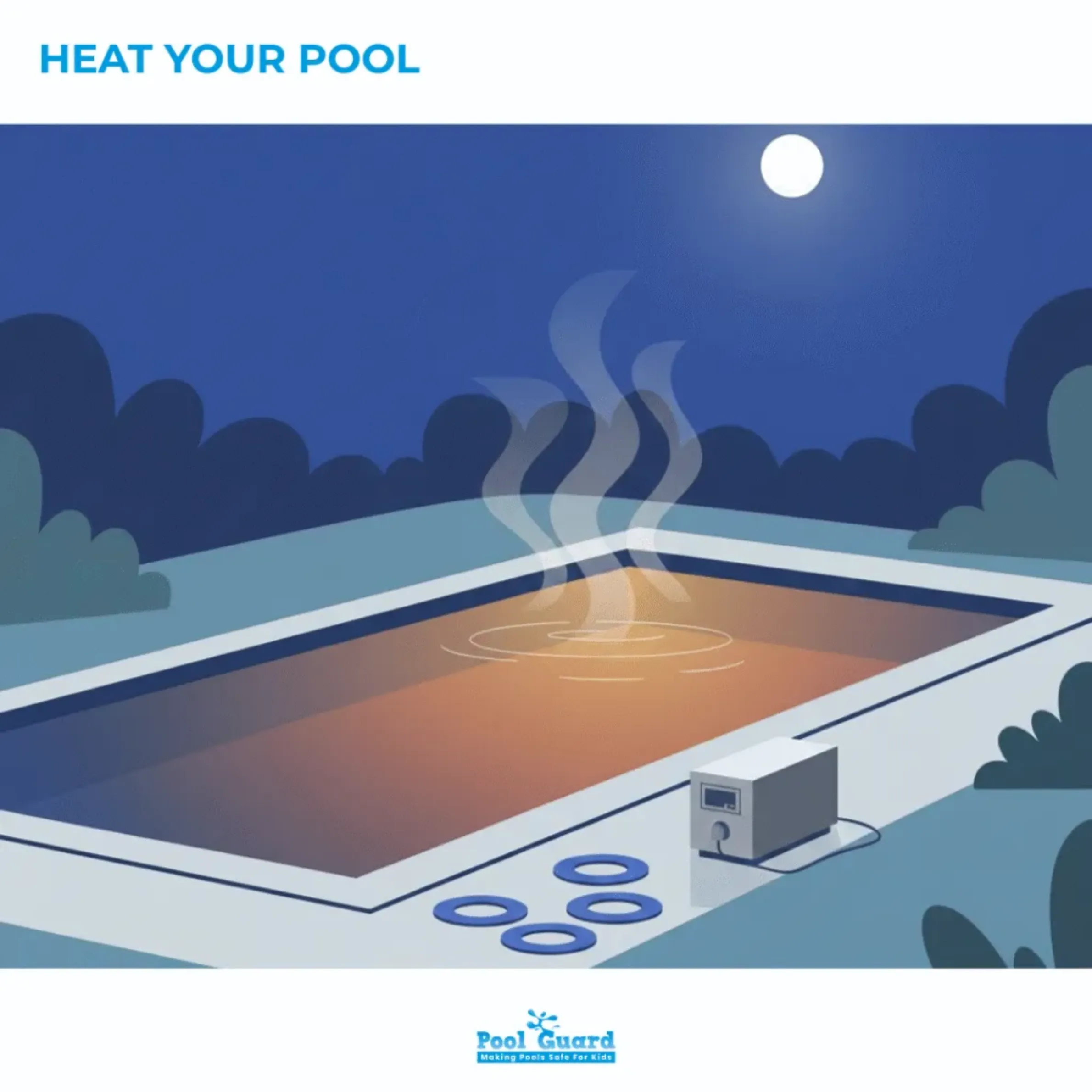
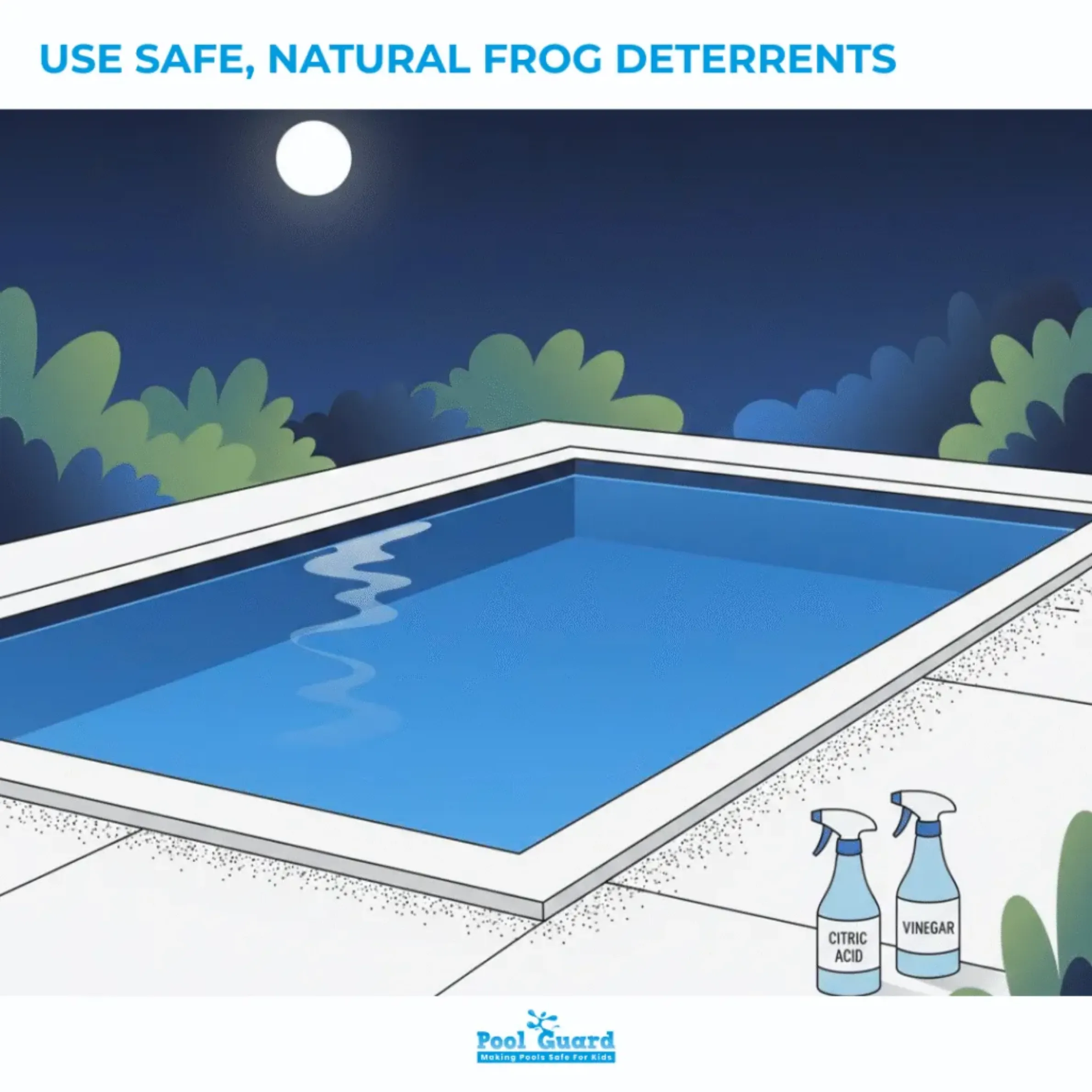
There’s limited evidence that home remedies work, so treat them as a minor supporting step.
Because frogs have thin, absorbent skin, anything irritating enough to repel them can also harm them. That’s one more reason to favor barriers.
The CDC notes that reptiles and amphibians can carry Salmonella and shed it in their droppings. A 2013 study documented 376 Salmonella infections across 44 U.S. states between 2008 and 2011 linked to pet aquatic frogs.
Although this outbreak did not involve swimming pools, it highlights the importance of safe frog handling and proper hygiene. Frog droppings can also introduce organic matter into the water and increase chlorine demand. Maintaining proper sanitation helps reduce the risk of contaminated pool water making swimmers sick.
A frog that can’t climb out eventually tires and drowns. Decomposition adds organic matter that consumes chlorine, cloudies the water, and feeds algae. Frogs trapped in skimmer baskets cause the same problem on a smaller scale.
Children love to “rescue” animals, and that means leaning over the water’s edge. Drowning is the leading cause of death for children ages 1 to 4 in the US, according to the CDC, so anything that lures a child to the pool unsupervised is a hazard.
Dogs add another risk. Chasing a frog can end in a fall, and some toads secrete irritating toxins that make dogs drool or vomit. A properly secured barrier helps protect both children and pets, making it an important part of keeping dogs out of the pool when nobody is supervising.
Frogs pulled into the skimmer can clog the basket and restrict flow. A restricted skimmer makes your pump work harder and your filtration less effective. Small animals that slip past the basket can end up in the filter system.
A single live frog in a well-maintained pool is a minor risk, not an emergency, but don’t swim alongside it. Here’s the safe sequence:
If you find a dead frog, keep swimmers out of the pool until removal and disinfection are complete. The CDC recommends maintaining free chlorine at 2 ppm and a pH of 7.5 or lower for 30 minutes. The water temperature should be at least 77°F, and the filtration system should remain operational throughout the process.
Although dead frogs in pools generally do not pose a health risk to swimmers, following these steps helps eliminate potentially harmful germs.
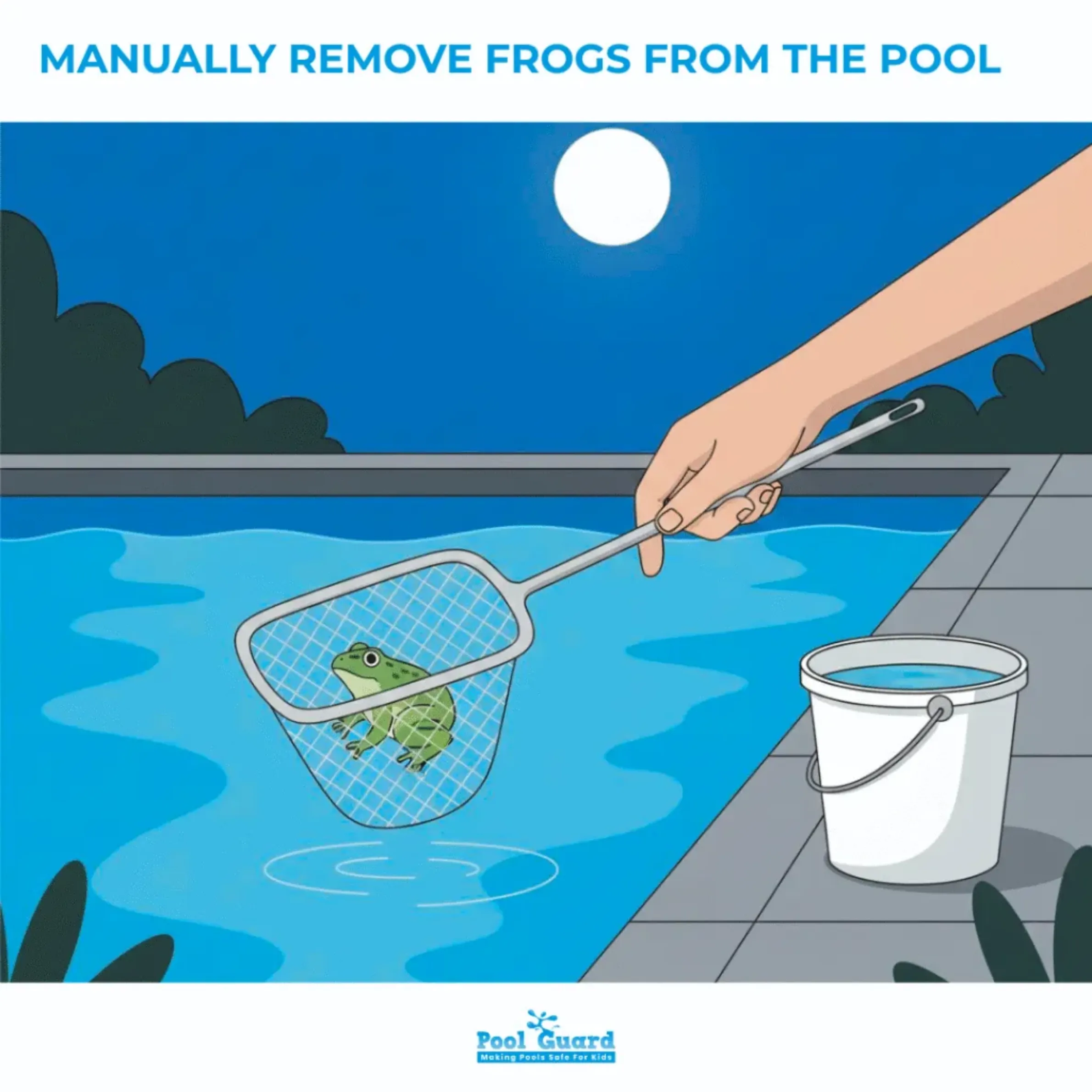
For a live frog, scoop it gently with a soft net or skimmer and release it near natural cover away from the pool. Check local wildlife rules if you live where protected amphibians are present.
Frog eggs look like jelly clumps or floating films. Skim them out with a fine net and dispose of them away from storm drains and natural waters, because eggs may not belong in the local ecosystem. Properly chlorinated water is hostile to eggs, but don’t count on it. If tadpoles appear, your water is probably out of balance, or the pool has been left uncovered. Remove them, then test and correct your pool chemistry.
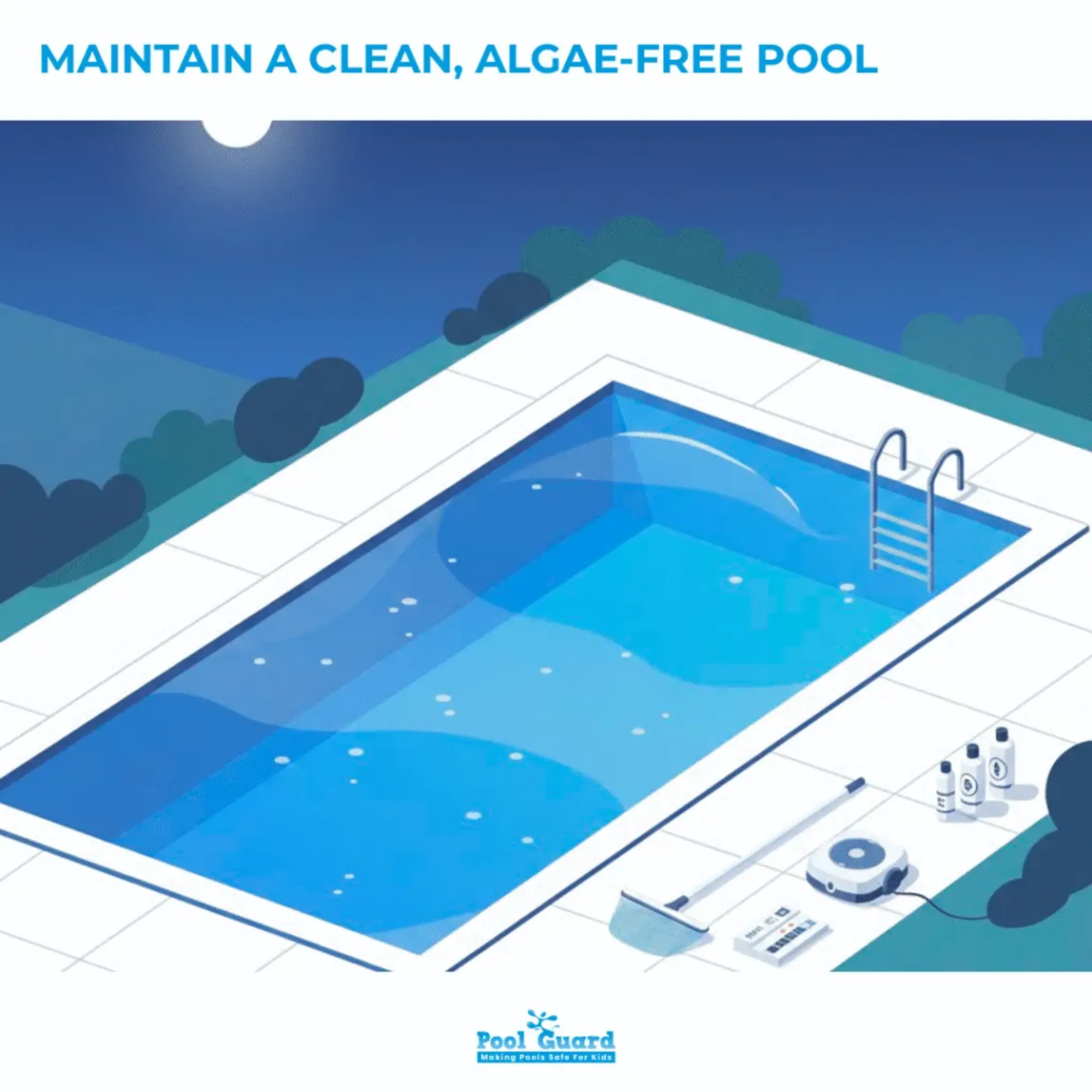
Start each day by skimming insects and debris off the surface, since fewer bugs means fewer frogs. While you’re there, check the skimmer and the pool for frogs so you can rescue any visitors early. In warm months, run the pump at night to keep the water moving, and make sure the lights are off whenever the pool isn’t in use.
Once a week, trim the vegetation near the deck so frogs have fewer places to hide. Then empty any standing water around the yard, which removes another reason for them to stop by. Finish by walking the fence line and testing the self-closing pool gate, so you know the barrier still works the way it should.
Each month, perform routine pool cover maintenance and clean the net, which keeps both barriers in good shape. Next, check the fence tension and gap clearance to make sure nothing has loosened or opened up. Finally, review your lighting habits and bulb color, since small changes there can quietly cut down the insects that draw frogs in.
Homeowners can manage common frog attractants by adjusting outdoor lighting, removing standing water, and trimming vegetation. However, these measures may not address underlying access problems. Regular pool fence maintenance can help identify damaged mesh, loose sections, and gaps near the ground.
If frogs keep entering your pool, a professional can assess these entry points and recommend suitable barriers. Pool Guard USA offers safety-rated barriers, ASTM-compliant safety covers, and custom-fit fence systems that help restrict wildlife access while protecting children. Professional installation provides a long-term solution that combines frog prevention with improved pool safety.
Whether you’re dealing with one curious frog or a nightly crowd, the cause is usually the same. Your pool offers food, calm water, and easy access. Knowing how to keep frogs out of pool spaces is really about closing the doors that let them in.
With the right approach, a few layers of protection go a long way. Combine physical barriers with smarter lighting, regular water circulation, and a tidy yard. For added protection, explore Pool Guard USA’s pool safety covers and fences to help keep wildlife out, protect children, and maintain cleaner pool water year-round.
Find your local dealer by entering your zip code above.
Recent Articles
Please fill out the form below with your information. Your local dealer will be notified about your inquiry.