A hot tub is one of the easiest ways to turn a backyard into a destination, until it isn’t. Behind the warm water and quiet hum of the jets sit four real hazards: overheating, drowning, slips and falls, and suction entrapment. None of them require bad luck to happen. They require a missed rule, an unlocked cover, or five unsupervised minutes.
The good news is that hot tub safety isn’t complicated. It’s a short list of habits, backed by real standards, that turn a hot tub from a risk into what it’s supposed to be – a place to relax.
This guide covers hot tub safety rules for every household member, the temperature and time limits that actually matter, how to secure the tub when no one’s using it, and what to do if something goes wrong.
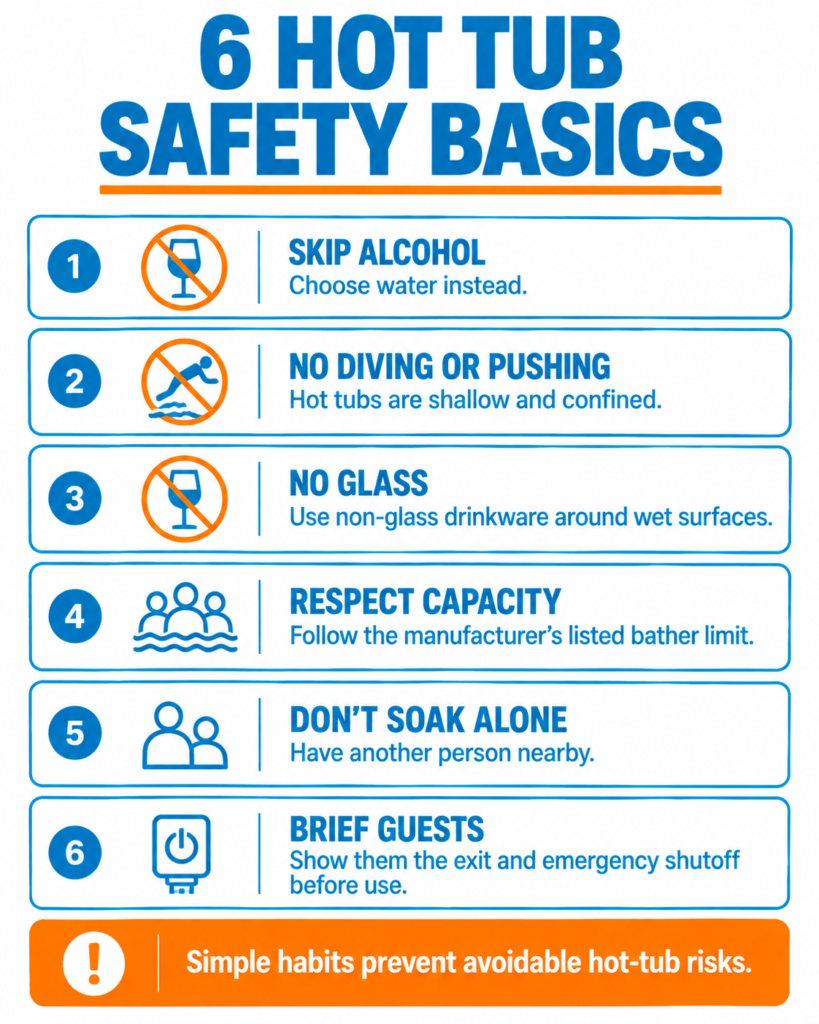
Most hot tub incidents don’t come from equipment failure; they come from skipped safety basics. Before anyone gets in, run through these:
Alcohol speeds up dehydration, dulls the signals your body sends when it’s overheating, and slows your reaction time if something goes wrong. Keep a glass of water within reach instead. Hydration is your actual insurance policy against a soak going sideways.
Hot tubs are shallow and crowded by design, which makes diving and horseplay a fast route to a head or neck injury. Glass containers near a wet deck are a slip-and-cut hazard waiting to happen; so better stick to plastic or metal cups.
That number on the spec sheet isn’t a suggestion. Overcrowding raises water temperature faster, reduces circulation, and makes it harder to notice if someone in the group is struggling.
This matters more than it sounds like it should. Overheating and dizziness can come on quickly, and having someone else present, even just within earshot, is often the difference between a close call and a real emergency.
Point out the rules, the emergency shutoff, and where the exit is. Guests won’t know your hot tub’s quirks unless you tell them, and a 30-second briefing costs nothing.
Children are not small adults when it comes to hot water, and hot tub safety for kids has to start from that premise.
Children under five shouldn’t use hot tubs at all; this isn’t a cautious suggestion, it’s guidance from the CDC. Babies and toddlers regulate body temperature far less efficiently than older kids or adults, which means they can overheat in water and time frames that would be perfectly fine for everyone else.
For older children, the rules loosen but never disappear:
If you’re hosting kids who aren’t your own, treat the “under five” rule as non-negotiable and communicate it to other parents before the pool party starts, not after.
Most owners know “104°F” as a number but treat it as a target instead of a ceiling. It’s the maximum, not a safe setting for everyone. Actual tolerance depends on your age, health, and how long you plan to stay in.
Check the actual water temperature with a thermometer rather than trusting the control panel alone. Keep sessions short, and shorten them further as temperature rises, age moves toward either end of the range, or any health condition is in play. Exit immediately for dizziness, nausea, or unusual drowsiness; these are warning signs, not inconveniences to push through. Drinking water helps you avoid dehydration, but it won’t stop your core temperature from climbing if you stay in too long.
Pregnancy, medical conditions, and medications call for a clinician’s advice, not a guess. Certain heart conditions, blood pressure issues, and medications that affect circulation or alertness change the calculation entirely.
No universal “safe number” of minutes applies to everyone in every hot tub. Know the ceiling, watch your body, and err short.
The area around and inside the tub has its own risks.
An unused hot tub is not a resting hot tub. It’s a small, warm, deep body of water sitting exactly where a child or pet might wander.
Fully secure and lock the safety cover every single time everyone exits. Not “close it”, but lock it. A cover that’s resting on top but not latched offers almost no protection.
Never let anyone bathe, sit, or walk under a partially closed cover. This sounds obvious, but it’s a common cause of entrapment injuries when someone tries to get “just one more minute” in as the cover comes down.
A standard insulating cover keeps heat in and debris out; it is not automatically rated to bear weight or prevent access. Look for covers that meet ASTM F1346, the recognized standard for hot tub, spa, and pool safety covers, which sets requirements for load-bearing capacity and latching mechanisms specifically to prevent accidental drowning. Regardless of rating, a cover is never a walking surface; it’s a barrier, not a platform.
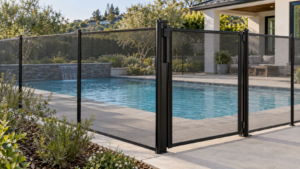
If your local code requires a fence or a self-latching gate around the hot tub area, treat that as a floor, not a ceiling, on your safety setup. ASTM F1346 exists because unsecured water access is one of the most preventable causes of injury tied to residential pools and spas, and a cover that’s simply present but not locked doesn’t meet the standard’s intent.
Clean-looking water and clean water are not the same thing; visual clarity tells you nothing about chemical balance, and clear water can still carry bacteria. That’s why the first step, before anyone gets in, is checking sanitizer and pH levels. Showering beforehand matters too, since it removes lotions, sweat, and residue that would otherwise consume sanitizer and reduce its effectiveness.
A couple of rules carry over once you’re in the water. Never swallow it, and if you or anyone in your group has had diarrhea recently, stay out entirely; that’s a direct route for germs to spread to everyone else using the tub.
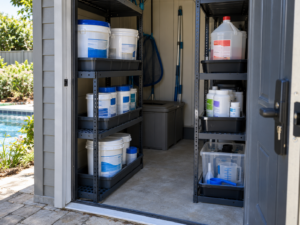
Chemical storage rounds out the basics. Keep sanitizer and other chemicals well out of reach of children, and leave them in their original, clearly labeled containers.
Even with every precaution in place, know how to respond before you need to.
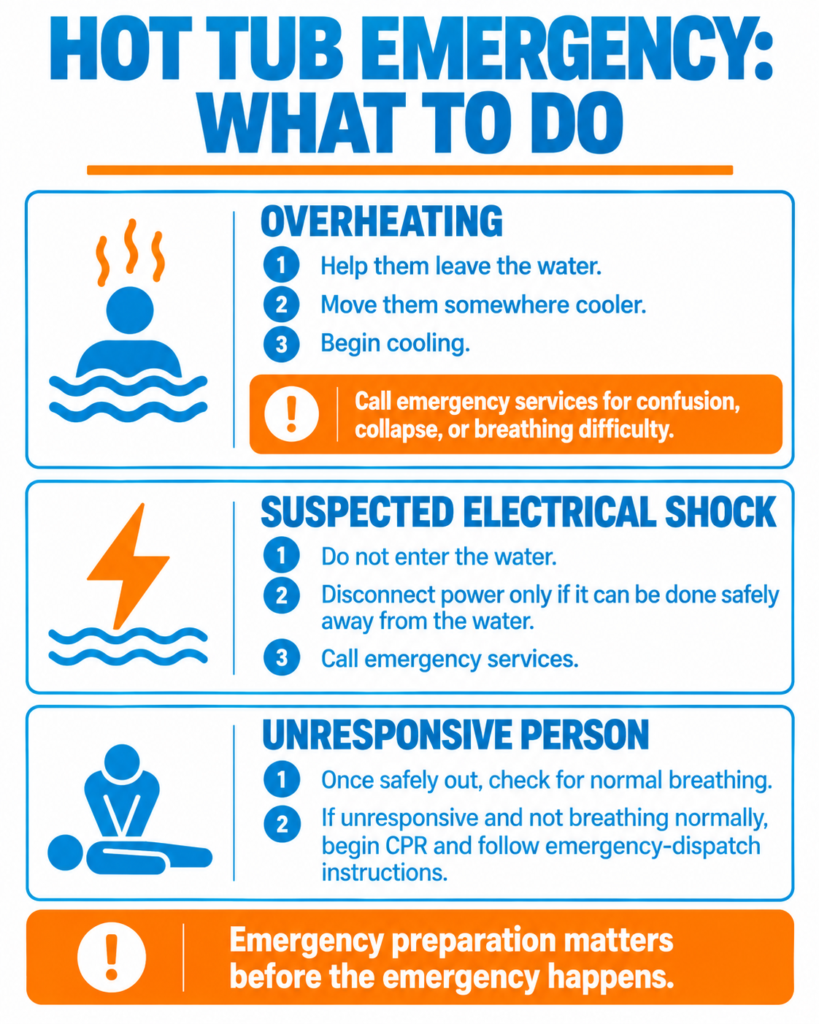
Help them exit the water calmly and begin cooling them down. Move them to shade or indoors, offer water, and use a cool, damp cloth if available. Call 911 immediately if they are confused, collapse, or have any breathing difficulty. Don’t wait to see if it passes.
Do not enter the water yourself. Shut off power at the breaker only if you can do so without stepping into or near the water. Get emergency services on the phone right away.
Once they are safely out of the water, check for normal breathing. If they’re unresponsive and not breathing normally, begin CPR immediately, including rescue breaths if you’re trained to give them, and follow the dispatcher’s instructions until help arrives.
A first aid certification and knowing where your circuit breaker is aren’t overkill. They’re the difference between reacting well and reacting late.
Hot tub safety comes down to three habits repeated consistently: manage the heat, supervise the children, and secure the tub the moment it’s not in use. Every rule in this guide supports one of those three ideas.
Safety equipment, like covers, GFCI protection, and non-slip surfaces, reduces risk. It doesn’t replace supervision, and it doesn’t replace judgment. The hot tub owners who never have a serious incident aren’t the ones with the most expensive equipment; they’re the ones who treat these rules as automatic, every time, not just when it’s convenient.
Find your local dealer by entering your zip code above.
Please fill out the form below with your information. Your local dealer will be notified about your inquiry.
Please fill out the form below with your information. Your local dealer will be notified about your inquiry.