You’ve chosen your pool safety cover, checked the material, and made sure it fits. But there’s one detail that’s easy to overlook – the hardware that keeps everything in place. Most pool owners don’t think much about it until a strap comes loose or the cover no longer fits as it should. Knowing what to check beforehand can help you avoid those problems.
If you’re wondering what are pool cover anchors and how they work, this guide will walk you through the different types and how to choose the right ones for your deck. You’ll also learn about installation, retraction, common repairs, and maintenance to keep your cover secure season after season.
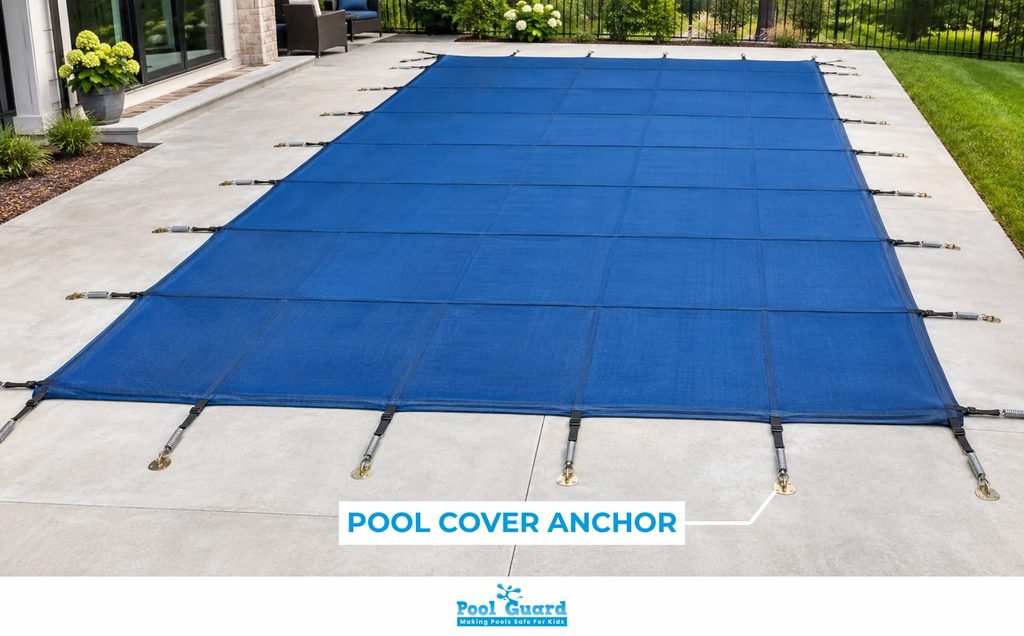
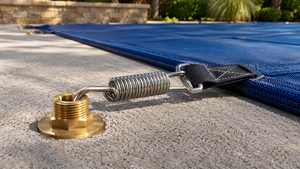
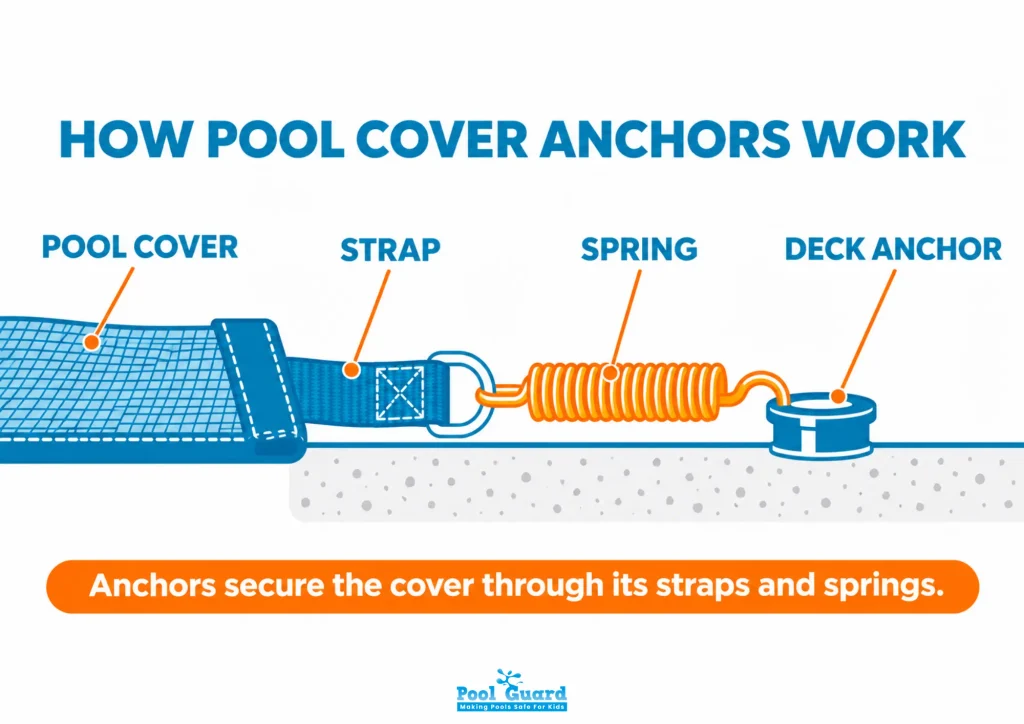
Pool cover anchors are deck-mounted attachment points for the straps and springs on a pool safety cover. Each strap runs from the cover’s edge to a spring, and each spring hooks onto an anchor. Spaced around the pool, the anchors spread the cover’s load evenly and hold the fabric taut above the water.
Anchors are one part of a properly fitted cover system, not a stand-alone safety measure. Straps, springs, cover fabric, and installation quality all affect performance. Look for covers that meet ASTM F1346, the U.S. safety cover standard, and keep the whole system in good condition.
The right type depends on what surrounds your pool:
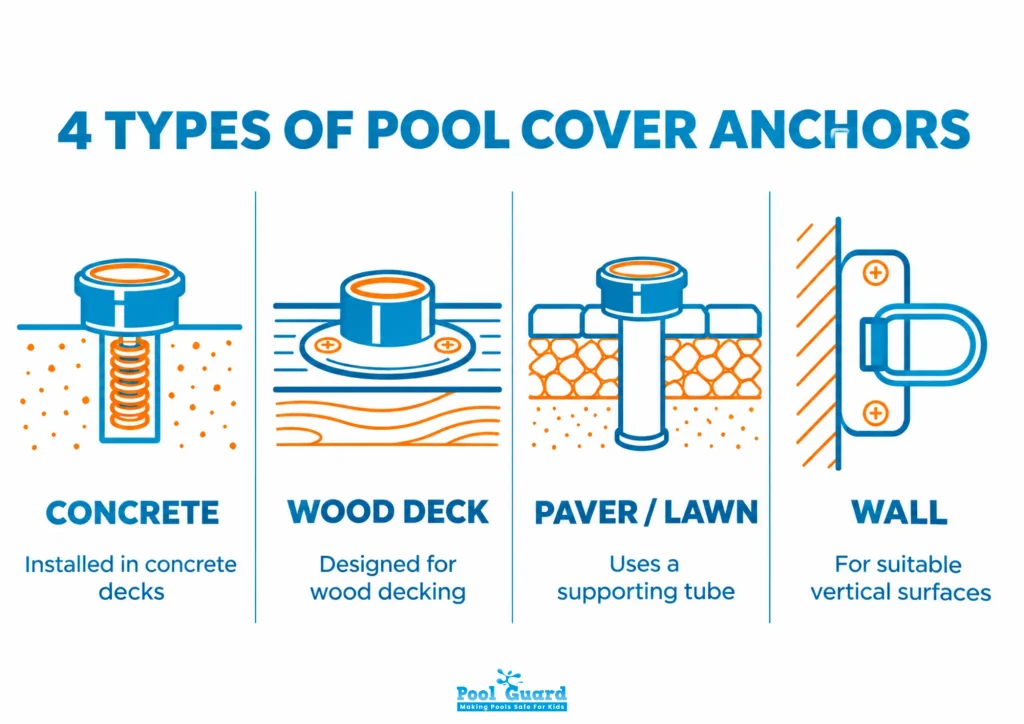
Always follow your cover manufacturer’s anchor layout, including placement and spacing. If you’re ordering a new cover, measuring your pool for a cover comes first, but those measurements don’t replace the installation plan.
Once you have the layout, check your deck material and identify any hidden pipes, wiring, or utilities before drilling. For standard brass anchors installed in concrete, follow these general steps:
Wood, paver, and lawn anchors require different installation methods, so follow the instructions for your deck and anchor type.
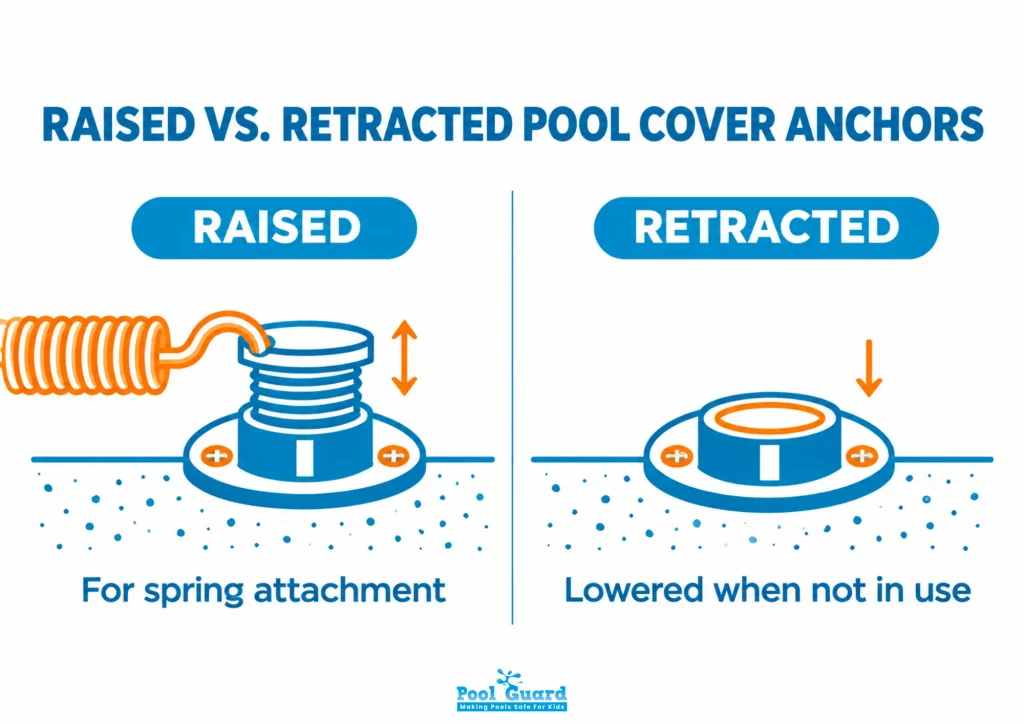
Retracting an anchor means lowering it flush with the deck, while removing it means taking the fitting out completely. Before either task, release the cover spring using the proper installation rod. For retractable anchors, insert a compatible hex key and turn it as directed by the manufacturer until the anchor sits flush with the deck.
To remove an anchor, first disconnect the cover and release any remaining tension. If the design allows, unscrew the threaded insert with a hex key. Removing the outer shell may require a specialized extraction tool, depending on how it’s installed.
If the anchor is stuck, avoid forcing it, as this can damage the threads or surrounding deck. Some fixed anchors cannot be retracted, and complete removal may require a qualified pool cover installer.
A loose pool cover anchor may wobble, spin, or lift out of the deck. Start by checking whether the anchor is damaged or the surrounding hole has widened. Remove tension from the affected attachment point before inspecting it, following the cover manufacturer’s instructions.
If the anchor is damaged but the hole is still sound, replace it with a compatible anchor using the manufacturer’s installation instructions. If the hole is enlarged or the deck is cracked, have a qualified installer assess the surface and determine whether the mounting area needs repair or relocation.
Once repaired, check that the anchor is secure and the cover spring is properly tensioned. Secure attachment points also help with keeping a pool cover from blowing off in strong winds. Don’t rely on temporary fixes or treat the cover as a functioning safety cover until the repair has been checked.
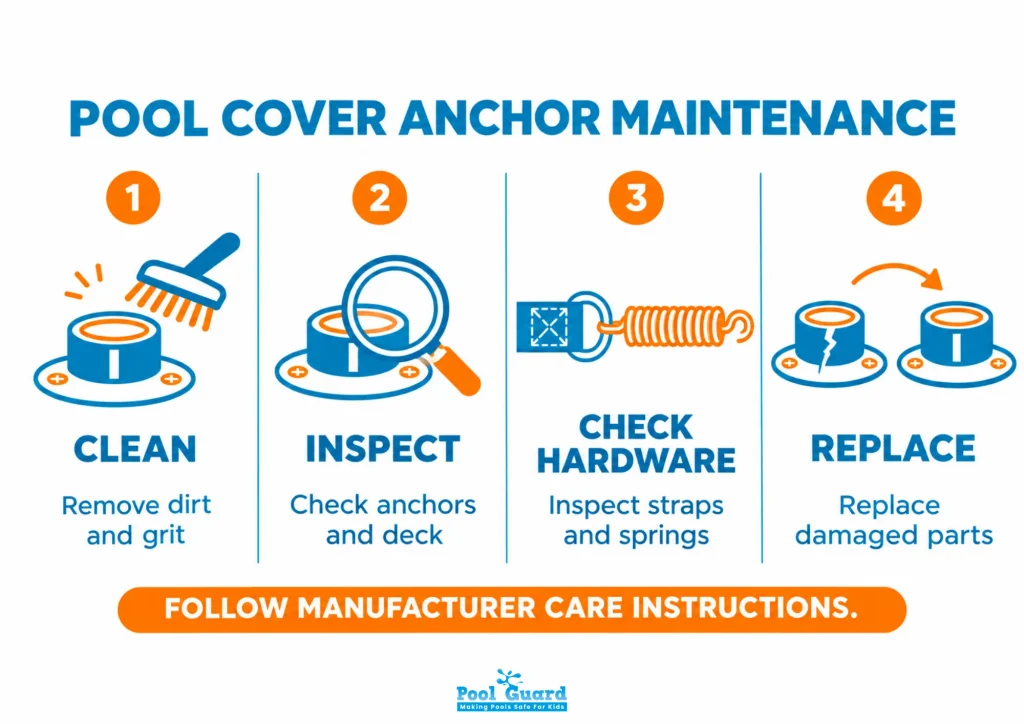
Routine care takes minutes and prevents most problems:
Once you know what are pool cover anchors, it’s easier to see why they deserve attention. They link your straps and springs to the deck, and they keep the whole cover steady under load. Ultimately, a cover performs only as well as the hardware that holds it down.
With the right approach, upkeep stays simple. Follow the manufacturer’s layout, inspect your anchors often, and replace worn hardware before it fails. Whether you’re installing new anchors or checking old ones, a few minutes of care pays off.

Find your local dealer by entering your zip code above.
Please fill out the form below with your information. Your local dealer will be notified about your inquiry.