A pool cover isn’t just an accessory—it directly affects safety, operating costs, water quality, and how often your pool is actually protected.
When homeowners compare an automatic pool cover vs manual, the debate usually centers on price. That’s the wrong starting point.
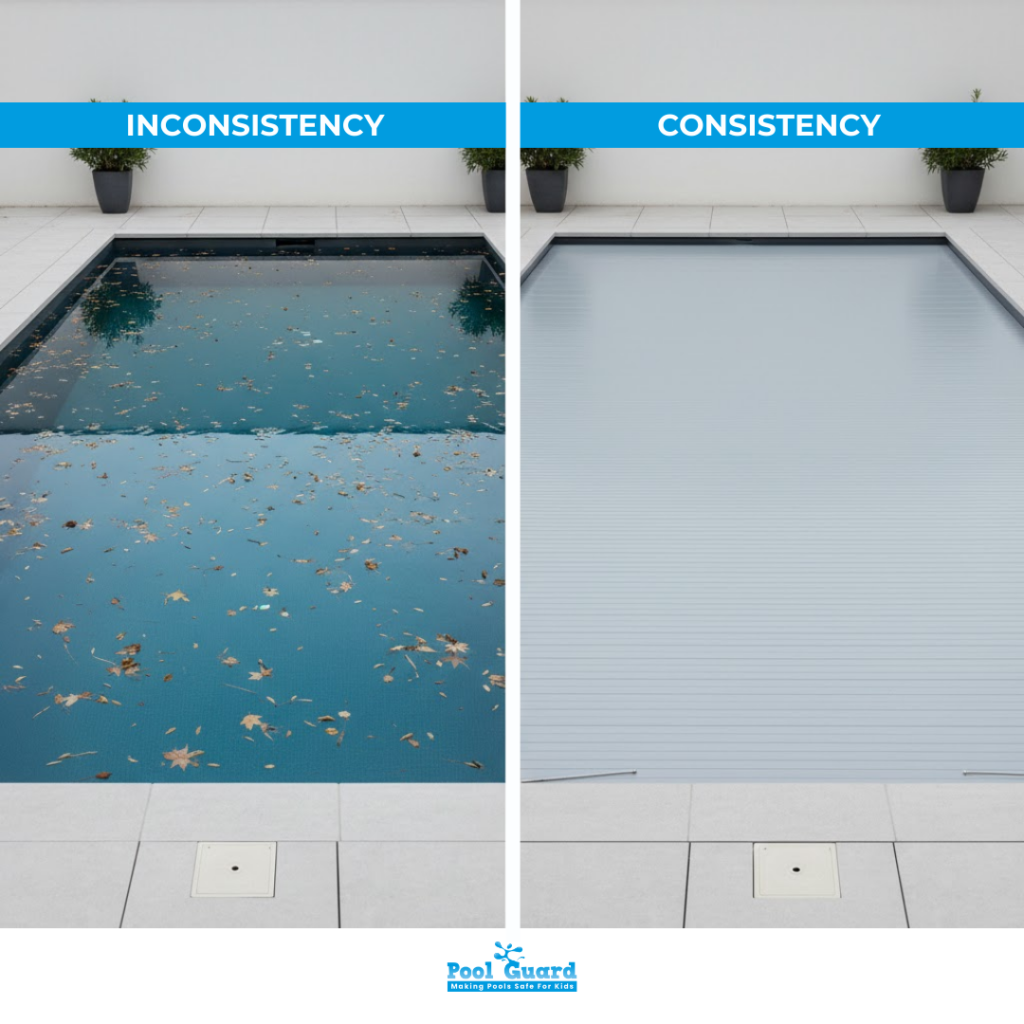
The real difference comes down to usage behavior. A pool cover only delivers benefits when it’s used consistently—and convenience determines consistency.
This guide breaks down how manual and automatic pool covers really compare, where each option makes sense, and when one is clearly the smarter choice. Many homeowners also consult our different types of pool covers guide before deciding which system fits their needs. This decision is often part of a broader evaluation of pool safety systems and long-term maintenance priorities.
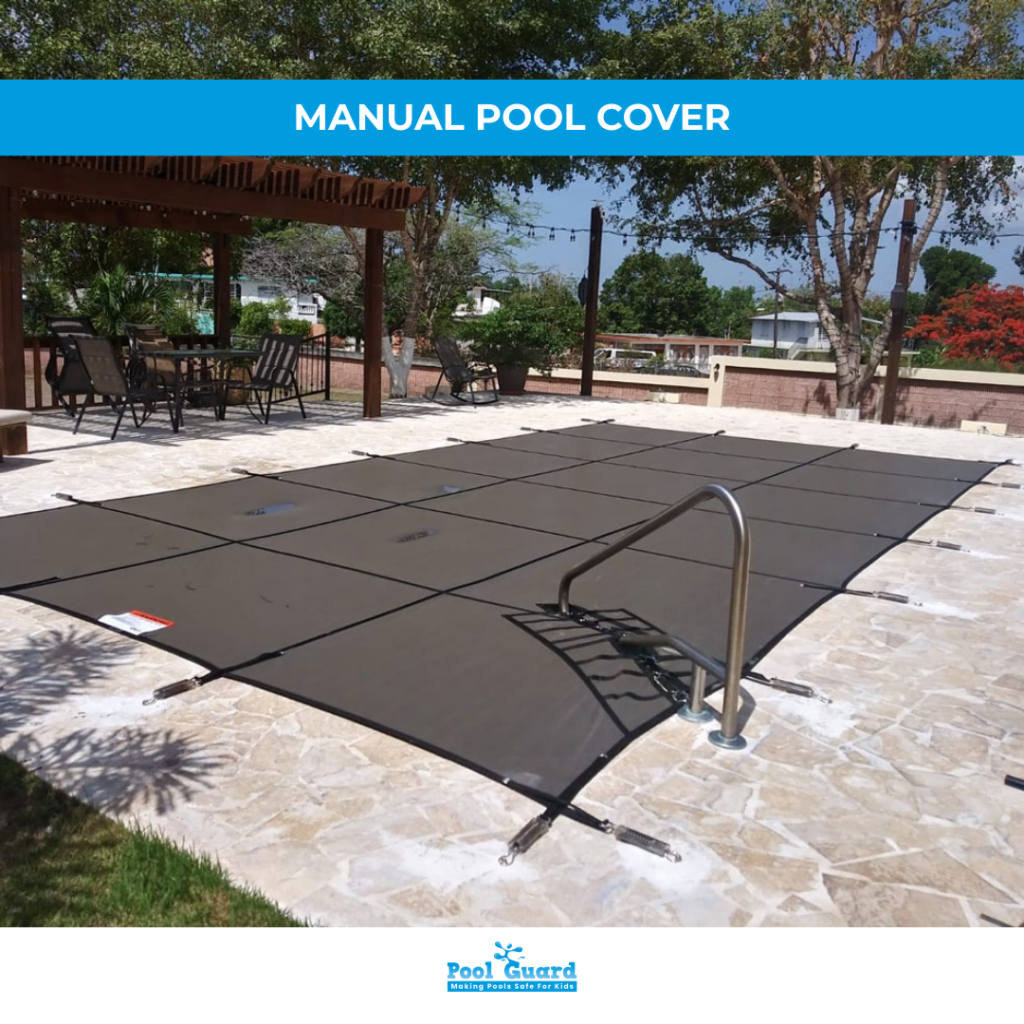
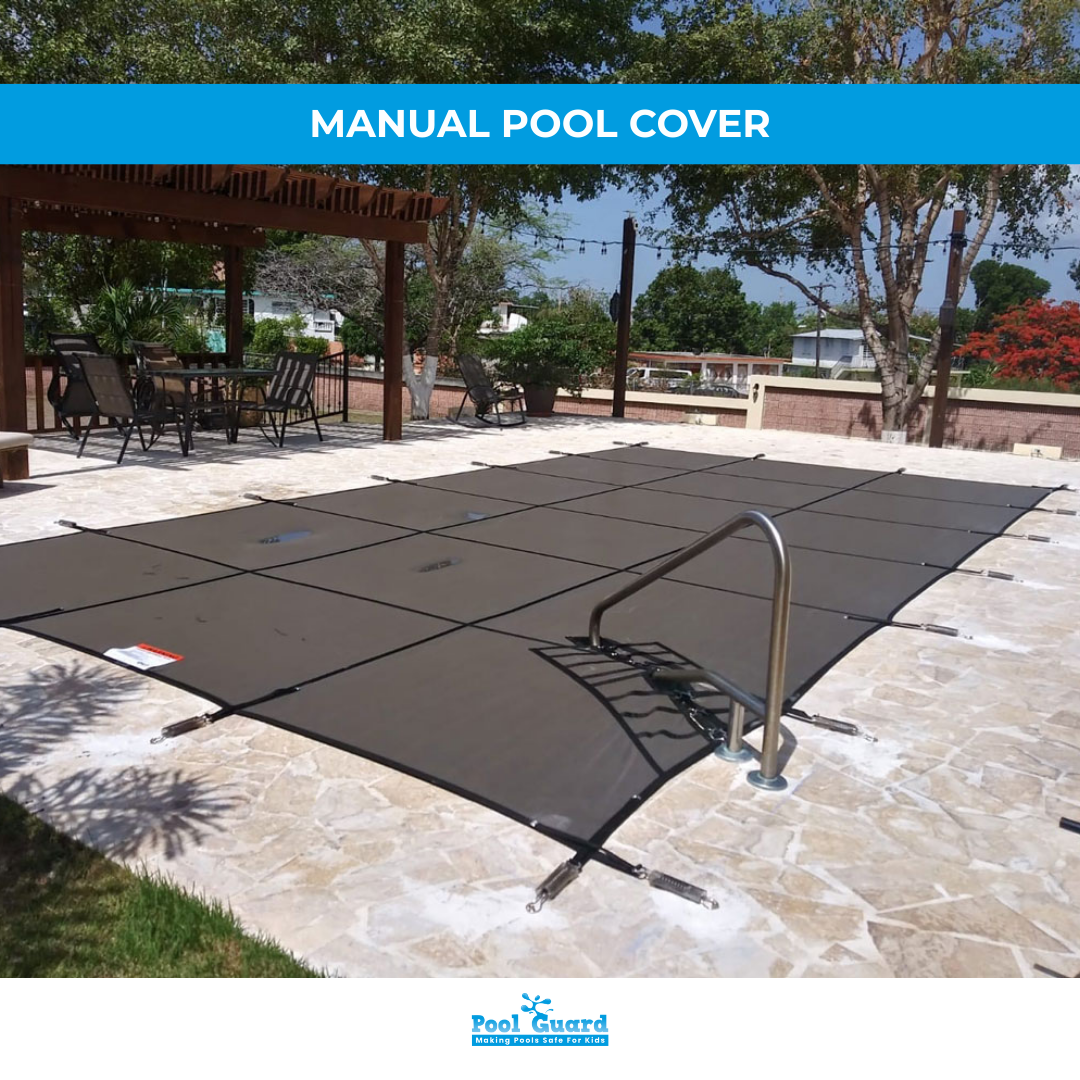
A manual pool cover is operated using physical effort rather than a motorized system. Although designs can vary, the core function remains the same: the pool owner moves the cover across the pool surface either by hand or with the help of mechanical assistance. These covers are commonly chosen for their simplicity and lower upfront cost, but their effectiveness depends largely on how consistently they are used.
Manual pool covers are available in several common configurations, each designed to reduce handling effort to varying degrees:
Manual pool covers are most often used in the following situations:
Manual pool covers can be effective at reducing heat loss, evaporation, and debris accumulation—but only when owners are willing to deploy them every single time the pool is not in use. Consistency, more than the cover itself, ultimately determines how much value a manual system provides. Manual covers require consistent use, and proper pool cover maintenance practices.
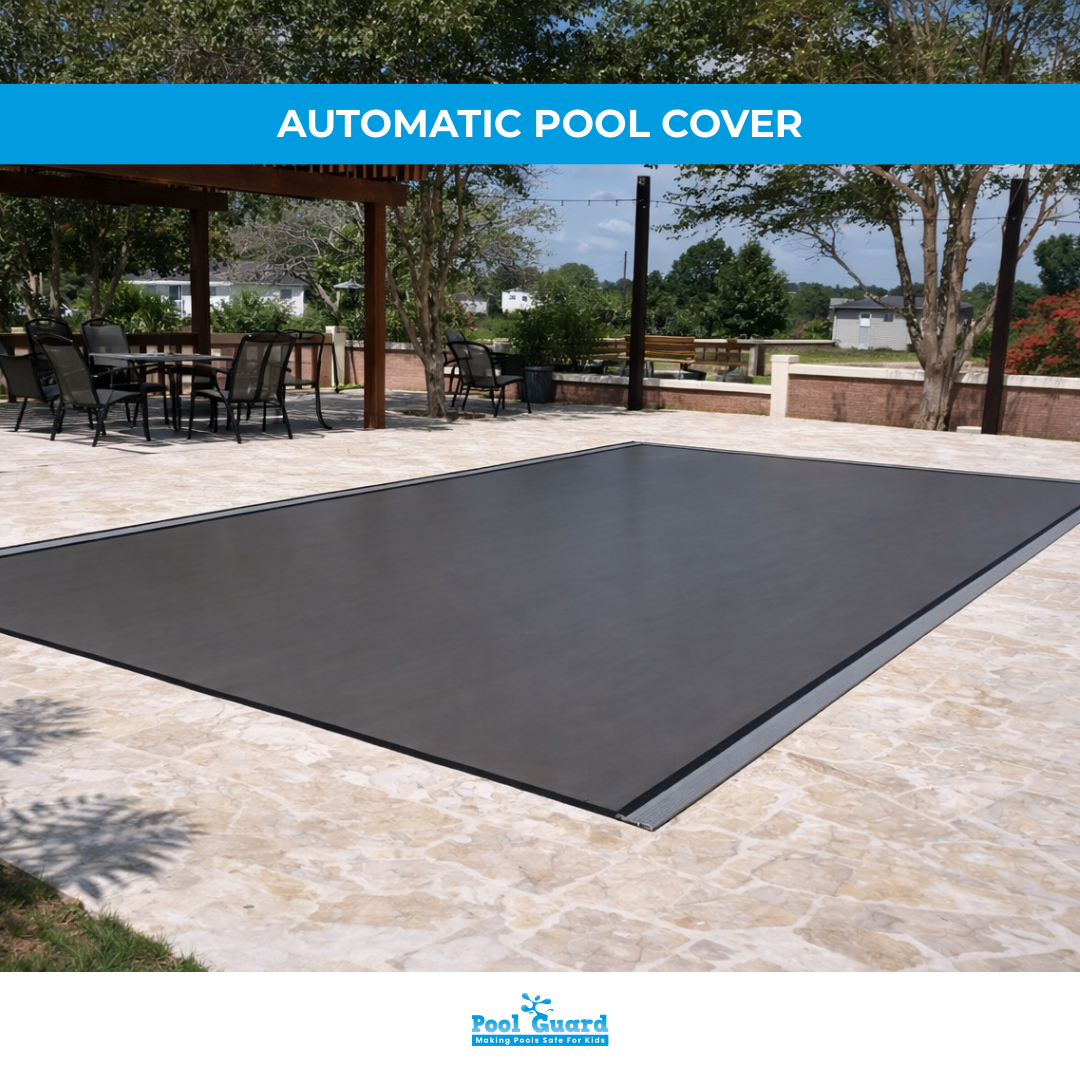
An automatic pool cover uses an electric or hydraulic motor to open and close the cover using a switch, key control, or keypad. Integrated tracks are built into or alongside the pool structure, guiding the cover smoothly across the water. This controlled movement ensures proper alignment and consistent tension, allowing the cover to operate efficiently with minimal effort from the pool owner.
Automatic pool cover systems rely on precision components designed to provide smooth, reliable operation:
Automatic pool covers are commonly chosen in the following scenarios:
Automatic pool covers remove friction entirely—and that change alone is often what makes the difference between a cover that’s occasionally used and one that’s used every day. Automatic systems are often considered among the best pool cover options for homeowners prioritizing convenience.
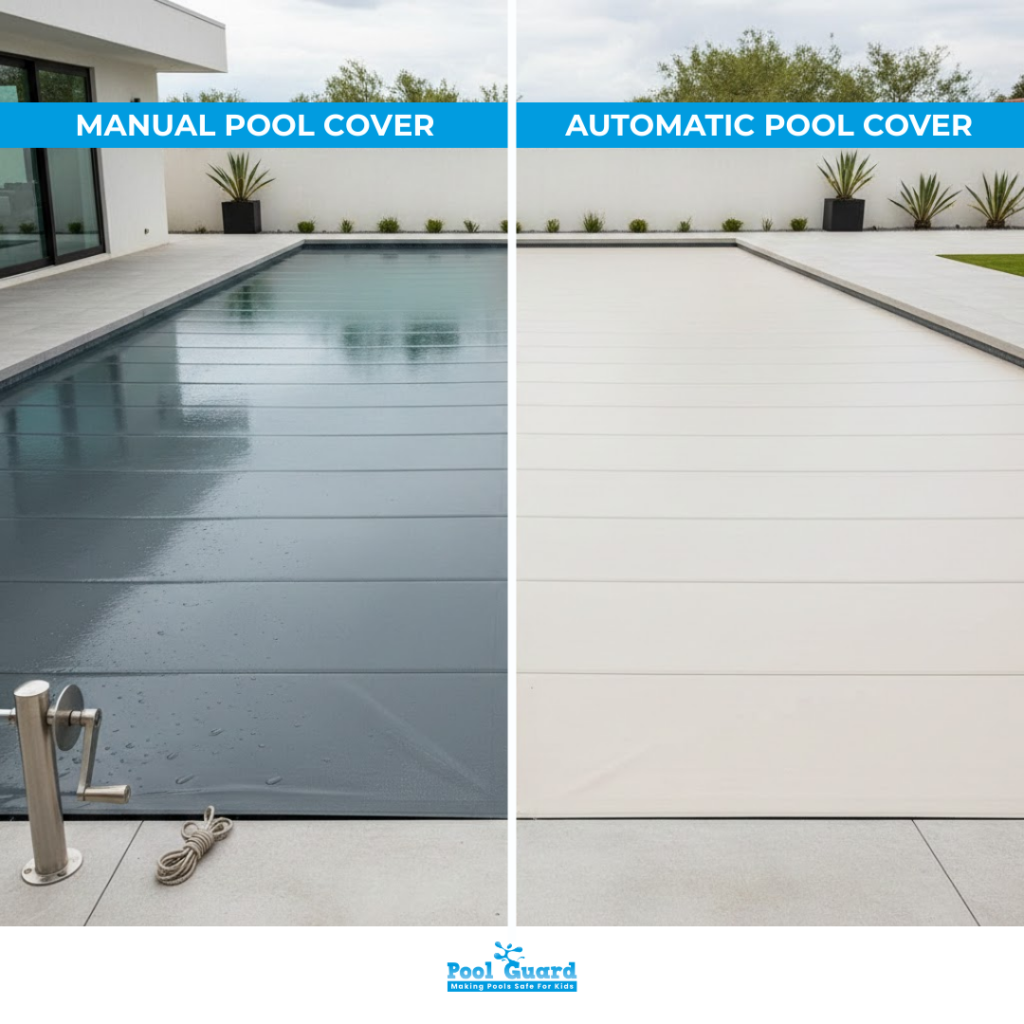
| Feature | Manual Pool Cover | Automatic Pool Cover |
| Operation | Hand-crank or physical effort | Push-button or key |
| Ease of use | Moderate to labor-intensive | Effortless |
| Installation | Simple to moderate | Complex, precision-based |
| Maintenance | Low mechanical upkeep | Periodic servicing required |
| Upfront cost | Lower | Higher |
| Long-term value | Depends on consistency | High due to frequent use |
| Daily adoption | Often inconsistent | Very high |
This comparison highlights the core reality: both options can work—but only one removes the friction that prevents consistent use.
This is one of the most frequently searched questions among pool owners—and also one of the most misunderstood. The answer depends less on the cover itself and more on how the pool is actually used.
An automatic pool cover is often worth the investment in the following situations:
Industry data and real-world usage patterns consistently show that automatic pool covers are used far more often than manual alternatives, simply because they eliminate the effort involved in opening and closing the pool.
In some cases, an automatic system may not be the most practical option:
Bottom line: automatic pool covers are not “better” by default—but they are often the better choice for most modern pool owners who prioritize safety, convenience, and consistent use.
To be considered a true safety barrier, pool covers must meet ASTM F1346 requirements. This standard outlines the performance criteria a cover must meet to help prevent accidental entry into the pool.
When comparing automatic and manual pool covers, several important safety factors come into play:
While pool covers can significantly reduce risk, they should always be part of a broader safety strategy rather than a standalone solution. Effective pool safety includes:
This layered approach is what creates meaningful protection—without relying on a single product to do everything. Even with a cover, additional protection from barriers and alarms is recommended in a complete pool safety equipment setup.
When comparing a manual pool cover vs an automatic system, cost is often the first consideration. However, the real difference isn’t just the upfront price—it’s how that investment plays out over time.
While pricing varies based on pool size, shape, and installation requirements, most pool covers fall into these general ranges:
These ranges are intended to provide context rather than exact pricing and should not replace a professional evaluation.
Over time, ownership costs are shaped by how frequently the cover is used and what it requires to stay operational:
Rather than focusing solely on return-on-investment claims, it’s more useful to think in terms of habit formation. The cover that’s easiest to use is usually the one that delivers the most long-term value. Homeowners often compare cover costs alongside pool fence installation cost considerations.
Maintenance requirements and long-term reliability vary significantly between manual and automatic pool covers. Understanding these differences helps set realistic expectations and avoid surprises over time.
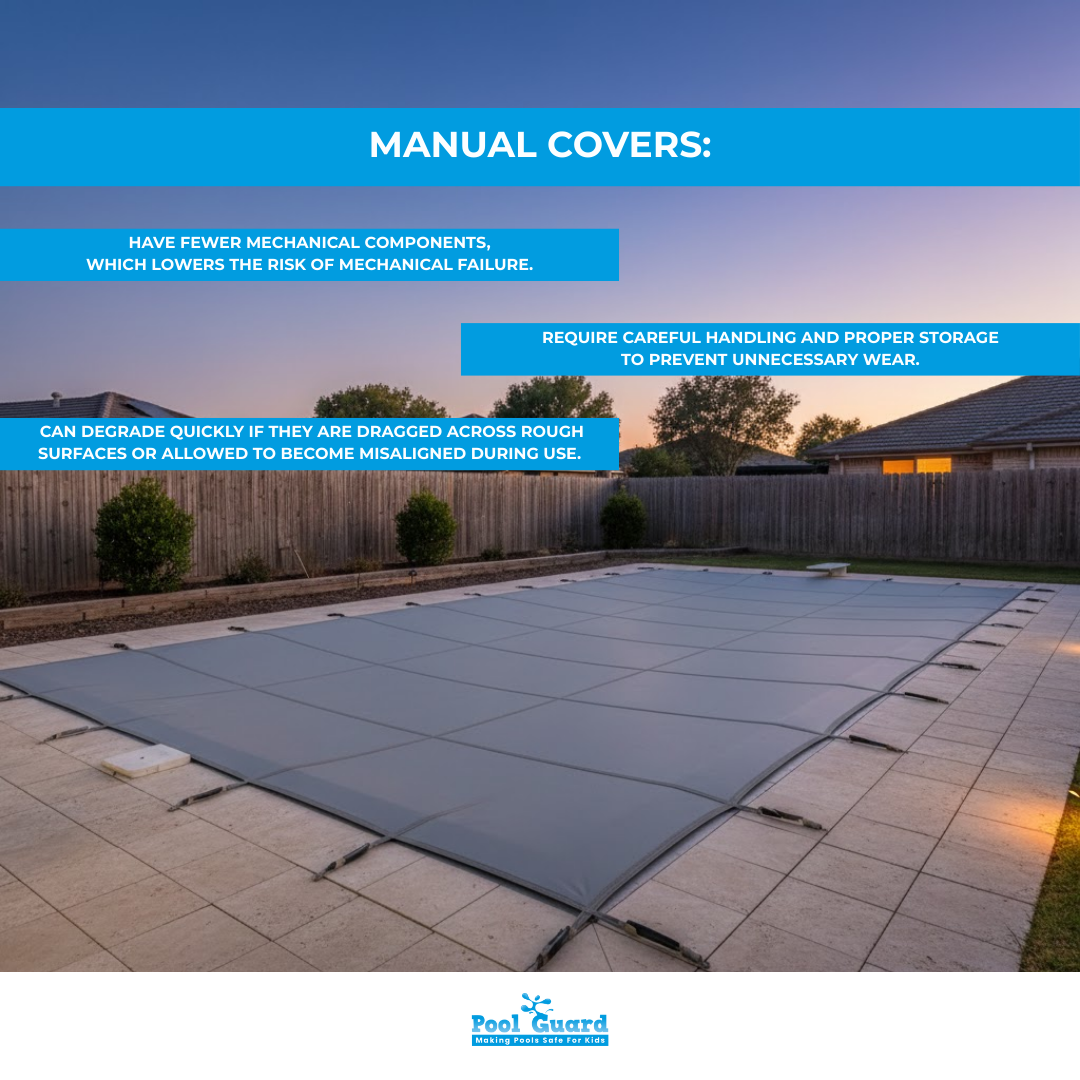
Manual pool covers tend to be mechanically simple, which reduces the number of potential failure points:
When handled correctly, manual covers can remain functional for many years, but misuse can shorten their lifespan considerably. Improper use or neglect can lead to issues similar to those seen in damaged or poorly maintained pool covers.
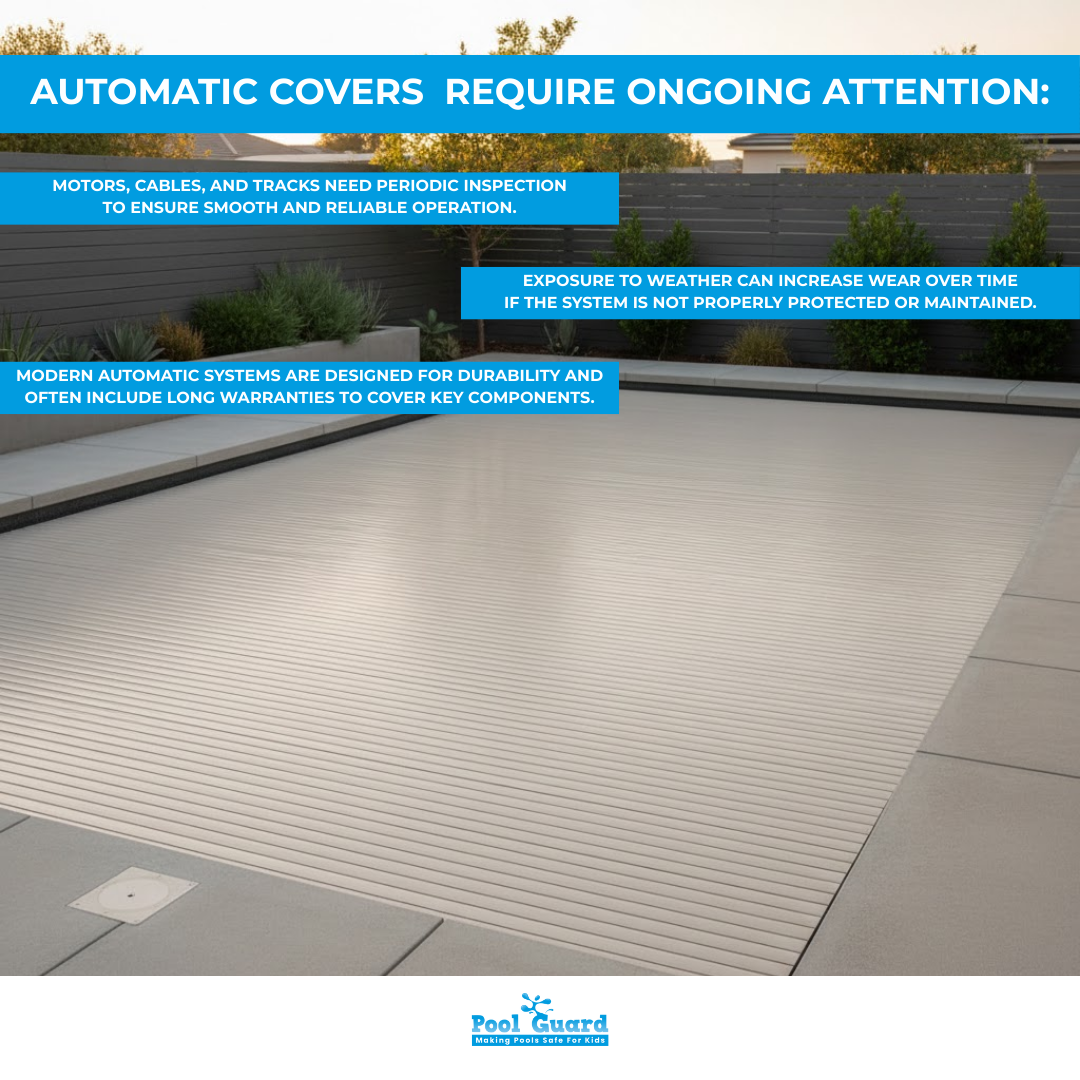
Automatic pool covers rely on mechanical and electrical components that require ongoing attention:
With regular servicing, automatic covers can provide reliable performance despite their added complexity.
Many pool owners underestimate the practical realities of day-to-day cover use:
These factors often play a larger role in long-term satisfaction than the cover’s mechanical design alone.
Choosing between a manual and an automatic pool cover depends largely on how the pool is used, who needs protection, and how much effort the owner is willing to invest in daily operation.
Automatic pool covers are often the better choice for families with young children because they reduce human error and improve consistency. Since the cover can be deployed in seconds, it’s more likely to be used every time the pool is not in use, providing an added layer of protection.
For pools that are used only during certain times of the year, a manual pool cover may be sufficient. When usage is limited, the added convenience of automation may not justify the higher upfront investment.
Homeowners who value ease of use and minimal effort tend to prefer automatic pool covers. Automation removes friction entirely, which is why it consistently outperforms manual systems in everyday use.
Manual pool covers offer a lower entry cost and can be a practical option for budget-focused buyers. However, they demand discipline, as the benefits are only realized when the cover is used consistently.
There is no universal solution—only the option that best aligns with real-world habits, priorities, and usage patterns.
Pool covers play an important role in reducing risk, but they should never be relied on as the sole safety measure. Even the best-designed cover works most effectively when combined with other protective systems.
Covers help reduce risk, but they do not replace the need for:
The most effective pool safety strategies rely on multiple layers of protection, rather than a single solution. Combining covers with barriers, alarms, and supervision creates a safer environment than any one measure alone.
The debate around automatic pool cover vs manual isn’t about which option is better on paper—it’s about which one actually gets used. A pool cover only delivers safety, energy savings, and cleanliness when it’s deployed consistently, and ease of use plays a major role in that.
Manual pool covers offer affordability and simplicity, while automatic pool covers provide consistency, convenience, and added peace of mind by removing manual effort. The right choice depends on how often the pool is used, who needs protection, and how much friction you’re willing to accept.
In the end, the smartest decision in the automatic pool cover vs manual comparison is the one that fits your habits—not just your budget. Before deciding, review pool safety options, compare barrier systems, and explore additional pool safety resources.

Find your local dealer by entering your zip code above.
Please fill out the form below with your information. Your local dealer will be notified about your inquiry.
Please fill out the form below with your information. Your local dealer will be notified about your inquiry.