A pool feels like the obvious answer to a hot day. Water cools the body, kids beg to jump in, and a heat advisory rarely stops anyone from grabbing a towel. But hot weather water safety is not just about staying cool. It’s about recognizing that heat changes the risk profile of every pool, lake, and backyard gathering, even when the water itself feels perfectly safe.
Dehydration, fatigue, crowded pools, and distracted supervision all rise together with the temperature. This guide covers what actually changes when the mercury climbs, how to check conditions before anyone gets in, and the specific steps that keep swimmers, especially children, safe from both heat illness and drowning.
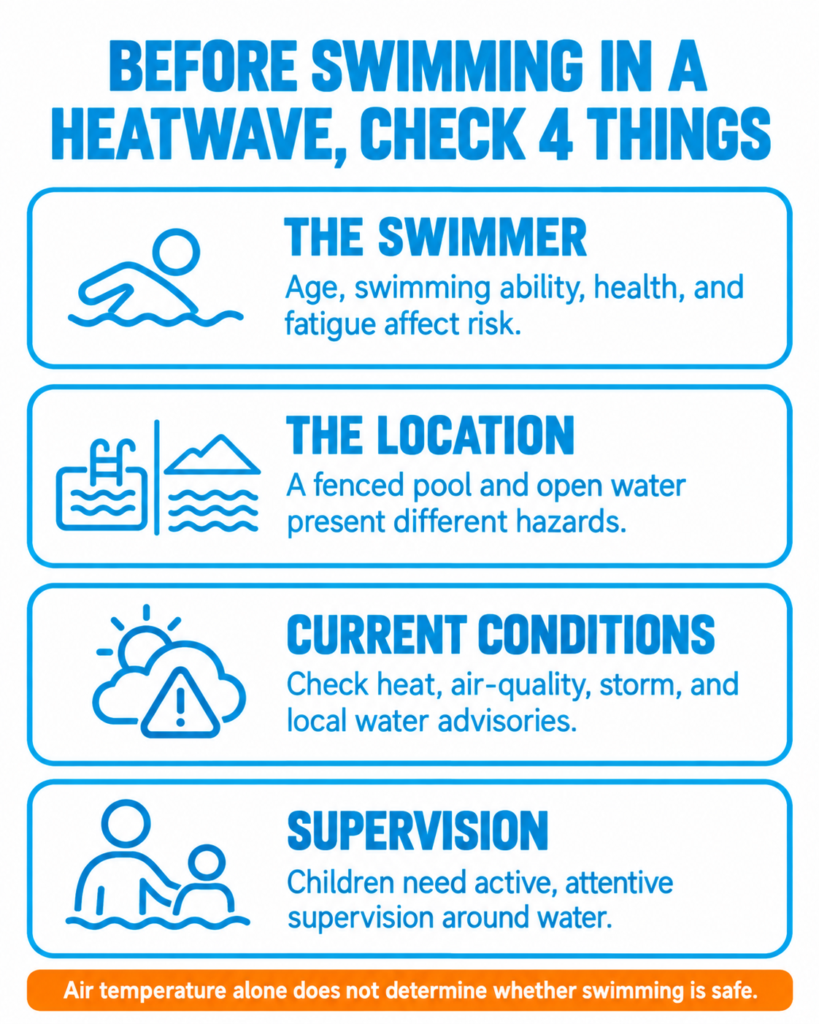
Whether it’s safe to swim during a heatwave depends on more than the air temperature. Four factors matter more than the thermometer reading:
Air temperature alone doesn’t answer the question. A 100-degree day with a supervised, fenced pool and hydrated swimmers is safer than an 85-degree day at an unsupervised lake with no lifeguard in sight.
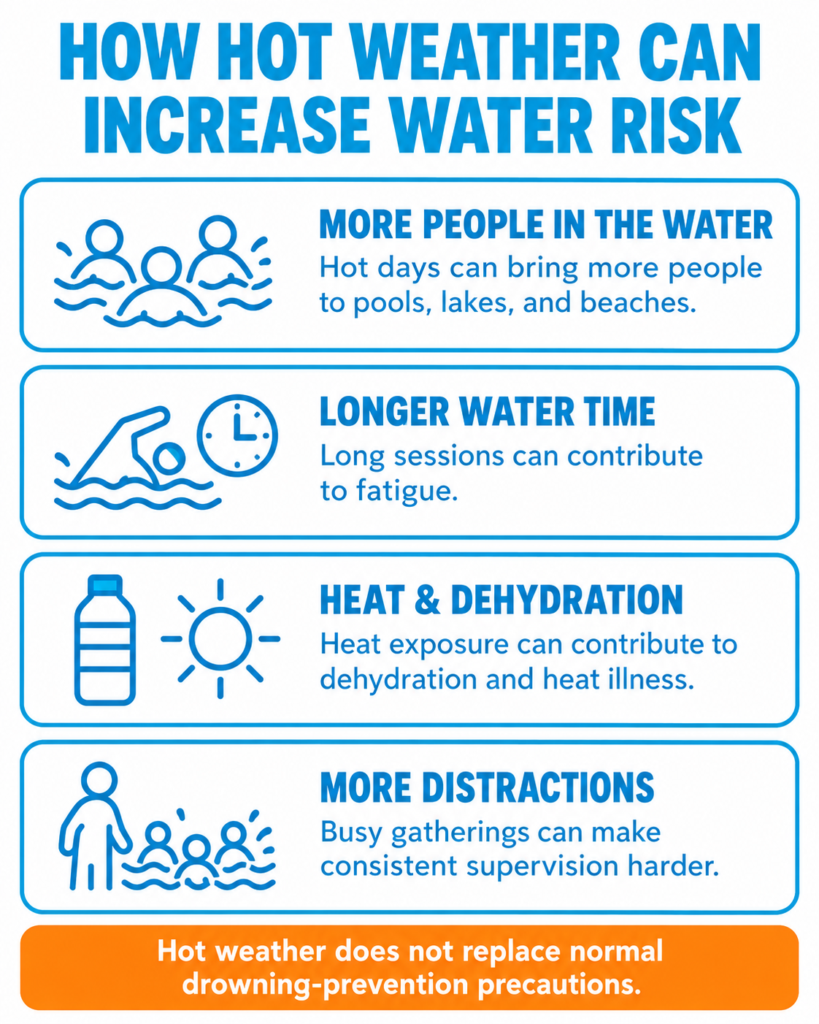
Heat doesn’t just make water more appealing. It changes behavior around water in ways that raise danger.
More people head into pools, lakes, and rivers to cool off, which means more swimmers per lifeguard, per fence, and per set of watching eyes. Longer swim sessions in the heat also contribute to dehydration and fatigue, both of which weaken swimming ability well before a swimmer notices anything is wrong. Crowded gatherings pull attention in a dozen directions, and the cooling sensation of water can mask early heat illness symptoms that would otherwise prompt someone to get out and rest.
The Centers for Disease Control and Prevention (CDC) notes that drowning remains the leading cause of unintentional injury death for children ages one to four. That statistic doesn’t change because the weather is hot. If anything, hot weather brings more swimmers, more distractions, and more opportunities for something to go wrong.
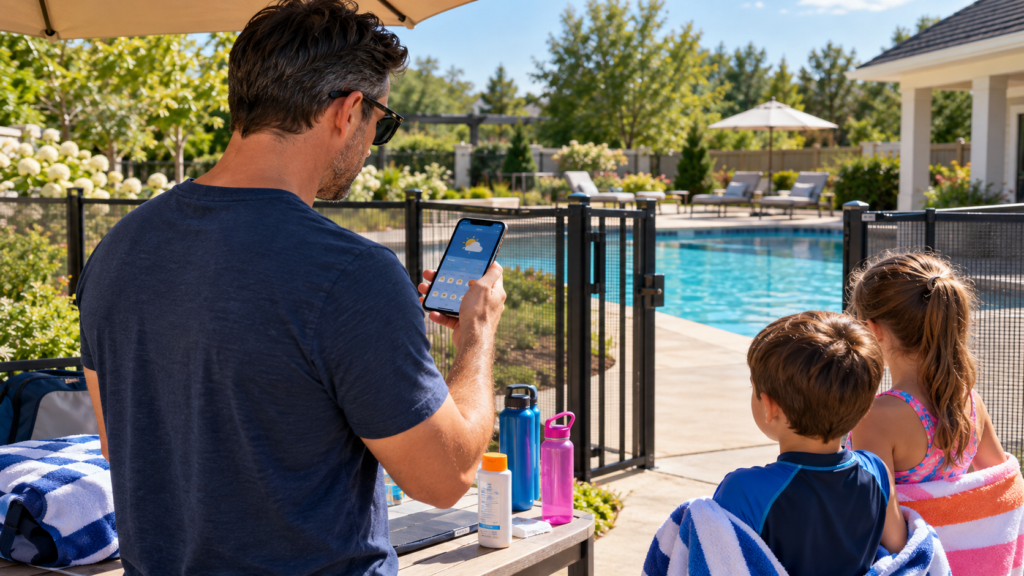
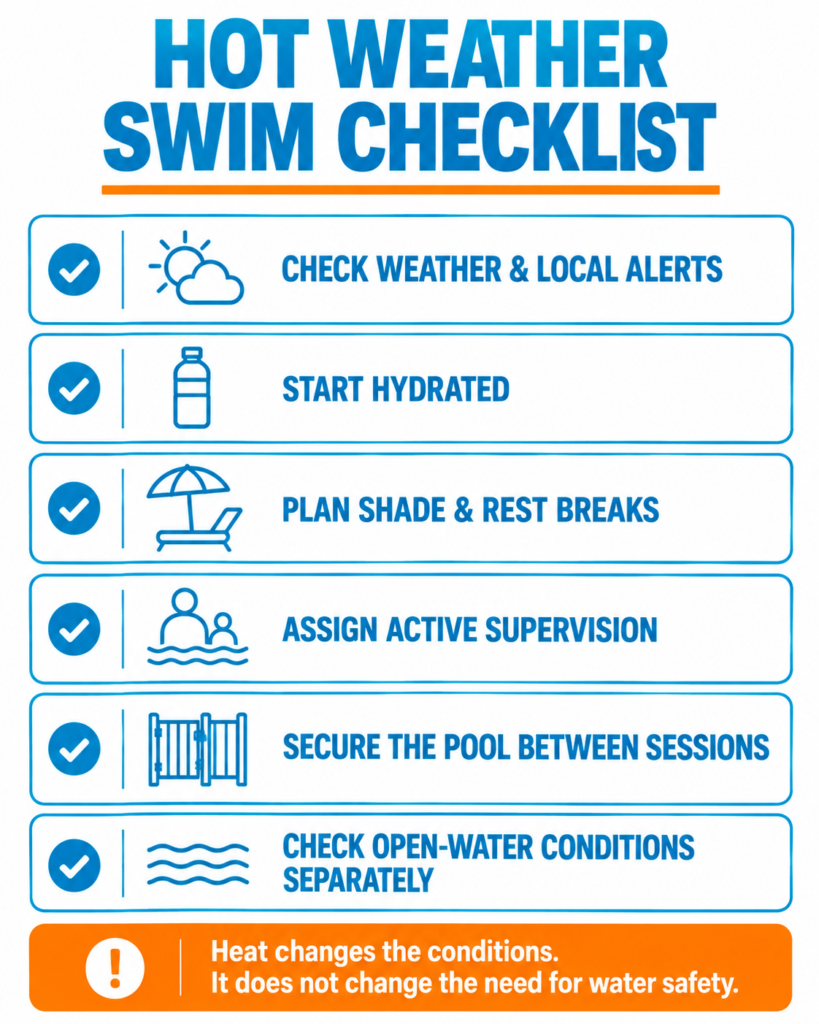
Before swimming, check what’s actually happening that day, not just the forecast high. Local heat advisories, air-quality alerts, storm watches, and beach or water-quality warnings all affect whether a swim is a good idea. A beach closed for bacteria levels or a lake under a storm watch is not safer just because it’s hot outside.
Where possible, choose cooler parts of the day, like early morning or evening, for outdoor swimming. Peak afternoon heat combines the highest temperatures with the highest UV exposure and the highest odds of dehydration.
Being in water doesn’t stop the body from losing fluid through sweat and heat exposure. Swimmers can become dehydrated and overheated without realizing it, because the water keeps the skin cool even as core temperature climbs.
To reduce that risk:
The CDC publishes specific guidance on recognizing and responding to heat-related illness, including the difference between heat exhaustion and the more serious heat stroke. That guidance applies in the water exactly as it does on dry land.
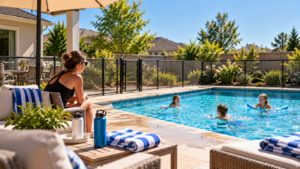
Hot weather draws more kids to the pool for longer stretches, which raises the stakes on supervision.
The American Academy of Pediatrics (AAP) recommends swim lessons as one layer of drowning prevention, which can begin for many children after their first birthday. However, swim lessons and swim skills alone cannot prevent drowning. A child who can swim can still drown from fatigue, a cramp, or a moment of panic in deep water.
Effective supervision during hot weather means:
Drowning is quiet. A child in trouble in the water rarely splashes or calls for help the way it’s portrayed on screen. By the time it looks like an emergency, it often already is one.
Hot weather often means kids are in and out of the pool all day, which raises the chance that a gate gets propped open “just for a minute”. Even during short breaks, the pool area should be secured again rather than left open for convenience.
A self-closing or self-latching pool gate should never be propped open between swim sessions. When swimming stops, remove floats and pool toys from the water as well. Toys left in the pool can tempt a child to return to the water without an adult present.
Before anyone gets back in, check decks, ladders, handrails, and metal pool surfaces for heat buildup. On very hot days, these surfaces can become uncomfortable or hot enough to cause burns to bare feet and hands.
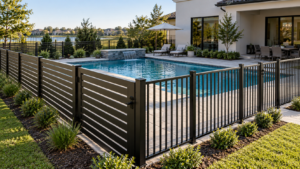
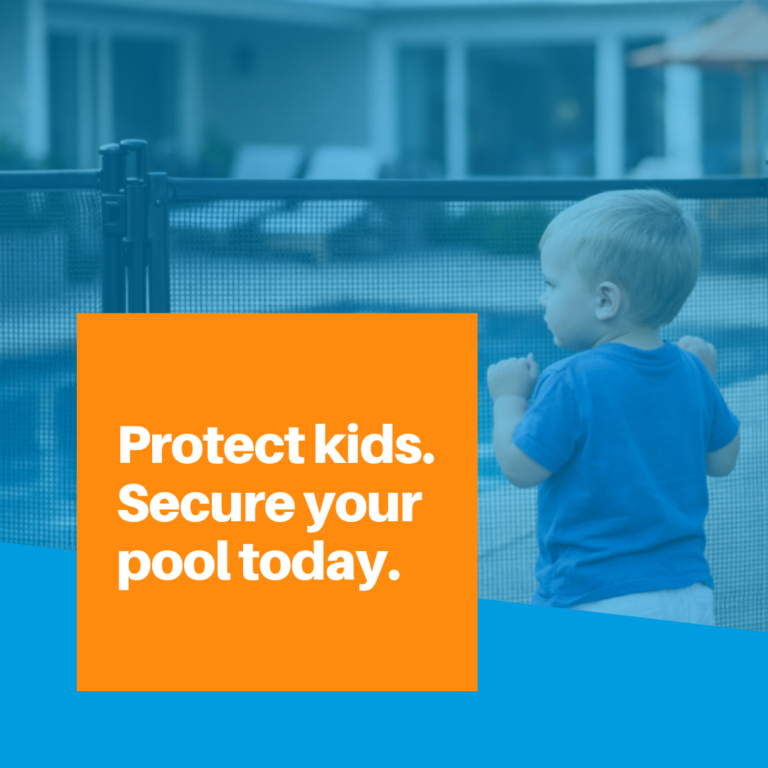
A pool safety fence with a self-latching gate adds a physical barrier between children and the water when the pool is not in use. It should support active supervision, not replace it.
A heatwave affects air temperature, not necessarily water temperature. Lakes, rivers, and even some ocean areas can stay cold well into a heatwave, and cold water changes how a swimmer’s body responds almost immediately, including gasping, rapid breathing, and reduced muscle control.
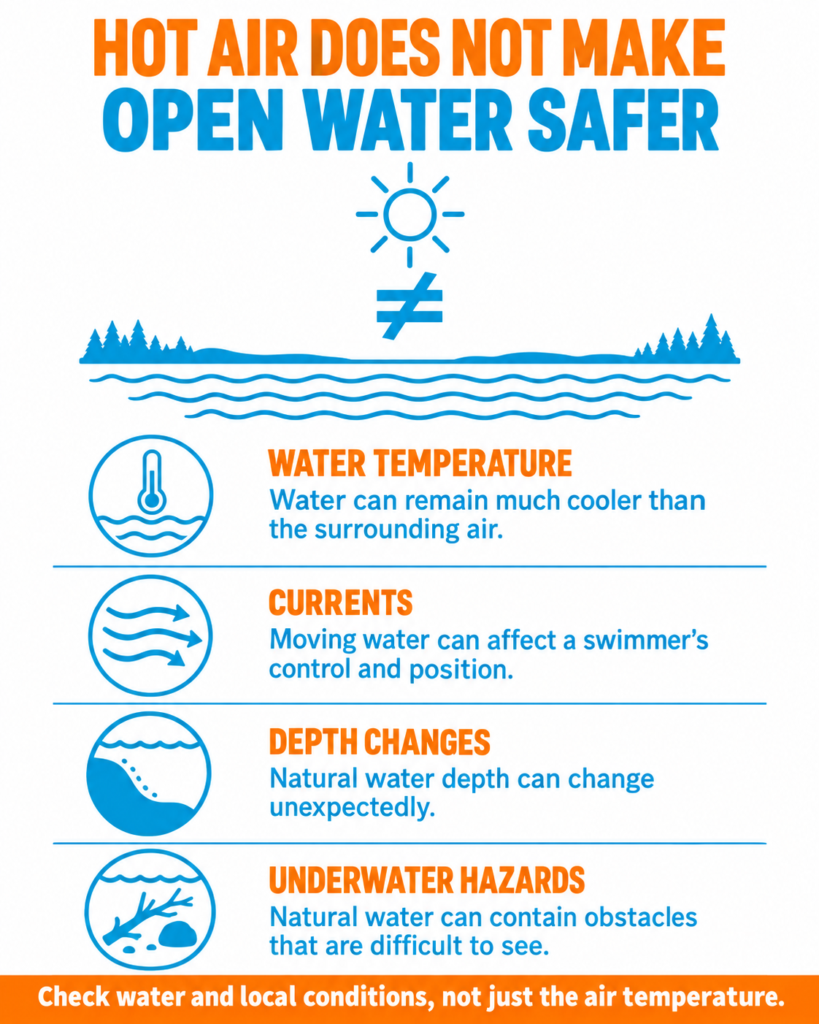
Open water also carries risks a backyard pool doesn’t: currents, sudden drop-offs, submerged debris, and depth that changes without warning. Hot weather doesn’t remove any of that. It just adds more swimmers willing to overlook it.
Swimming during a heatwave can be safe, but hot weather water safety depends on active choices, not just good intentions. Check conditions before getting in. Watch for early heat illness signs instead of waiting for an emergency. Keep supervision constant and layered, especially around children. And remember that hot air says nothing about water temperature or hidden hazards in a lake or river.
Please fill out the form below with your information. Your local dealer will be notified about your inquiry.
Please fill out the form below with your information. Your local dealer will be notified about your inquiry.