Summer afternoons at the pool tend to follow the same script. Someone unwraps a sandwich, a kid begs to jump back in, and a grown-up checks the clock. It’s a familiar warning that can turn a quick snack into an unexpected break from swimming. So, can you swim after eating, or is that wait really there for a reason?
The 30-minute rule has been handed down for generations, and most of us never question it. This guide covers where it came from and what the Red Cross and the International Life Saving Federation say. You’ll also learn how to tell a real safety concern from simple discomfort. Let’s start with the rule itself.
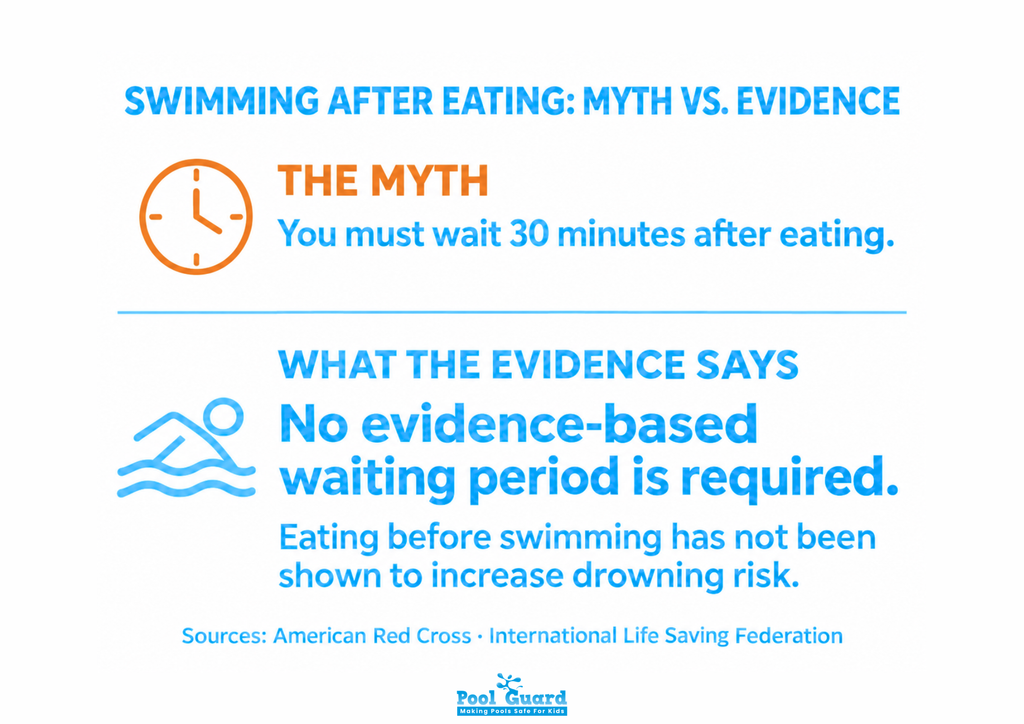
Yes, you can swim immediately after eating. According to the American Red Cross, swimming within an hour of a meal doesn’t increase the risk of drowning among adults or children, whether swimming recreationally or competitively. There is no evidence-based requirement to wait before getting back in the water.
The International Life Saving Federation (ILSF) supports this conclusion. Its medical position statement, based on a literature review led by pediatric emergency physician Dr. Linda Quan, found no evidence that eating before swimming increases drowning risk. It also found that no major medical or water-safety organization recommends a waiting period.
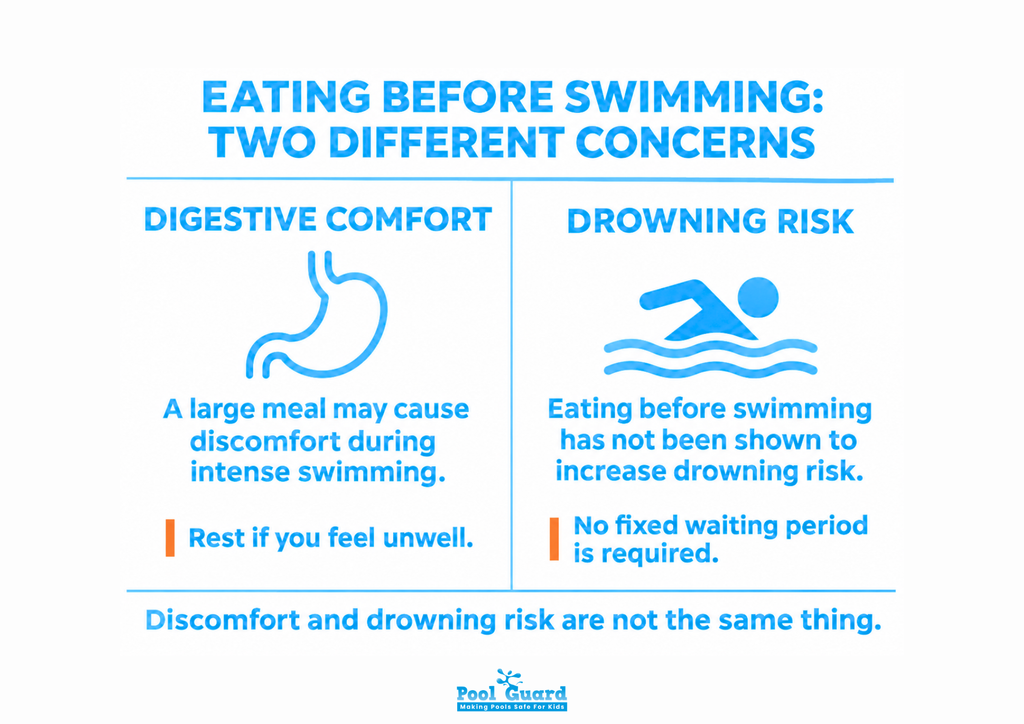
However, swimming after a large meal may feel uncomfortable, especially during intense activity. Comfort and drowning risk are different concerns, so how you feel matters more than watching the clock.
The rule is old. Robert Baden-Powell’s 1908 handbook, Scouting for Boys, warned against bathing in deep water soon after a meal, claiming it was likely to cause a cramp that could lead to drowning. Early scouting manuals helped spread the idea, and parents repeated it for generations. Nobody has pinned down the exact origin of the rule.
No evidence shows that digestion reduces blood flow to your muscles enough to make swimming dangerous. The old belief was that eating redirected blood from your arms and legs to your digestive system, causing cramps that could lead to drowning. However, Mayo Clinic explains that there is no scientific basis for this warning. Swimming after eating may cause some discomfort, but it isn’t considered dangerous for this reason.
The American Red Cross also reports that studies found no effect on swimming performance and only minimal side effects after meals. Its guidance confirms that swimming within an hour of eating doesn’t increase drowning risk.
Yes, stomach cramps or discomfort are possible when swimming after eating, particularly during intense exercise after a large meal. However, the International Life Saving Federation reviewed earlier swimming studies and found that participants reported no abdominal cramps or pain, regardless of whether they had eaten beforehand.
The review also considered research linking meals before exercise to digestive symptoms, including stomach pain and nausea. However, no causal connection between these symptoms and drowning has been established. If you feel uncomfortable after eating, resting before swimming is reasonable, but there is no evidence-based requirement to wait a specific amount of time.
As mentioned above, there’s no fixed rule for how long to wait after eating to swim. Instead, pay attention to how you feel. If you’re comfortable, you can swim. If you feel overly full or nauseous, rest until you feel better. This is about comfort, not drowning risk.
Also, consider your planned activity. Intense swimming may feel uncomfortable after a large meal, while casual swimming is less demanding. Ultimately, there’s no need to follow a strict 30-minute or one-hour rule. Let your comfort and activity level guide your decision.
If nausea, a stitch in your side, or unusual tiredness hits, treat it as a sign to stop:
These steps are sensible responses to feeling unwell. They don’t mean eating caused a dangerous condition.
The eating myth can distract from precautions that do save lives. According to the CDC, drowning is the leading cause of death among children ages 1-4 in the United States. The measures that matter most are well established:
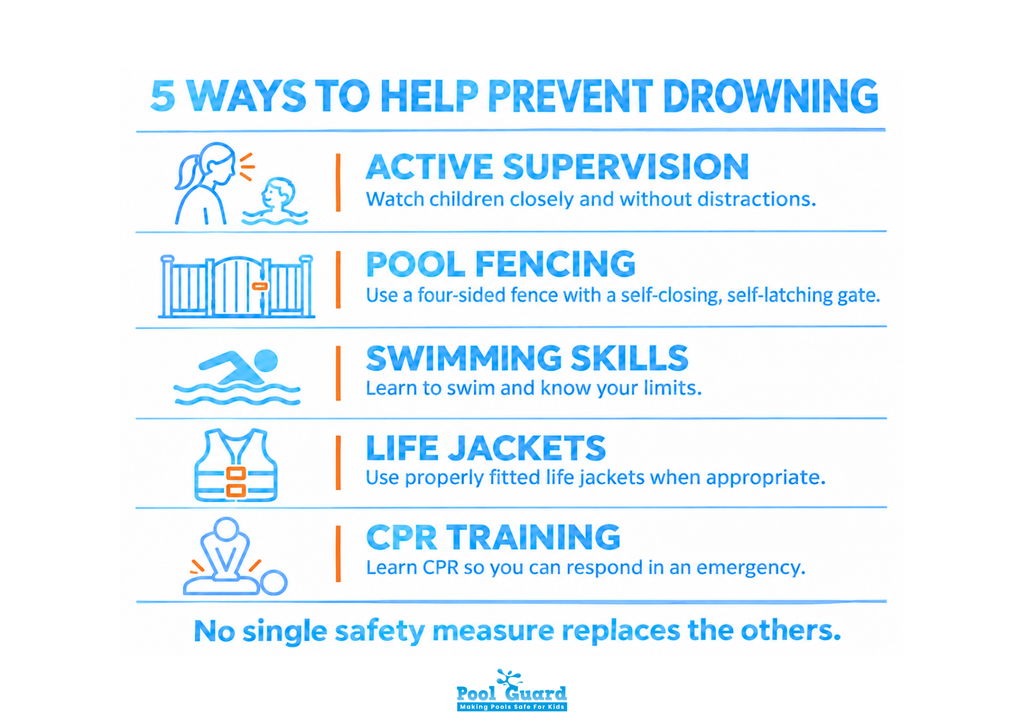
Can you swim after eating? Yes, there’s no need to follow a strict waiting period. Eating before swimming isn’t considered a drowning risk, although a large meal may cause some discomfort. The long-standing warning is more of a tradition than a rule supported by science.
What matters most is creating a safer swimming environment through active supervision, swimming skills, and multiple layers of protection. To help prevent unsupervised access to the water, Pool Guard USA offers removable pool safety fences that add an extra layer of protection around your home pool.

Find your local dealer by entering your zip code above.
Please fill out the form below with your information. Your local dealer will be notified about your inquiry.