A child finishes swimming lessons, and the family feels more confident about letting them enjoy the pool. But knowing how to swim doesn’t mean someone is prepared for every situation in the water. Water competency involves more than swimming ability, as unexpected hazards, changing conditions, and poor decisions can still put even experienced swimmers at risk.
So, what is water competency, and how does it go beyond swimming ability? This guide explains its three key components, the Red Cross five-skill sequence, and why those skills may not be enough in open water.
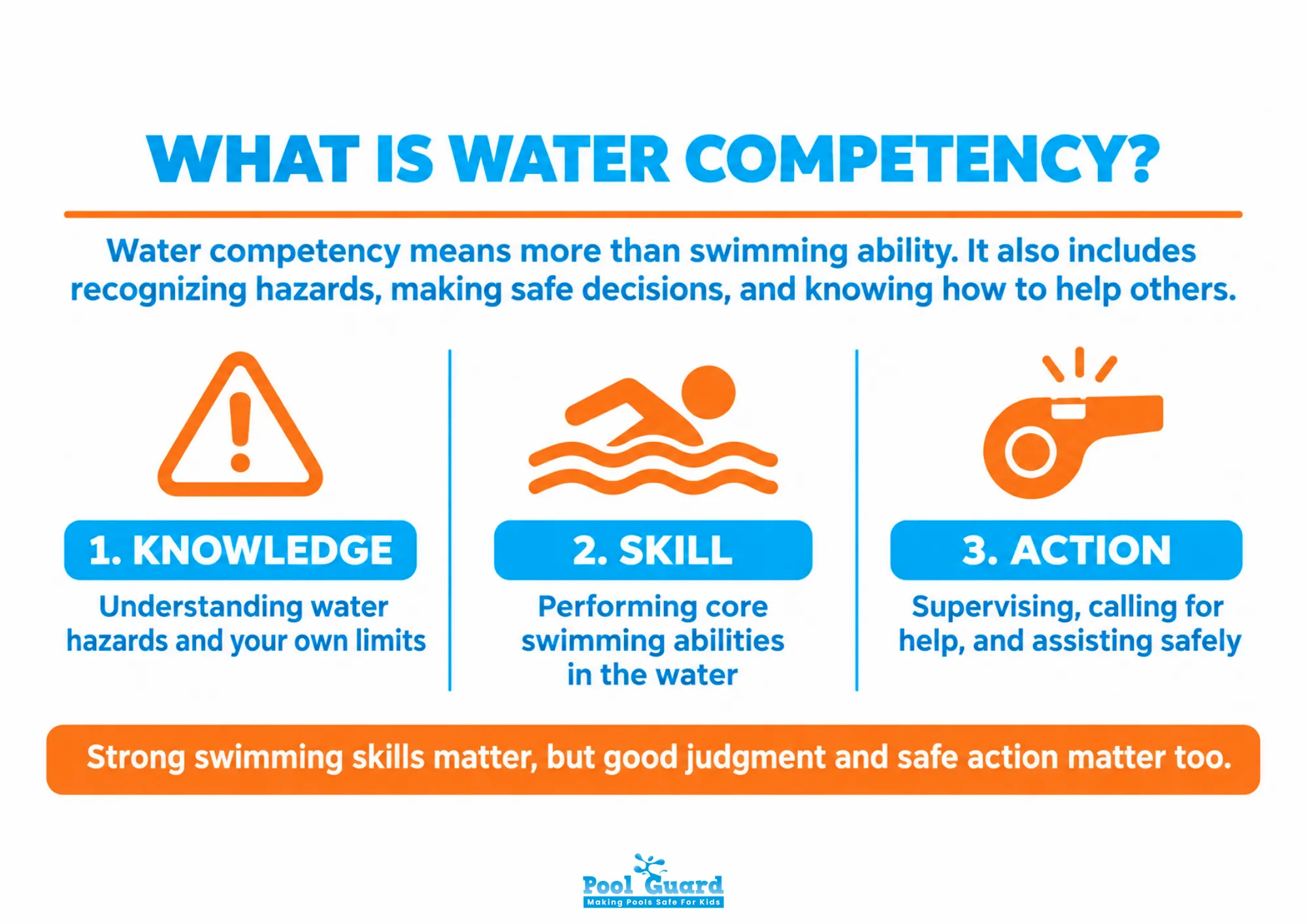
Being water competent means more than knowing how to swim. It also involves recognizing water hazards, making safe decisions, and knowing how to respond when someone is in trouble.
Water Safety USA, a consortium that includes the American Academy of Pediatrics, the CDC, the American Red Cross, the U.S. Coast Guard, and the YMCA of the USA, describes water competency as the ability to anticipate, avoid, and survive common drowning situations and to assist others in need. Three ideas sit inside that definition:
Even experienced swimmers can face drowning risks. Unfamiliar conditions, medical emergencies, alcohol, fatigue, and cold water can challenge even strong swimming skills. That’s why water competency involves more than technique. It also requires good judgment and awareness of potential dangers.
The three components of water competency work together to improve safety in and around water. They aren’t separate stages to complete, as everyone, from beginners to experienced swimmers, needs to develop and practice all three.
Water smarts means understanding the water before you enter it. It includes:
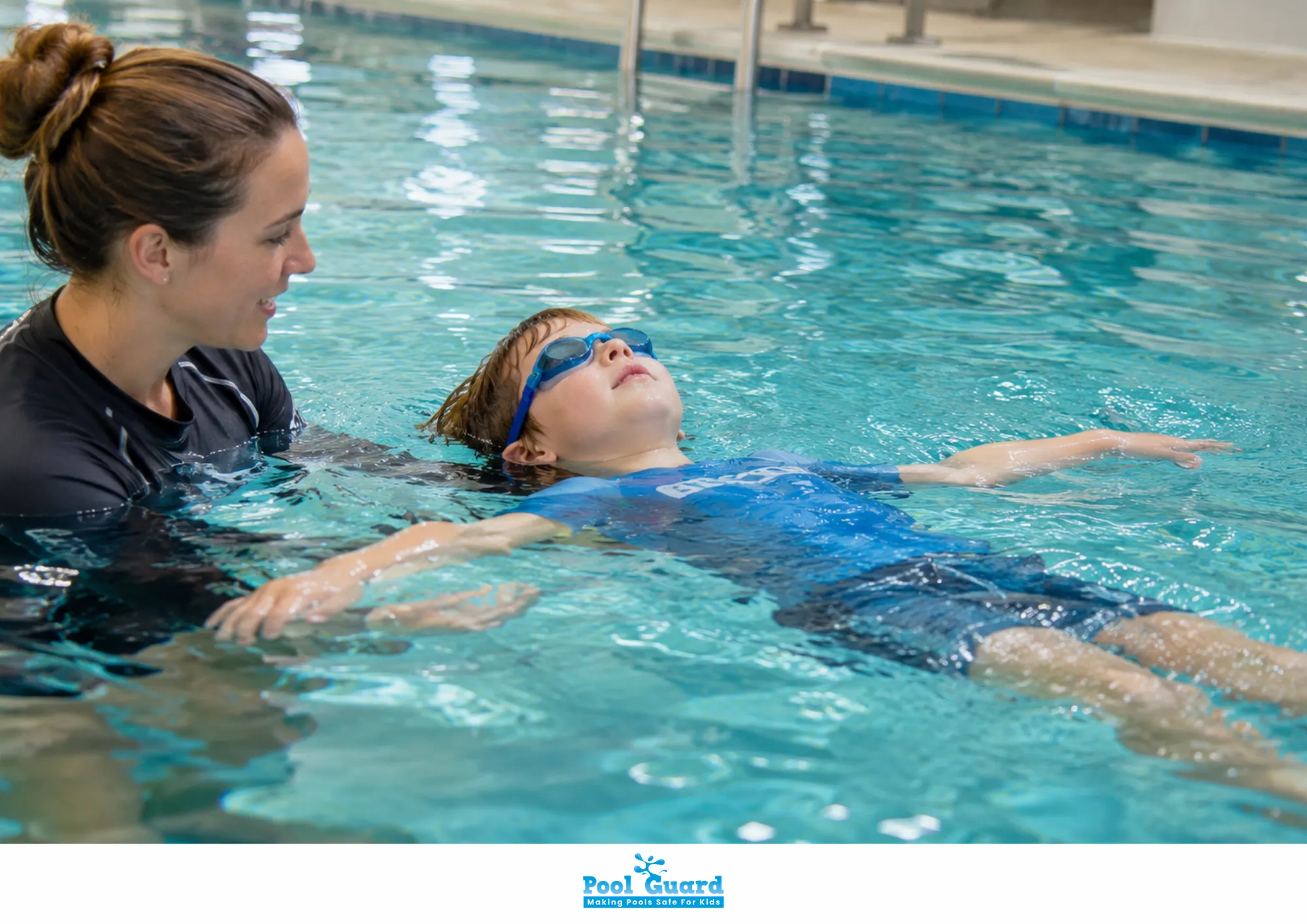
Swimming skills are the physical abilities that help you stay afloat and reach safety: entering the water, returning to the surface, floating or treading, turning, swimming toward safety, and exiting. Water Safety USA also emphasizes breath control and explains that clothing, physical activity, and water conditions can affect a person’s ability to perform these swimming skills.
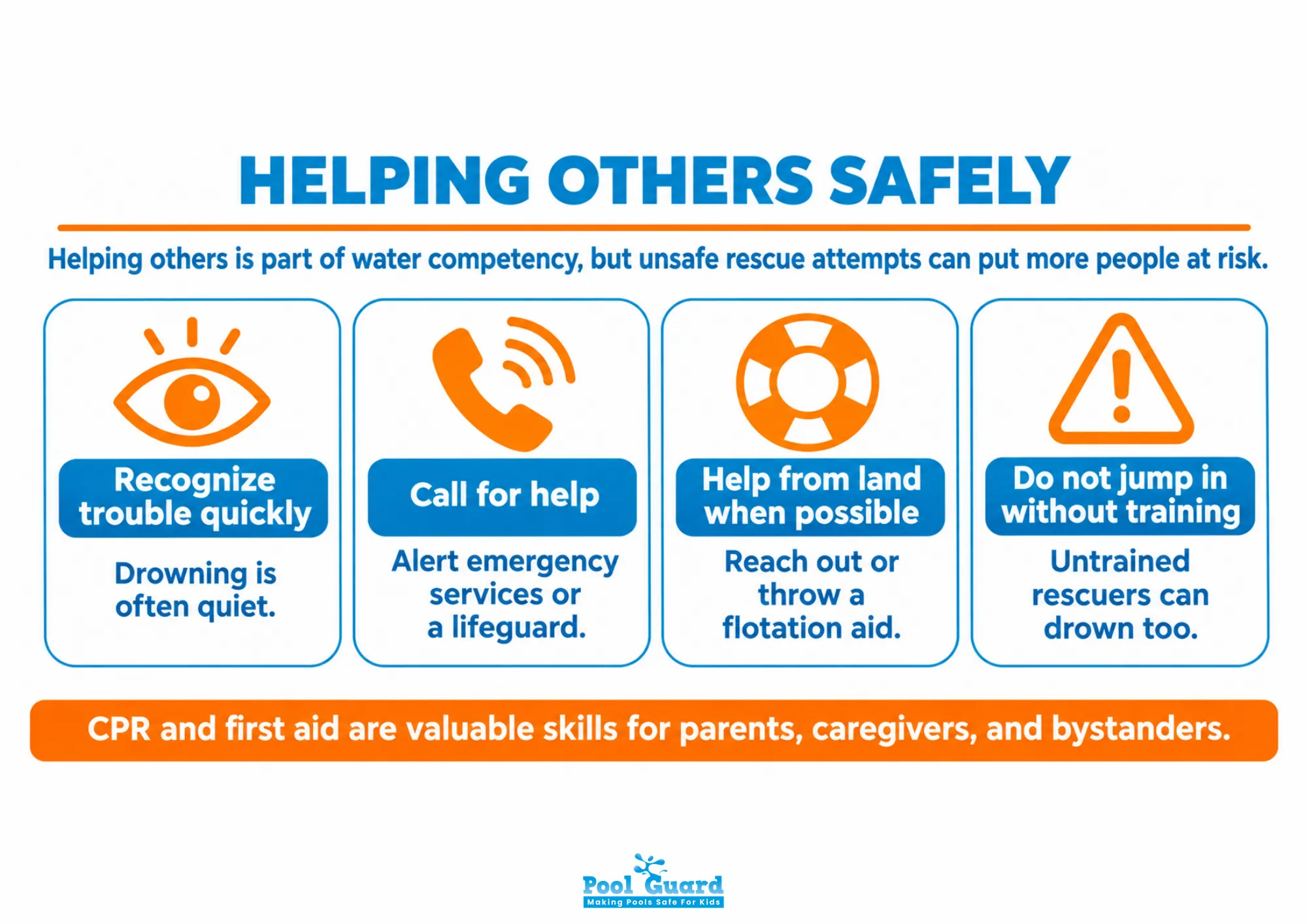
Understanding what is water competency also means knowing how to help others safely. Prevention starts with close, undistracted supervision and recognizing signs of trouble. Drowning often happens quietly, so if you notice someone struggling, call emergency services and alert a lifeguard if available.
Whenever possible, help from a safe position on land by reaching out or throwing a flotation aid rather than entering the water. CPR and first aid skills are also important, especially at backyard pools and open-water areas without lifeguards.
Untrained bystanders shouldn’t jump in to attempt a rescue. Rescuers can drown too. Knowing how to help someone who is drowning includes recognizing when to call for help and using safe rescue methods from outside the water. Entering the water to save someone requires specific training.
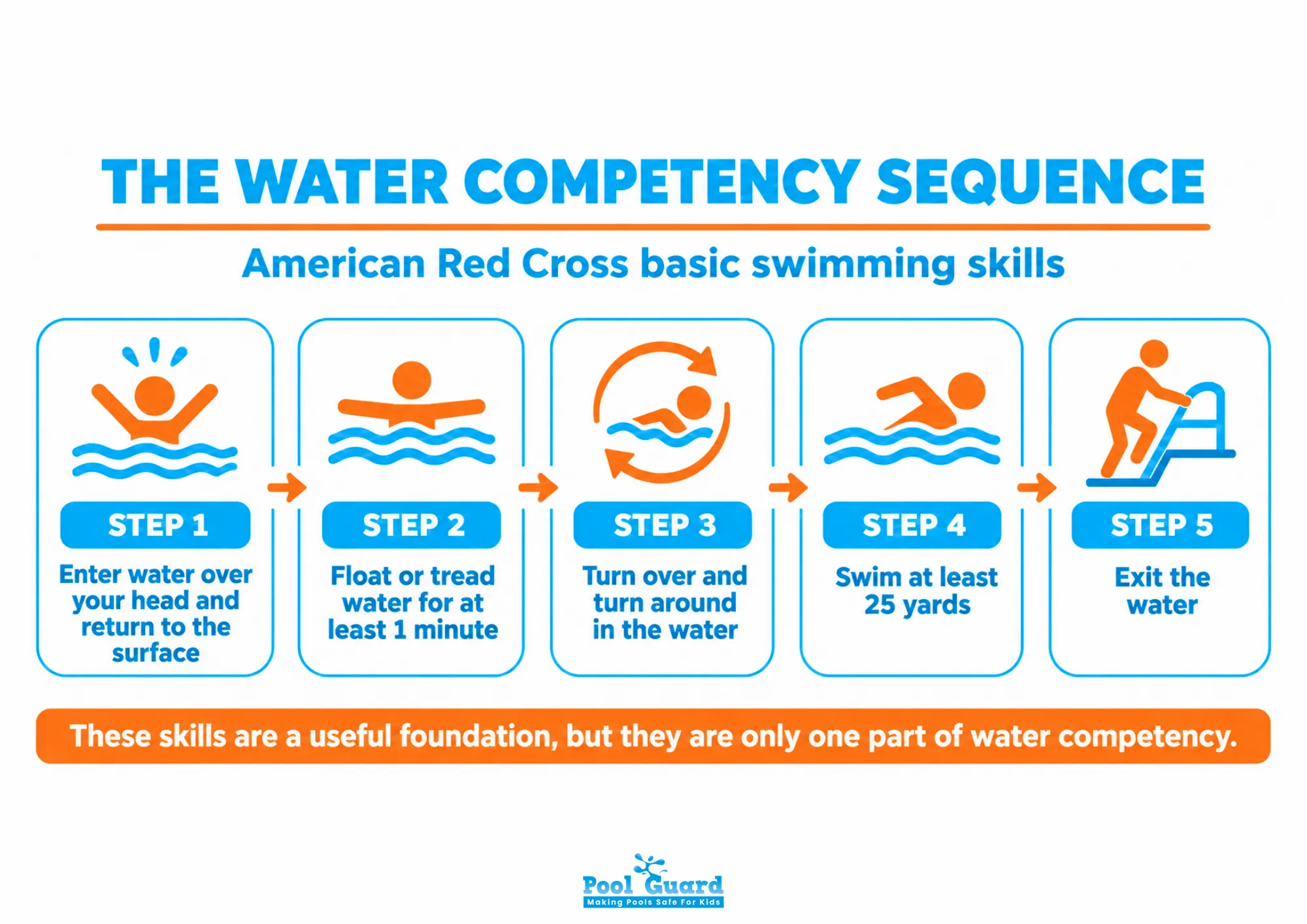
To recognize what is the water competency sequence, it helps to look at the five basic swimming skills identified by the American Red Cross. These skills focus on a person’s ability to stay afloat, move through the water, and reach safety.
According to the American Red Cross, the sequence involves entering water over your head and returning to the surface, floating or treading water for at least one minute, turning over and around, swimming at least 25 yards, and exiting the water. Some Red Cross programs have additional requirements, such as exiting without a ladder or steps.
However, completing these five skills is only one part of water competency. Recognizing hazards, making safe decisions, and knowing how to help others are equally important.
Completing the sequence shows that someone can perform basic skills under the circumstances in which they were assessed. It doesn’t guarantee safety everywhere. Currents, cold water, unfamiliar surroundings, clothing, fatigue, and health conditions can all reduce a person’s proficiency.
Water Safety USA emphasizes that someone who barely meets the Red Cross’s basic swimming criteria is still considered a novice. Activities such as snorkeling, surfing, wakeboarding, and in-water rescues actually require additional skills and specialized training.
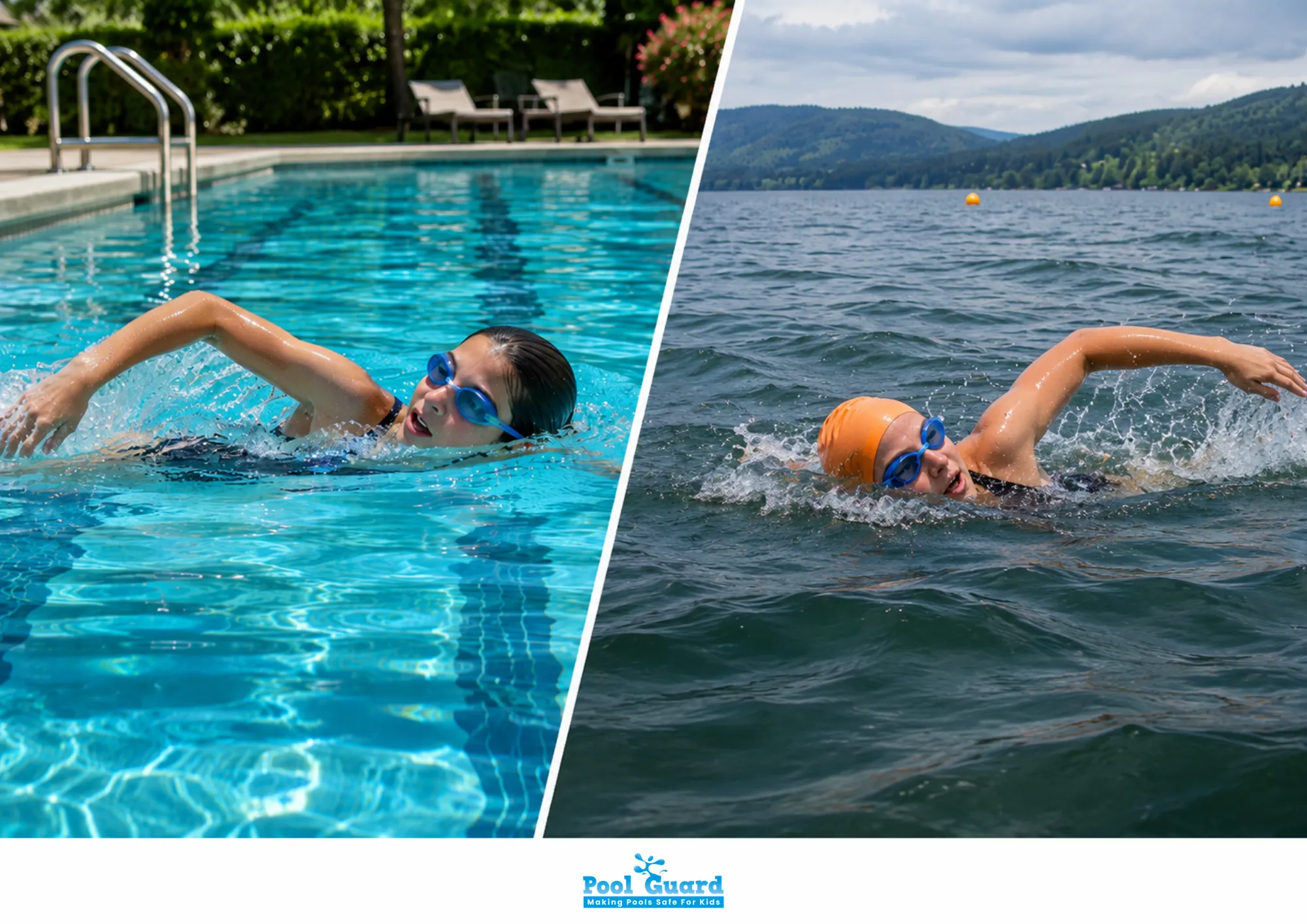
A pool offers clear water, a visible bottom, walls, and lifeguards. Lakes, rivers, and oceans offer none of that guarantee. These differences between pool and open water safety matter because waves, water flow, cold temperatures, poor visibility, and uneven bottoms change how hard each skill is.
Someone who swims 25 yards comfortably in a heated pool may struggle to do the same in a river current. Skills also have to hold up in the clothes people actually wear when accidents happen, and Water Safety USA lists clothed performance as part of building competency.
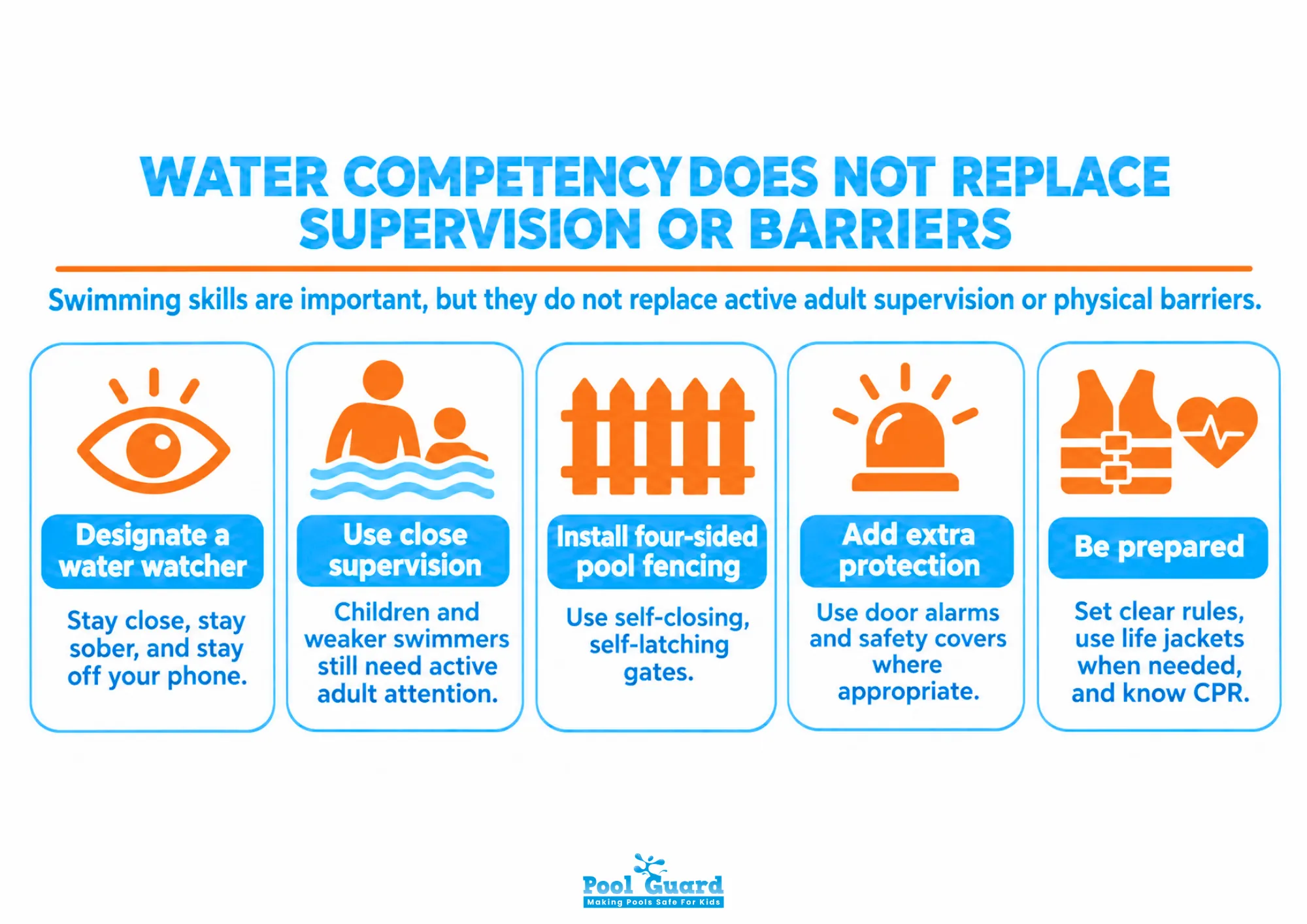
Swimming skills don’t replace close supervision, especially for children and weaker swimmers. Water Safety USA recommends that children who lack basic swimming skills have a designated water watcher who stays within arm’s reach, remains sober, and avoids distractions such as phones. Even after completing beginner lessons, children still need active adult supervision.
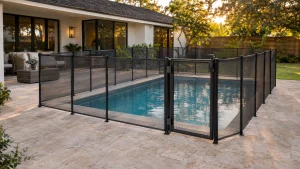
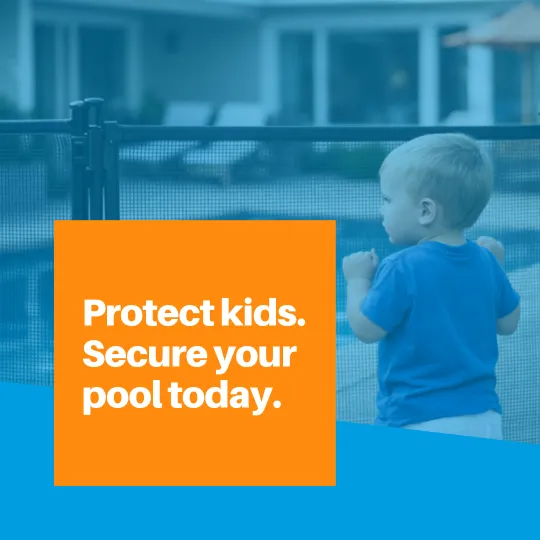
At home, multiple layers of protection help reduce drowning risks. These include four-sided pool fencing with self-closing, self-latching gates, door alarms, and pool safety covers where appropriate. Families should also establish clear water safety rules, designate a water watcher, use life jackets for weak or non-swimmers when needed, and ensure adults know CPR.
Water competency develops through instruction and repeated practice, not by passing one stage once. A practical path looks like this:
No. Swimming is one of three components. Water competency also includes knowing hazards, using protective gear like life jackets, supervising others, and responding to emergencies.
No. It is a set of basic skill benchmarks used to assess and teach, not a license or guarantee. Programs may assess the skills differently, so a pass in one setting doesn’t carry over automatically to another.
Yes. Adults drown too, and many adults lack basic skills such as floating or treading for a minute. Adults also act as water watchers and first responders, so their competency protects others.
Getting a clearer picture of what is water competency means recognizing that staying safe in the water requires more than swimming capability alone. It involves acknowledging potential hazards, developing essential swimming skills, and knowing how to help others in an emergency. The Red Cross five-skill sequence provides a useful foundation, but completing it doesn’t guarantee safety in every swimming environment.
At the end of the day, no skill replaces a watchful adult and a few layers of protection around the pool. Whether you’re a parent, a coach, or a curious swimmer, keep learning and keep practicing. With the right precautions, everyone can enjoy the water more safely. For added protection at home, Pool Guard USA’s safety fences help prevent unsupervised pool access.
Find your local dealer by entering your zip code above.
Recent Articles
Please fill out the form below with your information. Your local dealer will be notified about your inquiry.