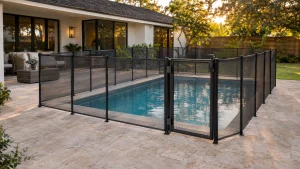
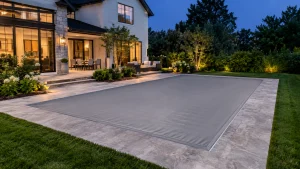
Planning a plunge pool involves more than choosing its size, design, and location. Local building codes may require safety barriers, even for smaller pools. These rules can also affect where and how your pool is installed. Understanding these requirements early can help you avoid unexpected costs, permit issues, and installation delays.
So, do you need a fence around a plunge pool? This guide explains how local regulations affect fencing requirements, whether existing yard fences or safety covers may qualify, and what to check with your building department before installation.
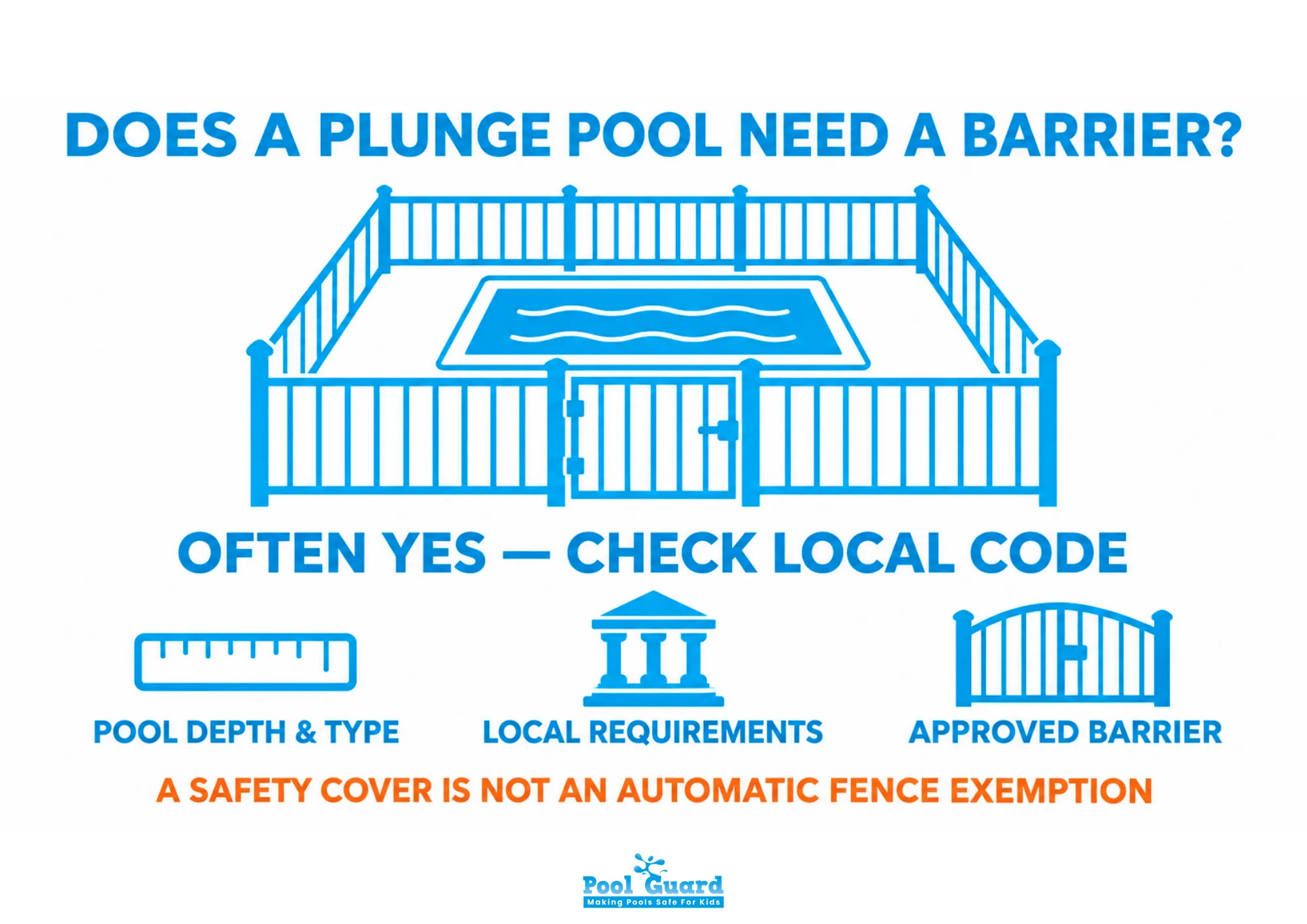
In many cases, yes. Plunge pools are generally subject to the same safety barrier rules as other residential swimming pools when they meet local size or depth requirements. Some jurisdictions allow approved safety covers instead of certain fencing requirements, but this depends on the applicable building code.
Before installing a plunge pool, check with your local building department. Regulations may specify minimum barrier heights, self-closing and self-latching gates, and approved safety features. A safety cover doesn’t automatically eliminate the need for a fence.
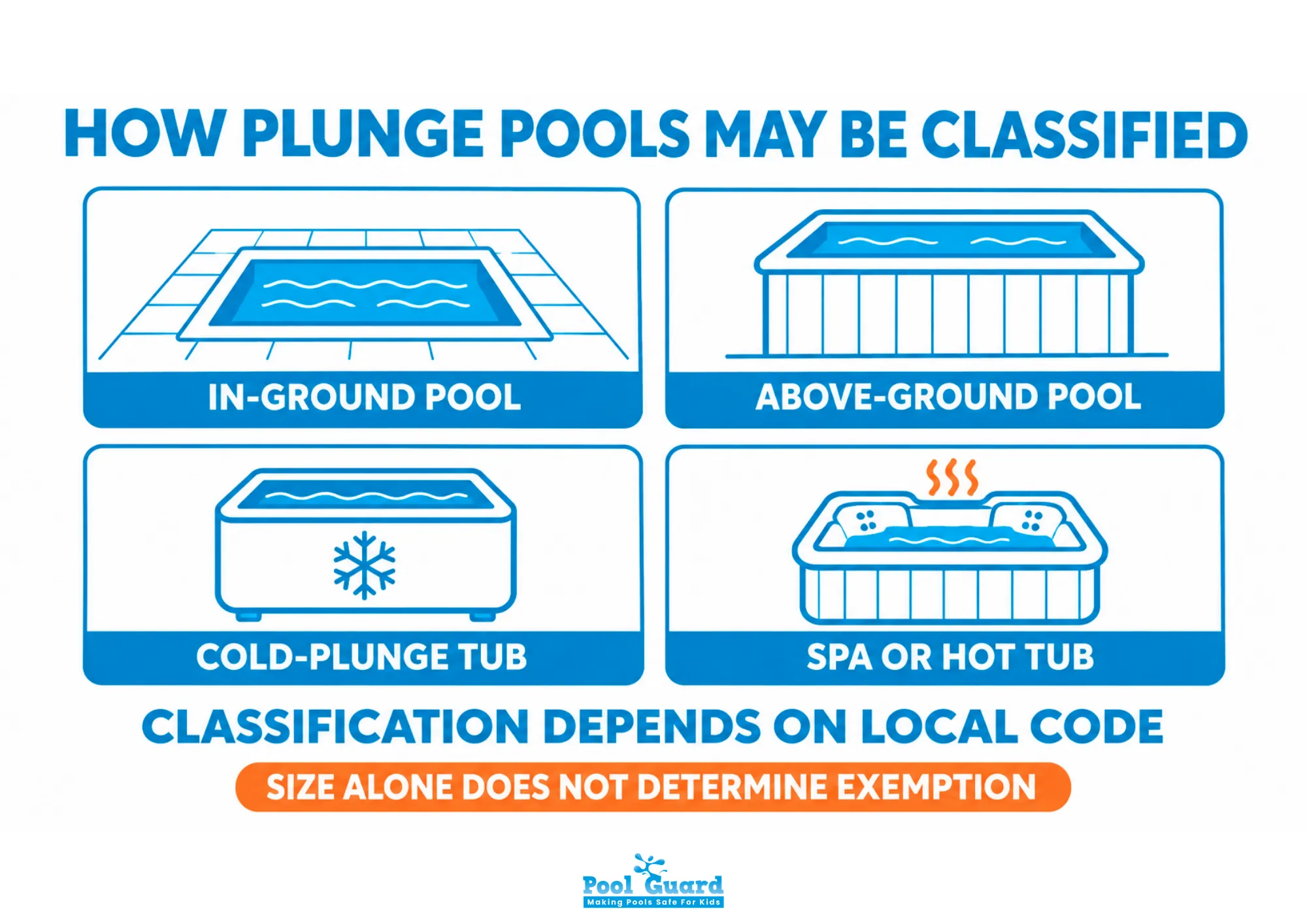
“Plunge pool” is a product description rather than a specific legal category. Depending on its design and installation, local building officials may classify it as a permanent in-ground pool, an above-ground pool, a cold-plunge tub or ice bath, a hot tub or spa, or a swim spa.
Each category can carry different rules. Local definitions often hinge on water depth, whether the unit is permanent or portable, and how people use it. A small, shallow tub may escape the pool rules, while a deep, built-in plunge pool rarely does.
Federal guidance shows why classification matters. The CPSC’s barrier guide defines “pool” to include spas and hot tubs. It says the guidance applies to above-ground pools and may include larger portable pools. A plunge pool can therefore land inside the pool rules even if you never call it a swimming pool.
Treat this as your pre-installation checklist. Ask your local building department about each item:
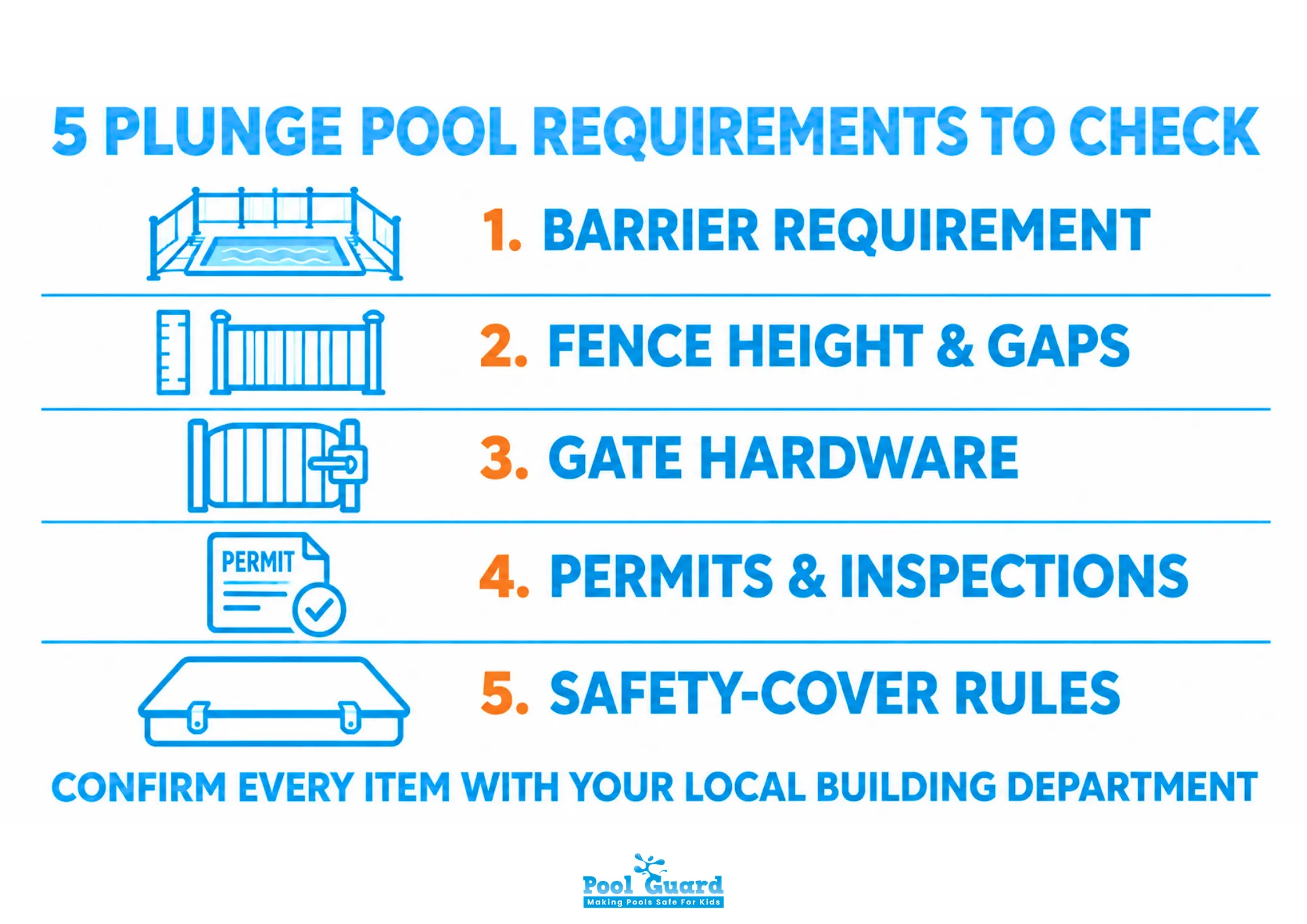
Don’t assume a four-foot fence, or any other single measurement, applies everywhere. Pool fence height requirements can differ by jurisdiction. The CPSC states that its swimming pool barrier guidelines aren’t a CPSC standard, and they aren’t mandatory requirements. Some states and localities have written them into their own rules, and others have set different ones. Your local code determines which measurements apply.
Possibly, but only if your local code says so and your installation meets it.
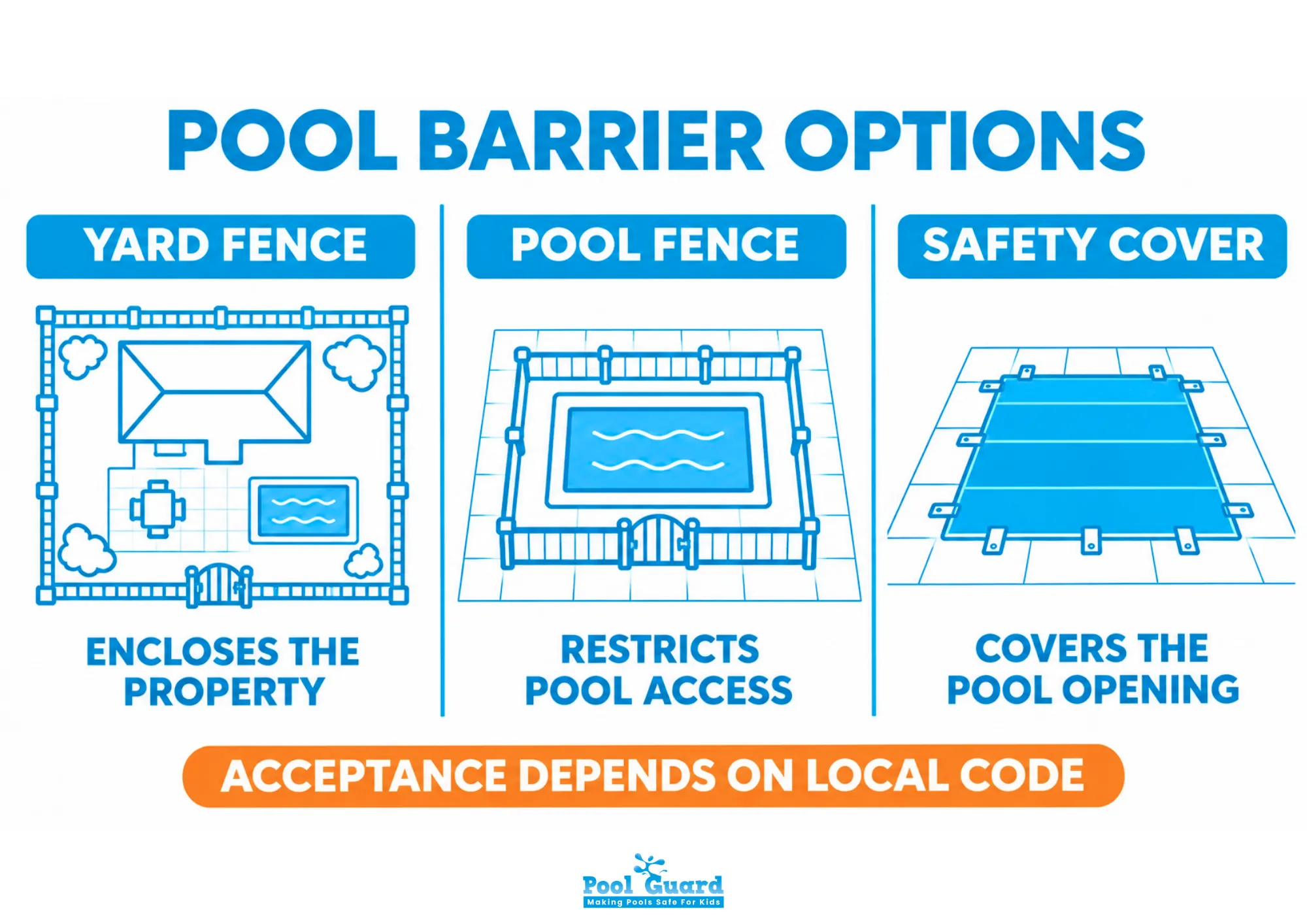
Some codes accept a perimeter fence as the pool barrier. Others require a dedicated enclosure around the pool itself. Whether your fence qualifies depends on its height, gaps, gate hardware, and the access points it leaves open, such as doors from the house.
Pool covers aren’t automatic substitutes. Where codes permit them, they usually must meet a recognized standard, fit properly, and stay in use. The CPSC lists barriers as including a fence or wall, door alarms for the house, and a power safety cover over the pool, but that is guidance, not a legal equivalence.
Understanding the differences between pool fences and covers also matters – a fence restricts access around the water, while a properly secured safety cover protects the pool opening when installed. A pool net or soft cover should never be described as a legal replacement for a fence unless your code explicitly says so.
Reviewing pool fence laws by state can help you identify potential barrier requirements before contacting your local building department. However, county and municipal rules may also apply, so confirm the requirements for your specific project.
Before purchasing or installing a plunge pool, contact your local building department or code official. They can explain which pool safety regulations apply to your property and whether permits or inspections are required. Checking early can help prevent installation delays and unexpected expenses.
Describe the type of plunge pool you plan to install, including its dimensions, water depth, and location on your property. Specify whether it’s permanent or portable and how you intend to use it. These details can affect how local regulations classify your pool.
Ask whether your plunge pool needs a fence or another approved safety barrier. If fencing is required, confirm the minimum height, gate specifications, and any other safety features. Also, check whether an existing yard fence or approved safety cover can satisfy the applicable requirements.
State, county, and municipal regulations may establish different requirements. Your homeowners association (HOA) may also impose restrictions on pool placement, fencing materials, or appearance. Confirm which rules apply and whether additional approvals are necessary before installation.
Request written confirmation of applicable requirements whenever possible. Keep permits, approved plans, and inspection records together for future reference. If you’re purchasing or renting a property with an existing plunge pool, ask for its permit history and inspection records to help establish whether the installation meets current requirements.
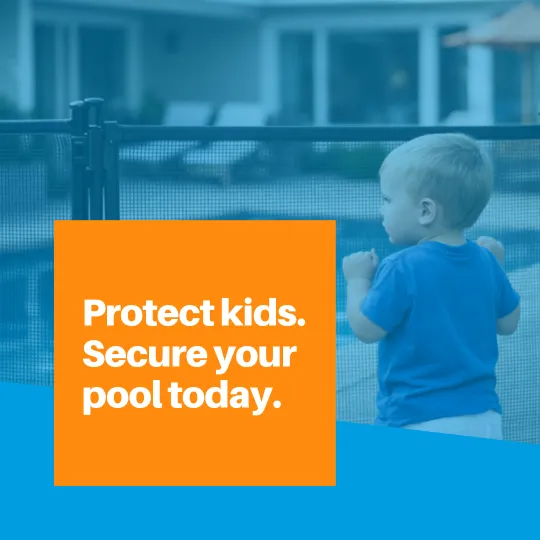
A compliant barrier cuts down unsupervised access, making it an important part of pool safety for toddlers and other young children. The CDC identifies drowning as the leading cause of unintentional death for ages one to four. The CPSC is equally clear that barriers can never replace adult supervision.
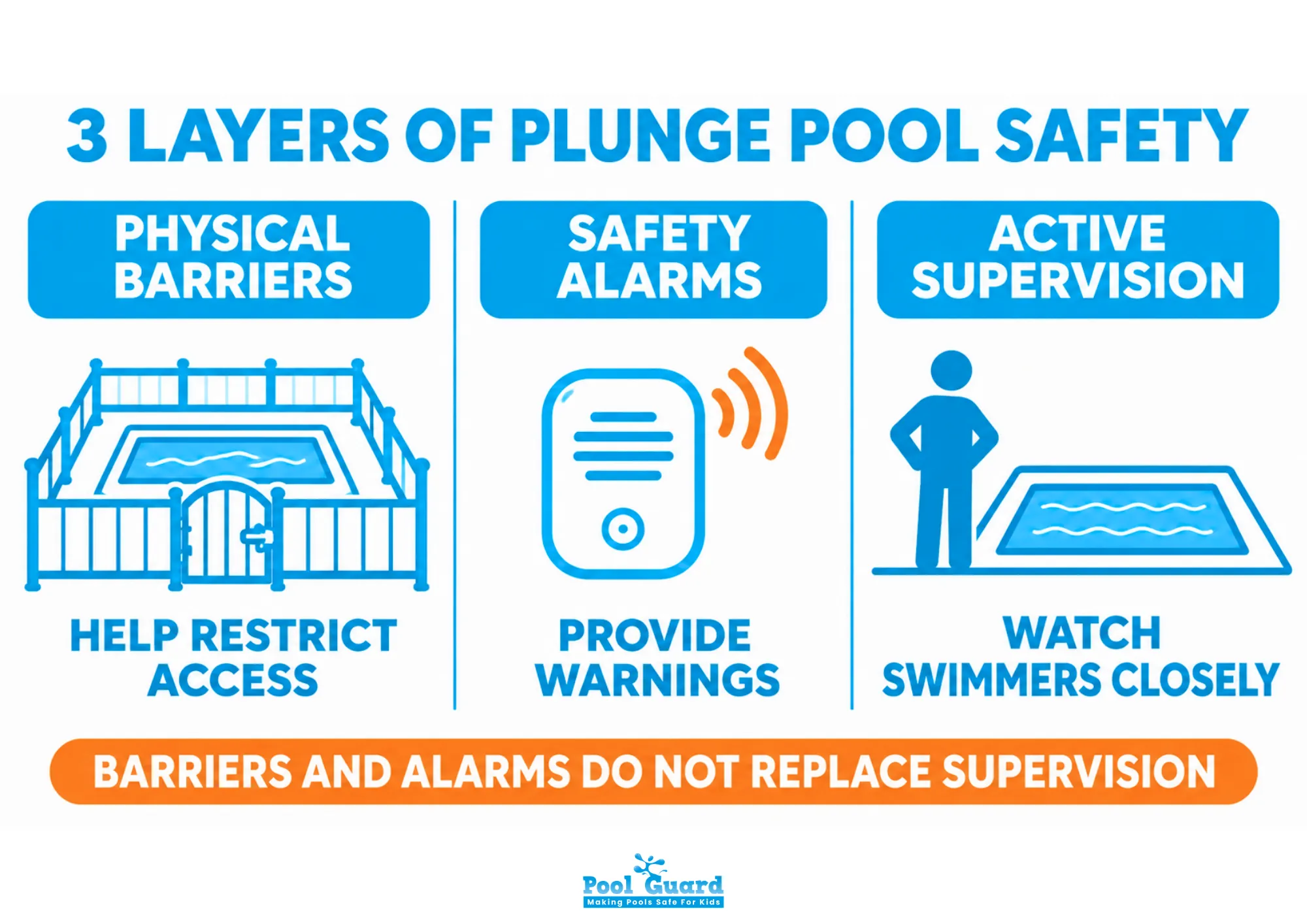
Plunge pool safety relies on several layers of protection. Physical barriers restrict access, while alarms provide warnings when triggered. Knowing how pool fences and alarms work together can help you choose suitable safety measures. Self-closing gates and door alarms offer added protection, but none can replace active supervision.
Do you need a fence around a plunge pool? Usually, yes, although local regulations determine the exact requirements. These depend on your pool’s classification, depth, and other factors. Checking with your building department before installation helps you understand the rules and avoid costly mistakes.
A compliant barrier is an important part of plunge pool safety, but it doesn’t replace active supervision. Following local regulations and taking additional safety precautions can help create a safer environment for everyone using your pool.
Find your local dealer by entering your zip code above.
Recent Articles
Please fill out the form below with your information. Your local dealer will be notified about your inquiry.