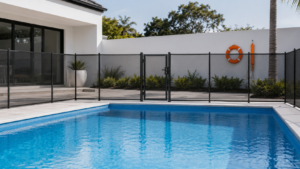
A backyard pool offers endless summer fun, but it also demands a reliable safety barrier. Securing the water is the most critical decision a homeowner can make to protect their family and ensure total peace of mind.
Choosing the right enclosure requires balancing your immediate safety needs with your long-term property goals. The ideal setup must seamlessly fit your daily lifestyle, backyard aesthetics, and project budget.
Selecting the right barrier depends on understanding how different materials protect your yard. This article provides a direct comparison of a mesh vs metal pool fence to help you choose the best option for your home. It will explore real safety differences, total costs, long-term performance, and exactly when each type makes sense.
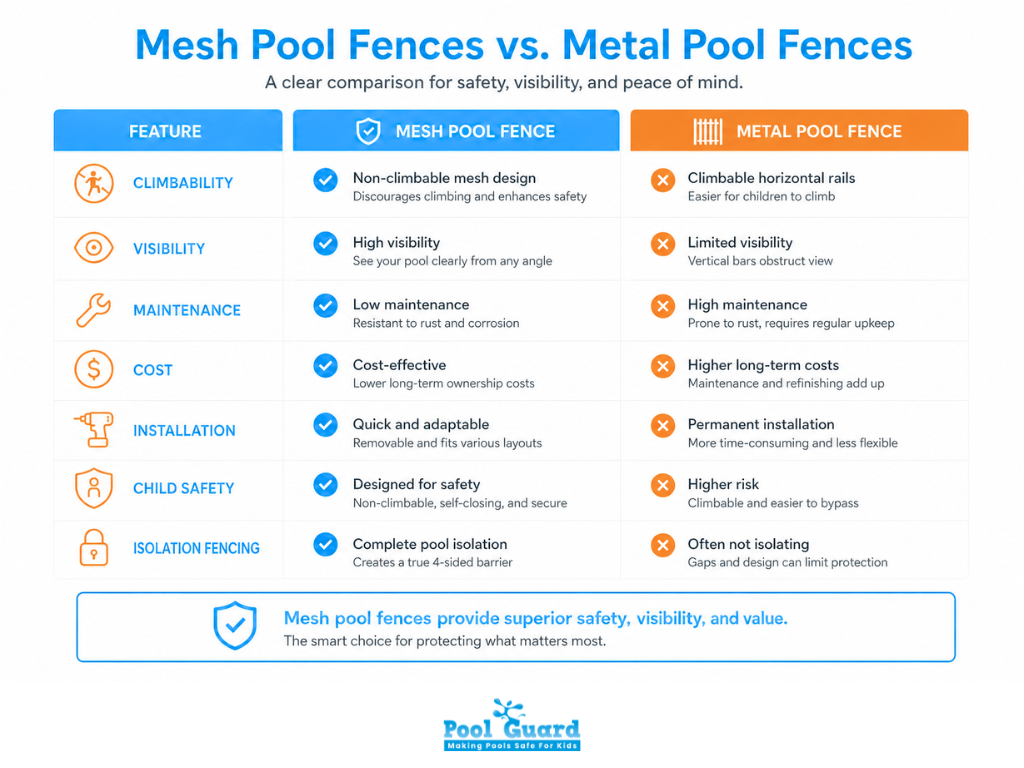
| Category | Mesh Pool Fence | Metal Pool Fence |
| Safety (Access Prevention) | Excellent – 4-sided isolation design | Good as perimeter, not isolation |
| Climbability | Non-climbable – no footholds or grip | Climbable – horizontal bars create footholds |
| Upfront Cost | Lower ($1,500–$3,500 avg.) | Higher ($3,000–$8,000+ avg.) |
| Installation | Easy, removable, no construction | Permanent, requires professional install |
| Maintenance | Low – UV- and rust-resistant | Moderate to high – rust coatings, repainting |
| Visibility | Near-transparent, easy supervision | Can obstruct sightlines |
| Best Use Case | Homes with young children or pets | Perimeter fencing, aesthetic priority |
Most homeowners focus on strength when evaluating pool fences, but pool safety experts prioritize something else: preventing unsupervised access rather than resisting physical force.
The National Drowning Prevention Alliance (NDPA) emphasizes that the majority of child drowning incidents happen during brief lapses in supervision, often less than five minutes. A fence’s job is to buy those critical minutes.
This framing changes everything. A fence doesn’t need to stop an adult intruder. It needs to stop a curious two-year-old who wandered outside while a parent answered the phone.
With that standard in mind, the most important questions become:
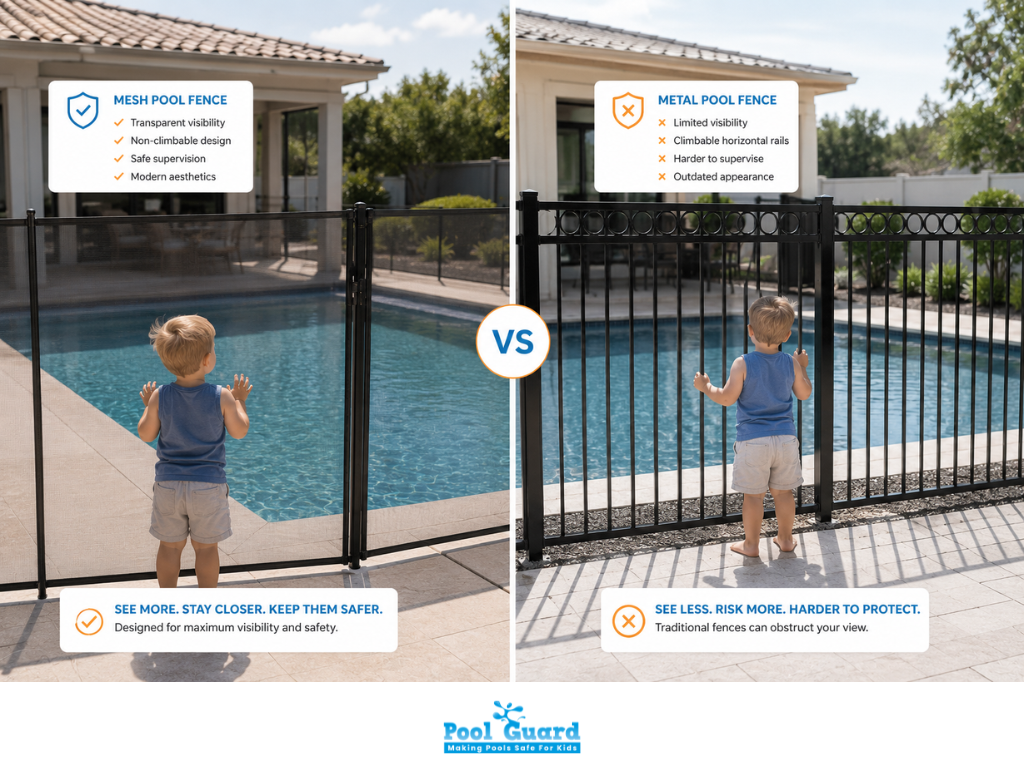
Climbability is the most important safety difference between pool fence types. Metal fences, including wrought iron, steel, and aluminum, often have horizontal rails or decorative crossbars that can act like ladder rungs. A child may be able to pull a chair or patio furniture up to the fence and climb over it, which is why many pool safety organizations consider traditional metal fencing climbable.
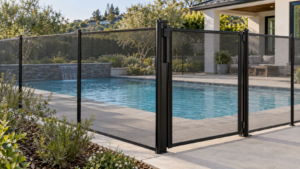
Mesh pool fences are specifically designed to prevent climbing. The tensioned mesh surface provides no footholds or grip, making it difficult for a child to scale even with nearby furniture. ASTM standard F2286, which is the key benchmark for residential pool barrier safety, specifically addresses climbability, and quality mesh fences are built to meet those requirements.
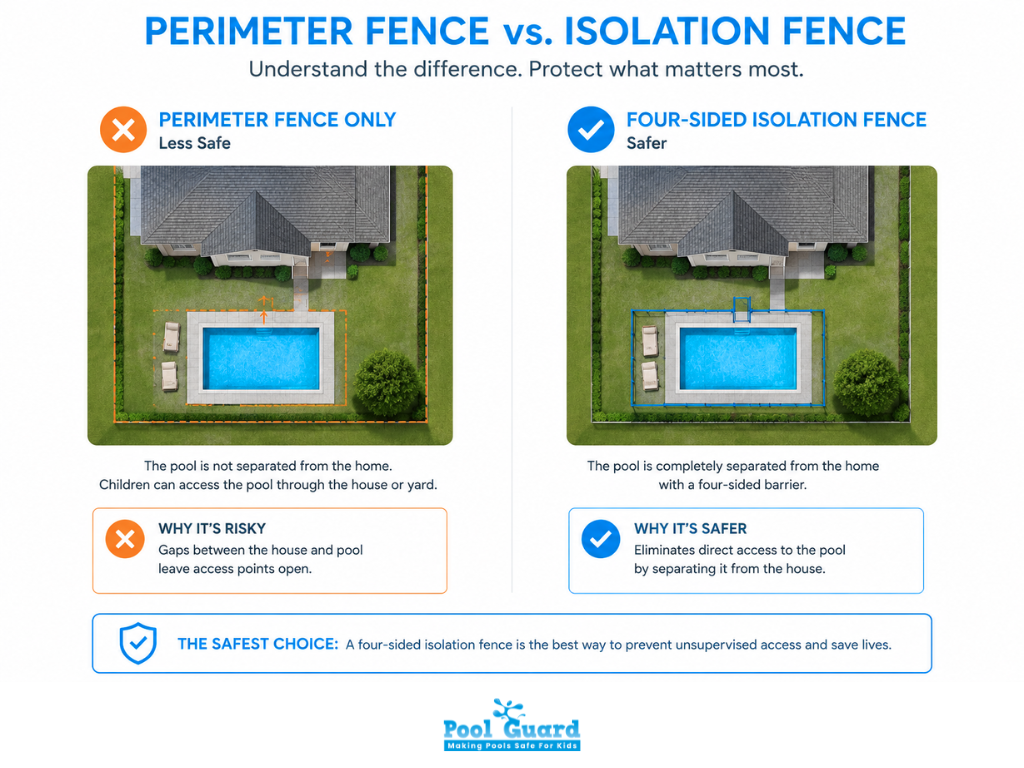
Aperimeter fence surrounds the entire property, while a four-sided isolation pool fence surrounds only the pool, creating a barrier between the house and the water.
The CDC, NDPA, and American Academy of Pediatrics all recommend 4-sided isolation fencing as the safest option because a perimeter fence does not stop a child from accessing the pool from the backyard.
Mesh pool fences are specifically designed for isolation fencing, with self-closing, self-latching gates that meet pool safety codes. Metal fencing is more commonly used as perimeter fencing, which may create a false sense of security.
Metal fences, especially wrought iron and powder-coated steel, are built for long-term durability. With proper protective coatings, they can withstand harsh weather, UV exposure, and heavy use for decades, and many come with extended rust warranties.
Mesh fences have evolved significantly. Modern pool mesh is made from UV-stabilized, rust-proof materials engineered for outdoor exposure. They won’t rust or corrode, and they hold up well in hot desert climates. That said, mesh isn’t as physically rigid as metal and may wear more quickly in extremely high-traffic situations.
Ultimately, metal wins on raw durability, while mesh wins on corrosion and low-maintenance performance.
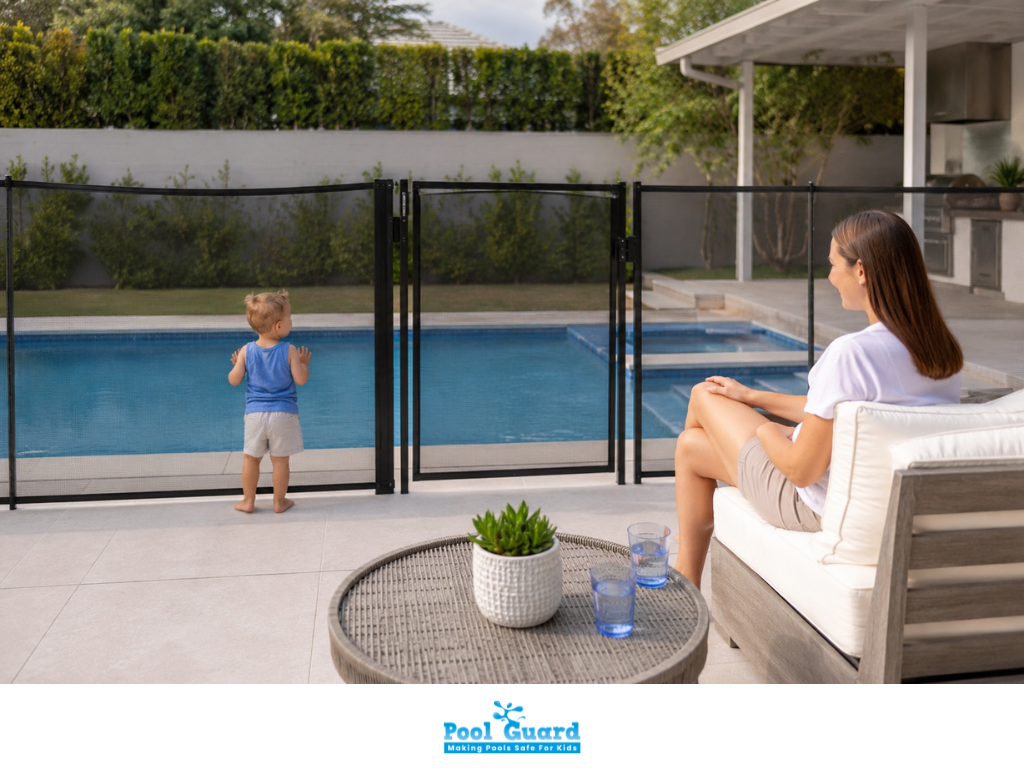
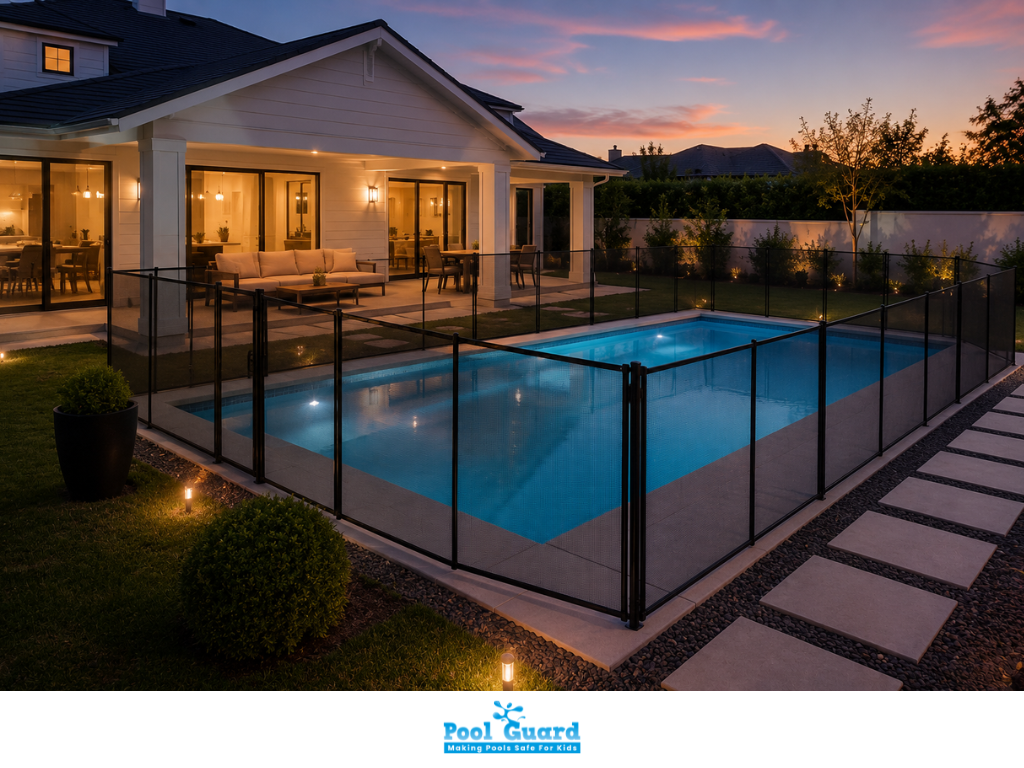
Mesh pool fences are nearly transparent, making it easier to monitor the pool area from inside the home, the patio, or across the yard. For parents and caregivers, this added visibility is an important safety advantage, since supervision remains the last line of defense around water.
Metal fences, especially ornate wrought-iron or solid-steel designs, can partially obstruct sightlines at certain angles. While not a major drawback, it can make pool supervision slightly more difficult for active families.
Mesh pool fences are removable and relatively quick to install, typically using ground sleeves drilled into the deck. They can also be taken down and reinstalled as needed, making them a flexible option for families who want to open up the yard for gatherings or remove the fence during the off-season.
Metal fences are permanent structures that usually require professional installation, concrete footings, and permits in some municipalities. Once installed, they are intended to remain in place long term, which can be either an advantage or a limitation depending on your needs.
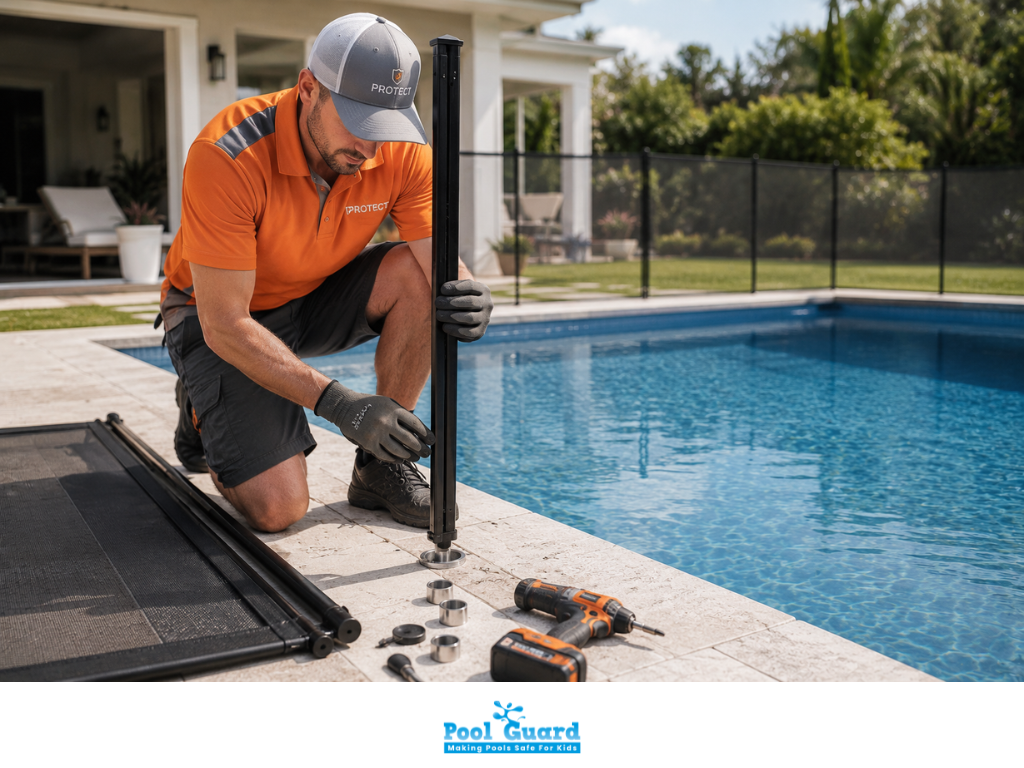
Mesh pool fences require minimal maintenance. Their UV-resistant materials resist fading and rust, and cleaning usually only requires an occasional rinse. Aside from checking gate hardware, little ongoing upkeep is needed.
Metal fences require more maintenance over time. Even powder-coated or galvanized metal should be inspected periodically for rust, especially around welds and edges. Touch-up painting, re-coating, and gate maintenance may also be necessary, particularly in humid or saltwater environments.
Pool fence installation cost is one of the biggest differences between mesh and metal pool fences and can significantly affect a homeowner’s budget.
Over a 10-year period, a mesh pool fence can cost 40-60% less than a comparable metal fence when installation and maintenance are factored in.
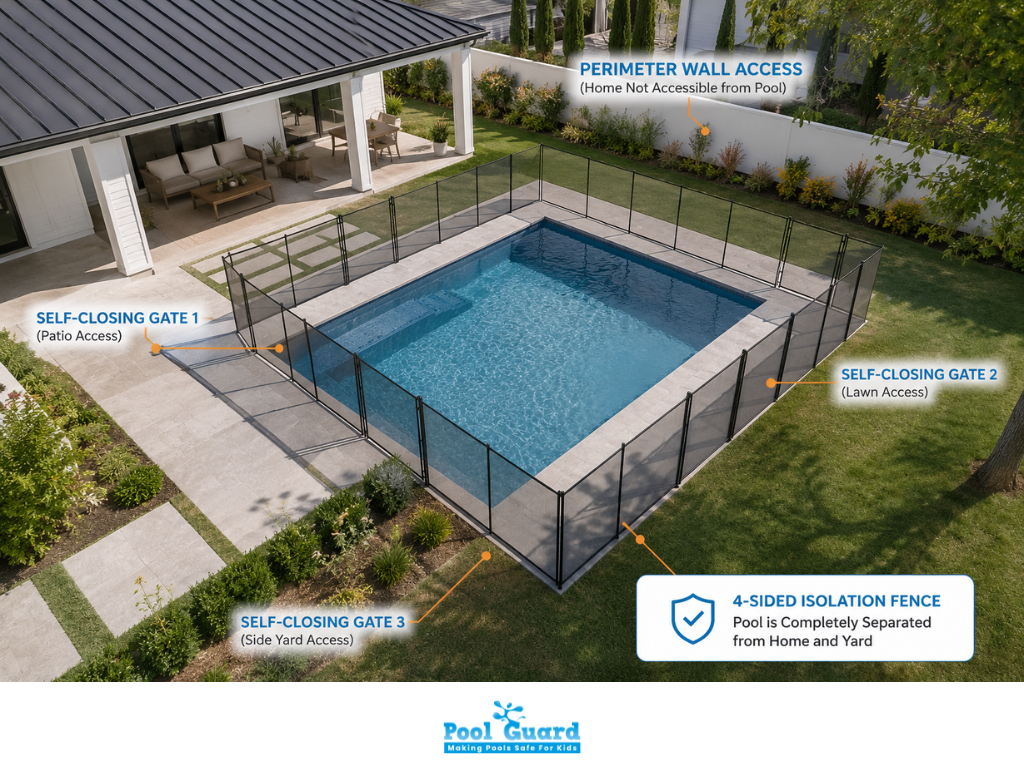
If your home has children under 10 or pets, mesh is almost always the right primary safety barrier. The non-climbable design and isolation-fence capability address the specific risk profile that matters most: unsupervised access to water.
Mesh is also the smarter choice for:
Metal fencing earns its place in the right context. If you’re looking for a perimeter fence that defines your property, deters trespassers, and complements a high-end landscaping design, metal is a legitimate choice.
It’s also appropriate as a secondary layer when combined with a mesh isolation fence, giving you the safety and precision of mesh around the pool itself, plus the aesthetic permanence of iron or aluminum around the wider yard.
Metal may also suit homeowners without young children who want a long-term architectural feature that adds visual sophistication to their outdoor space.
After comparing mesh and metal pool fences, the right choice comes down to which option best fits your safety priorities, backyard layout, budget, and local requirements. Pool Guard USA provides professional pool fence installation across multiple locations, helping homeowners turn that decision into a properly installed safety barrier. Browse the service areas below to find a Pool Guard USA location near you and get expert guidance for your pool.
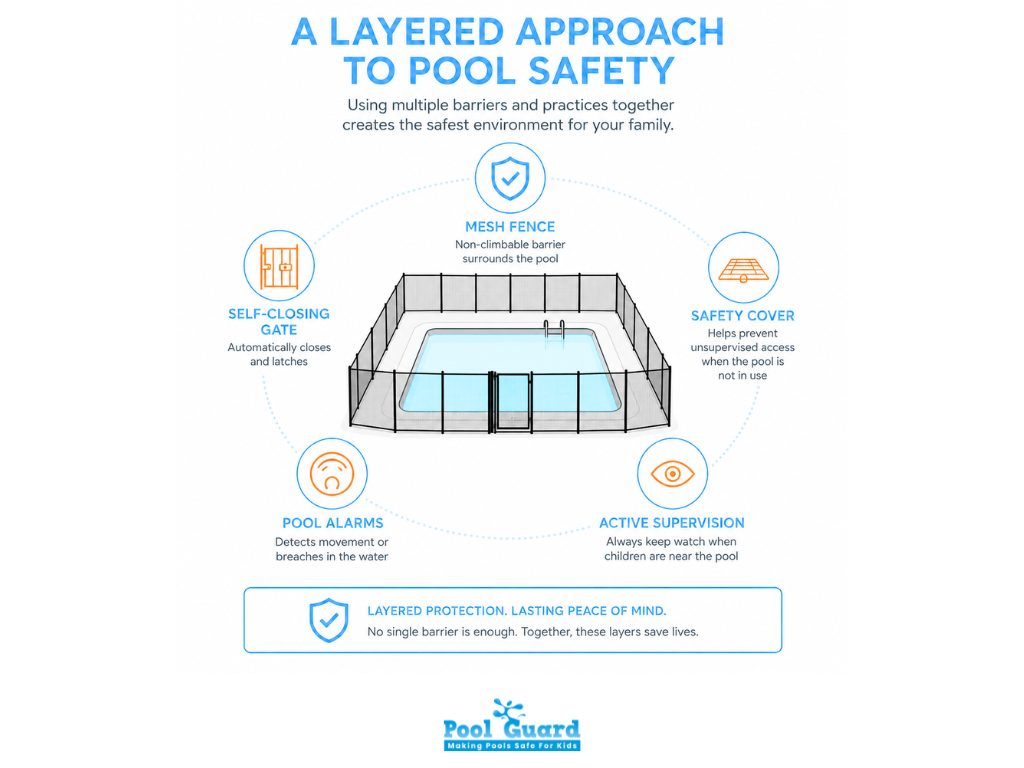
No fence operates in isolation. The most effective pool safety strategies layer multiple protections:
The CDC recommends using multiple layers together; no single measure is sufficient on its own.
Choosing between a mesh vs metal pool fence depends on your property layout, safety priorities, budget, and local code requirements, not just appearance. The best pool fence is the one that provides reliable protection while fitting your family’s needs and lifestyle.At Pool Guard USA, homeowners can get help comparing fence options, understanding local safety codes, and finding the right barrier for their pool. Whether you need a quote, installation guidance, or expert recommendations, the team is there to help.
Find your local dealer by entering your zip code above.
Please fill out the form below with your information. Your local dealer will be notified about your inquiry.
Please fill out the form below with your information. Your local dealer will be notified about your inquiry.