Your test strip shows chlorine is present. Your pool doesn’t believe it. The water’s a little hazy, there’s a sharp chemical smell hanging over the deck, and no matter how much chlorine you dump in, nothing changes. That combination of chlorine on paper and the lack of sanitizing power in the water is what most pool owners mean when they say “chlorine lock”.
It’s a genuinely common problem, and it matters for more than aesthetics – a pool that isn’t sanitizing properly is a pool where bacteria and algae can take hold, which is a real issue for anyone who swims in it, especially kids. Below, you’ll learn what’s actually happening in the water, the specific signs of chlorine lock, whether it’s safe to swim through it, and exactly how to fix it.
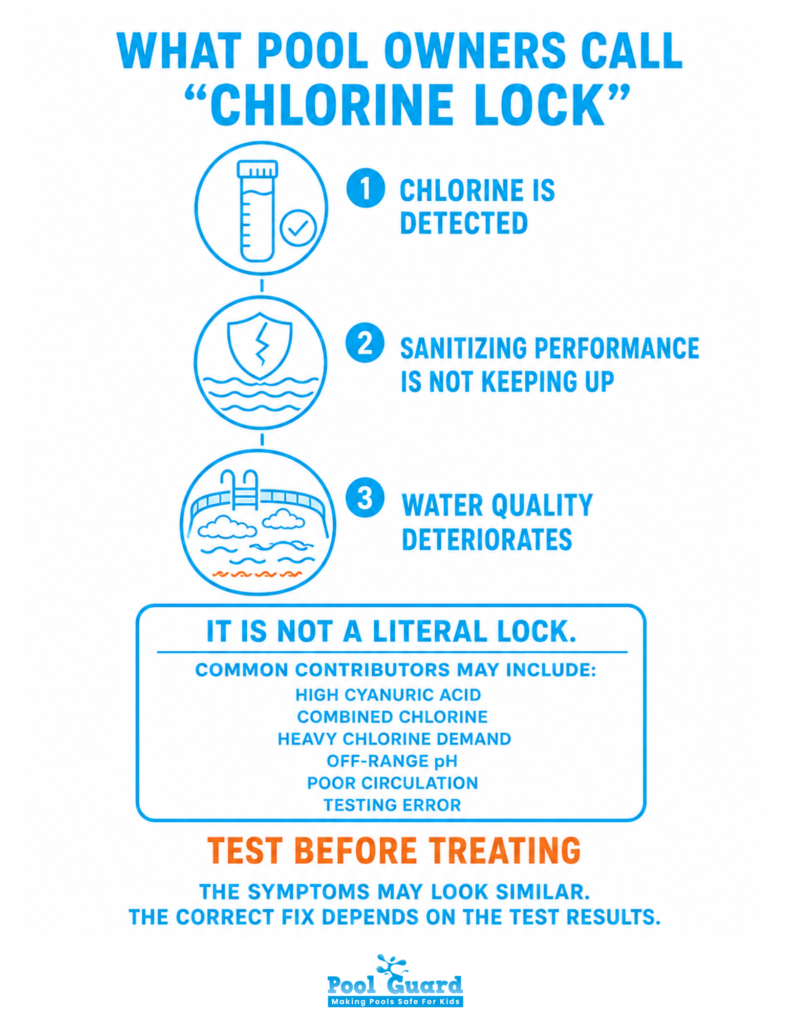
Chlorine lock is what happens when chlorine is present in your pool but isn’t sanitizing effectively. Testing may show chlorine in the water, yet the pool still turns cloudy, grows algae, or won’t hold a clean chemical balance.
The usual trigger is cyanuric acid (CYA), also called stabilizer or conditioner. CYA is genuinely useful in the right amount; it shields chlorine from being burned off by UV rays, so your pool doesn’t lose its sanitizer every few hours in direct sun. Problems start when CYA builds up too high, usually from repeated use of stabilized chlorine products like trichlor tablets or dichlor granules, which each add a little more CYA every time you use them.
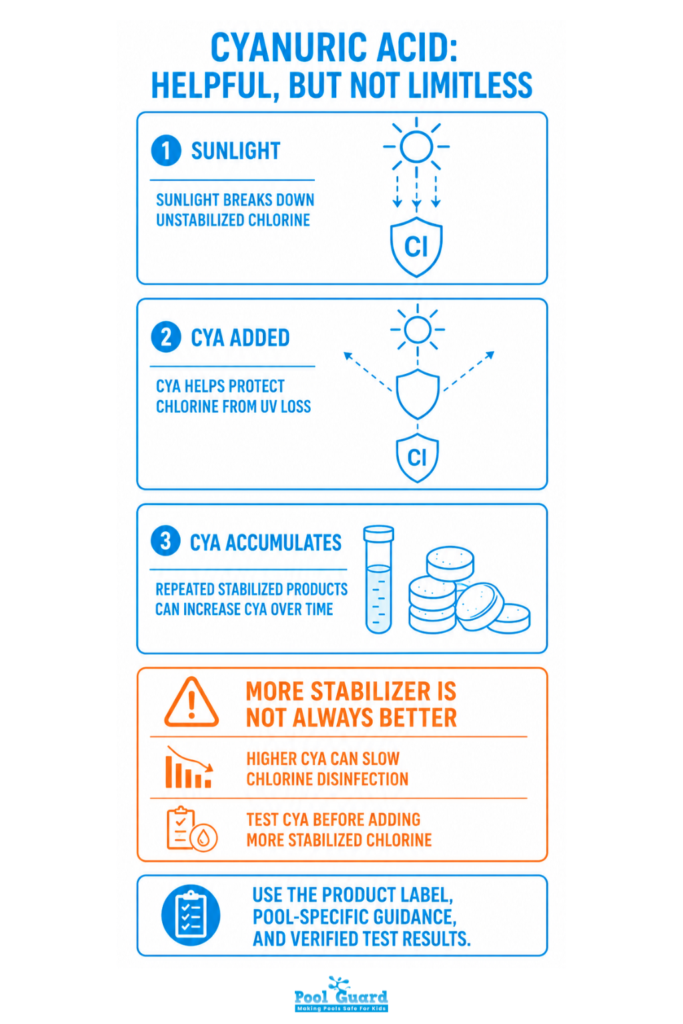
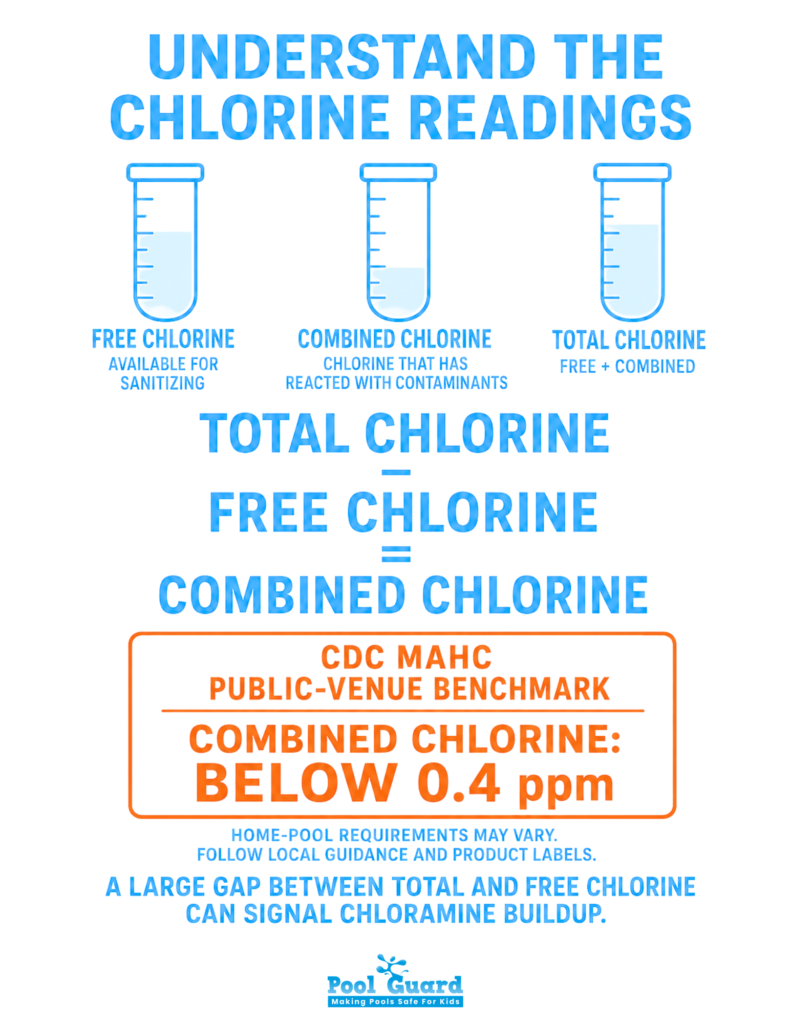
Beyond CYA overload, this “dormant chlorine” pattern occurs when combined chlorine climbs too high from fighting contaminants like sweat and oils. It also happens when drifting pH levels actively block chlorine’s sanitizing power.
While some specialists argue that “chlorine lock” is just high CYA or extreme chlorine demand rather than a true scientific term, the results are identical. Focus on the practical signs and fixes to restore your water balance.
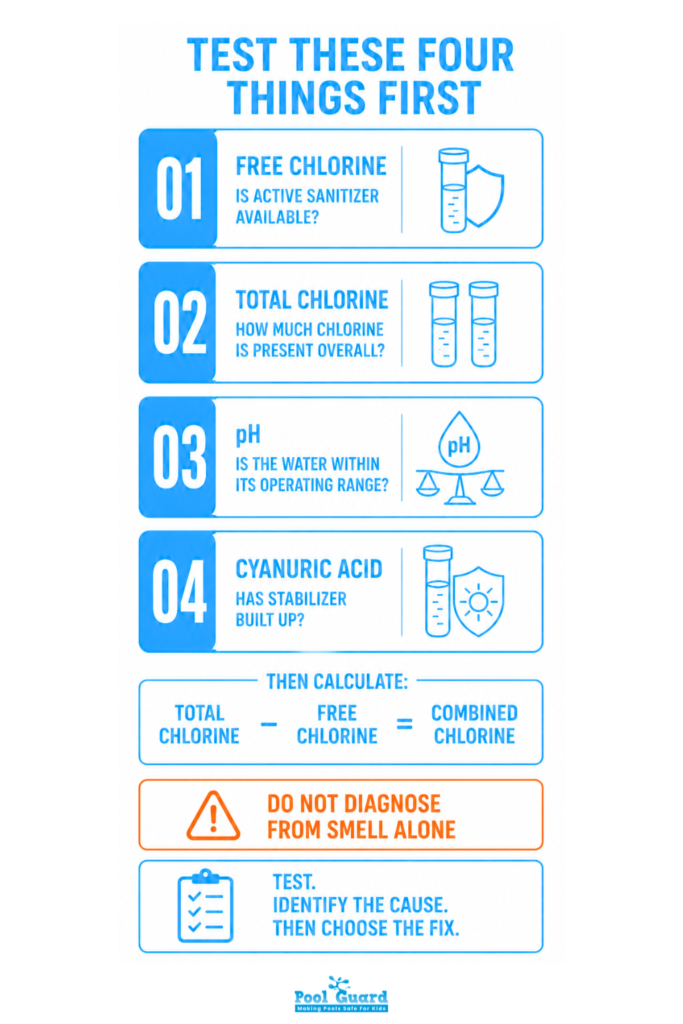
Chlorine lock rarely announces itself with one obvious symptom; it’s usually a cluster of small red flags. Here’s what to check for:
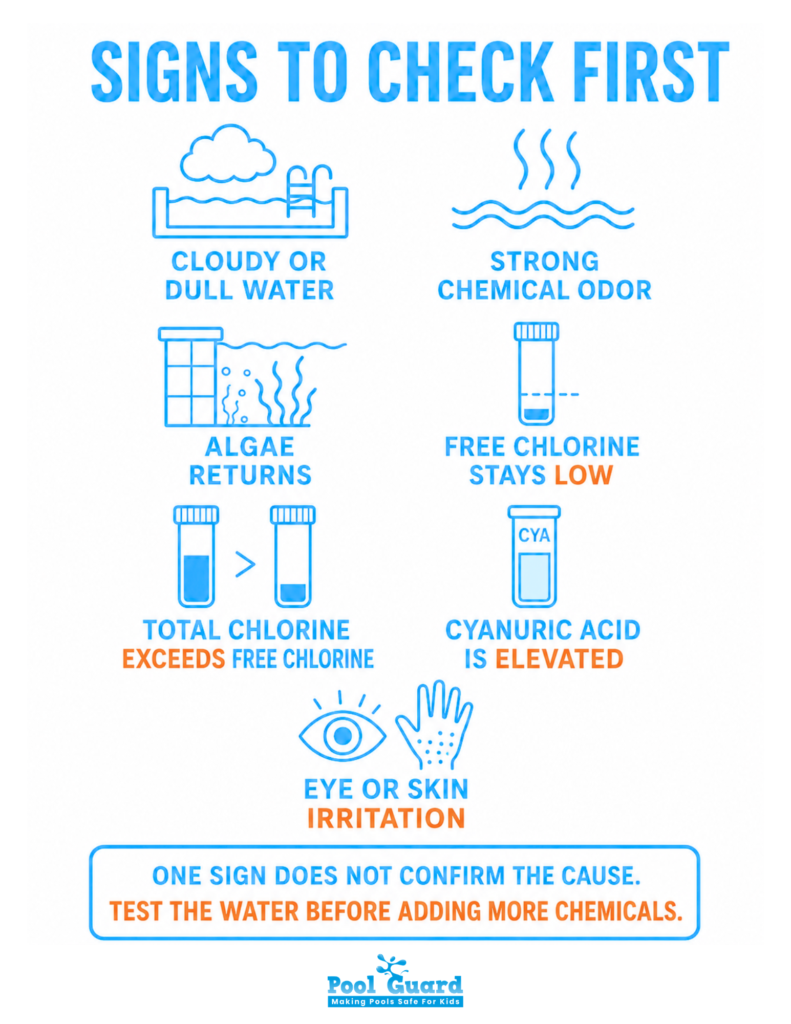
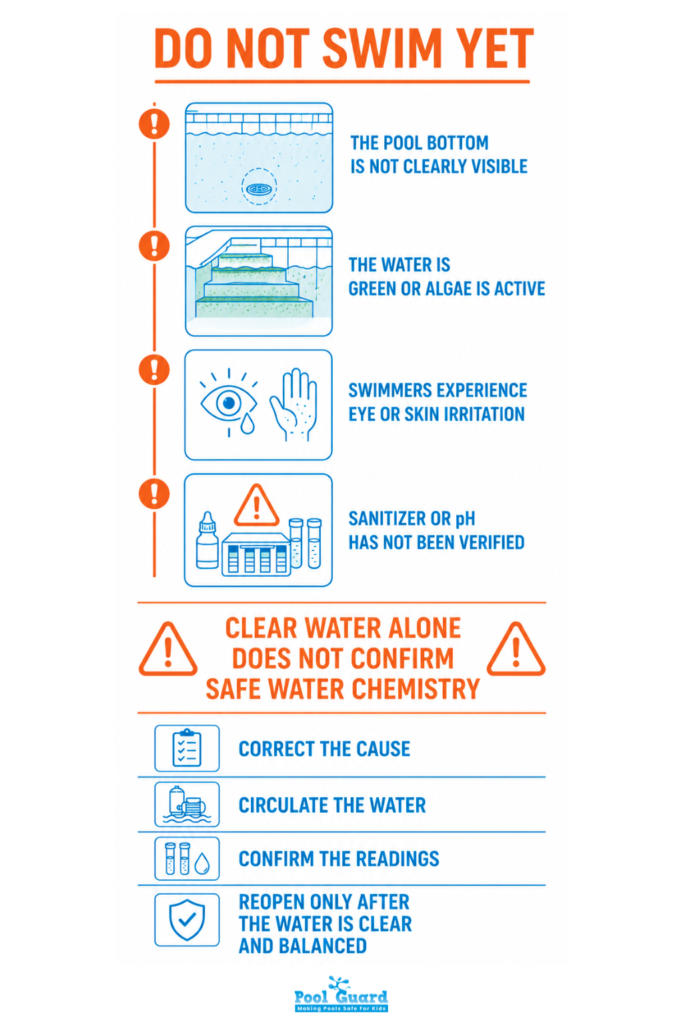
Generally, no. If the water is cloudy, green, gives off a strong chemical odor, or you can’t clearly see the bottom of the pool, it’s not safe to swim until the issue is corrected. The same goes for water that’s causing eye or skin irritation. Chlorine lock means your sanitizer isn’t reliably killing bacteria and controlling algae, so treat these signs the way you’d treat any pool with unclear or unbalanced water – fix it first, swim after.
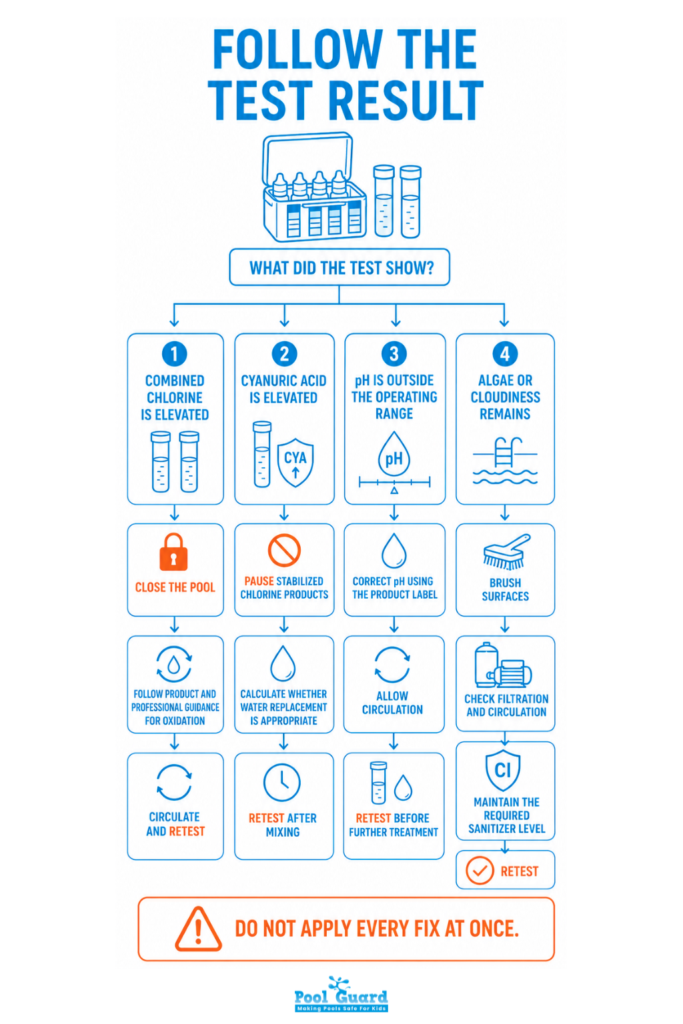
Bring in a professional if your test results don’t make sense to you, if CYA is reading very high and you’re not confident calculating a partial drain, or if algae keeps returning despite repeated shock treatments. It’s also worth the call if you have kids or guests expecting to swim soon and you’re not fully confident the water is safe. A pro can confirm it faster than trial and error, and can flag anything you might have missed.
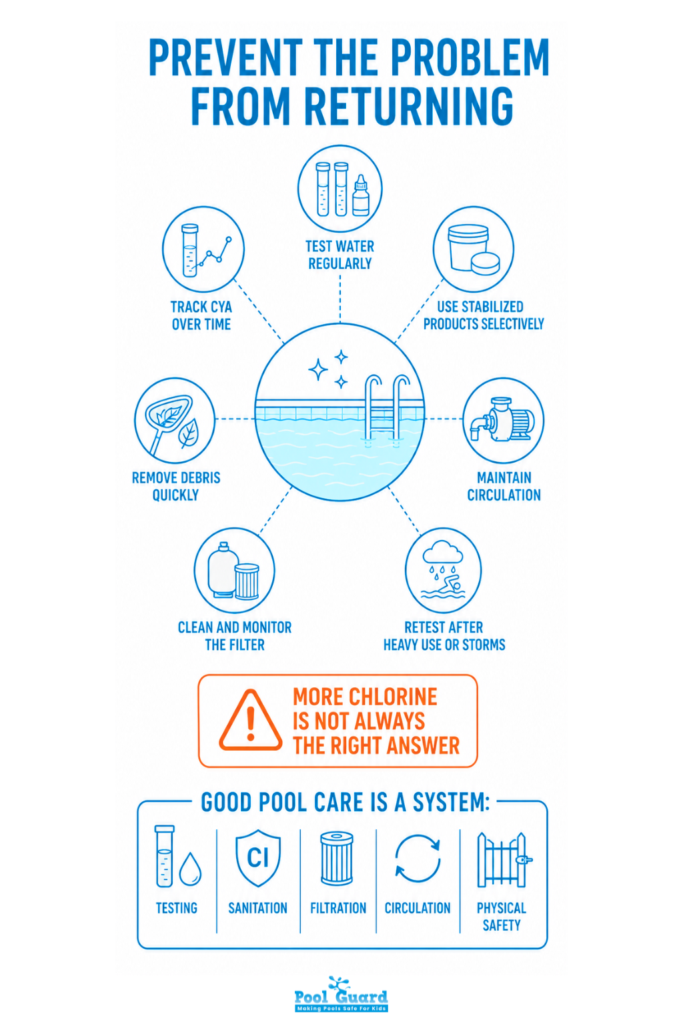
Recognizing the signs of chlorine lock, such as cloudy water, strong chemical odors, or recurring algae, is critical because it means your water is unsafe for swimming despite adding sanitizer. When your test results indicate the chemical balance is wrong, you must fix it before anyone enters the pool. However, keeping your family protected requires looking beyond the water chemistry alone.
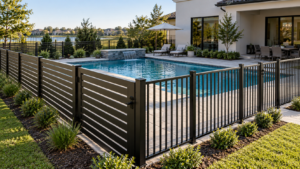
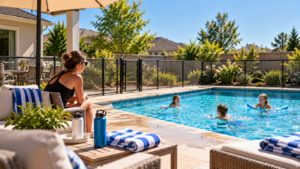
True backyard security relies on a layered safety approach where chemical health and physical barriers work together. While you work to restore clear water, you must also ensure your active adult supervision is paired with reliable Pool Guard USA fencing and a self-closing gate. Combining a healthy chemical shield with secure physical boundaries is the only way to guarantee total peace of mind.

Please fill out the form below with your information. Your local dealer will be notified about your inquiry.
Please fill out the form below with your information. Your local dealer will be notified about your inquiry.