Pool alarms provide an additional layer of safety by alerting nearby adults to unexpected activity in the water. The Lifebuoy BCone is a floating pool alarm that detects water disturbances and sounds alerts both at the pool and inside the home. However, its reliability depends on proper placement, pool conditions, and how consistently the system is used.
This BCone pool alarm review examines how the system works, its key features, installation, false alarm triggers, and ongoing maintenance. It also compares manufacturer claims with independent testing, highlights important limitations, and weighs the pros and cons to help you decide whether BCone is suitable for your pool.
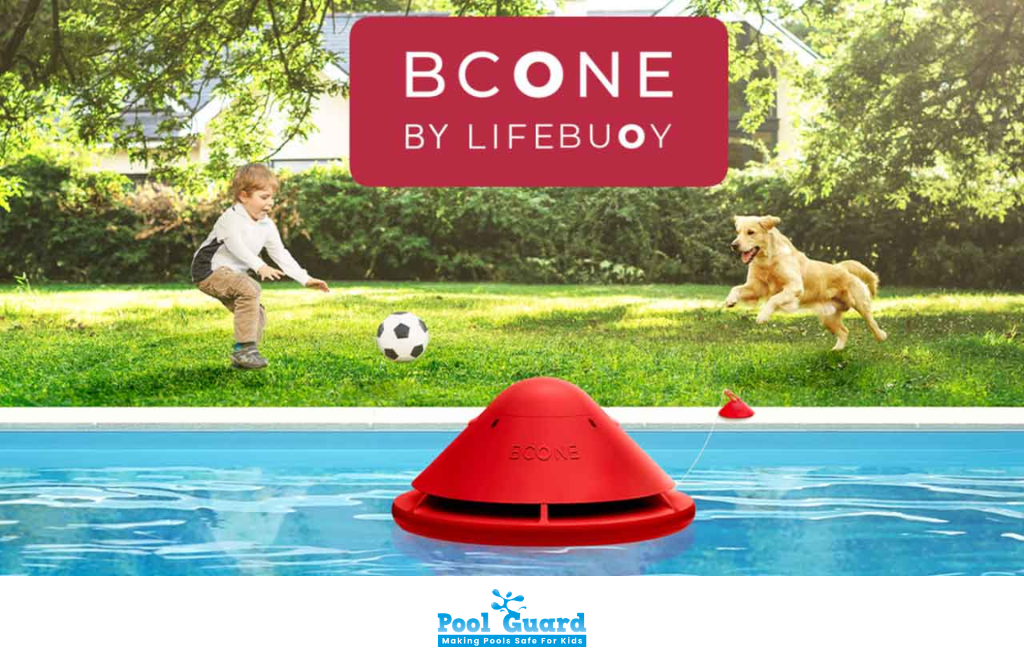
The BCone pool alarm is a practical option for homeowners who want audible alerts at the pool and inside the house, with optional smartphone notifications. Its Pool Unit and Home Unit are NSF-certified to ASTM F2208 for alarm performance. However, certification doesn’t guarantee reliable detection in every pool layout or entry scenario.
The system also has limitations worth considering. Automatic pool cleaners and water features can trigger false alarms, while larger pools may require additional coverage. Floating solar covers are also incompatible with BCone, making it less suitable for pools that regularly use them.
Independent testing provides another perspective. In a July 2024 Bob Vila review, Hannah Selinger rated the BCone 4 out of 5 after testing pool alarms in her inground pool over one week. She highlighted its responsiveness, loud alerts, and easy-to-use app, although setup took longer than with some alternatives. These findings reflect one reviewer’s experience rather than guaranteed performance across different pools.
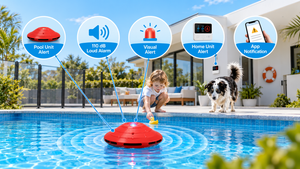
The standard BCone system includes a floating Pool Unit and an indoor Home Unit, with access to the optional BCone app. The Pool Unit detects water disturbances, while both units provide audible alerts. The app adds remote notifications and controls when the Home Unit is connected to Wi-Fi.
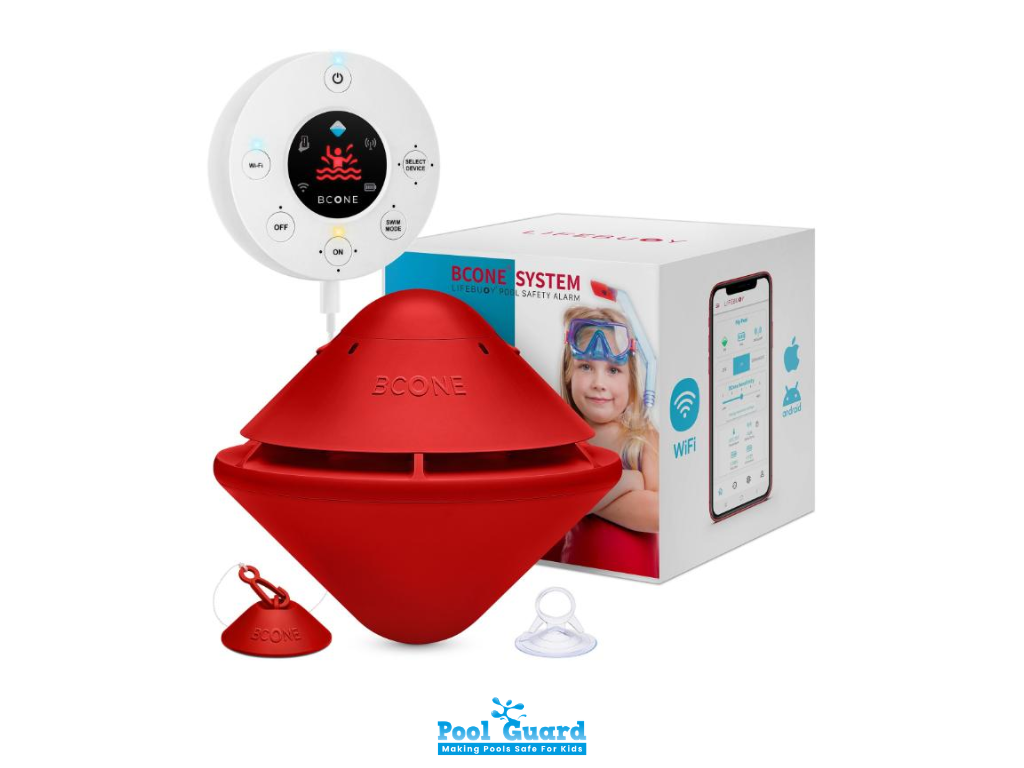
Lifebuoy also offers a BCone Multi-System for monitoring multiple areas. One Home Unit supports up to four Pool Units, allowing additional coverage for larger pools or separate bodies of water.
The BCone uses surface wave detection to monitor movement in the pool. Its floating Pool Unit responds to water disturbances rather than identifying people through a camera. This means a person entering the water, a dropped object, or waves from strong winds can potentially trigger an alarm.
Sensitivity can be adjusted to respond to smaller or larger disturbances, although higher sensitivity may increase false alarms. Since pool alarms work using different detection technologies, their ability to identify certain types of water activity varies.
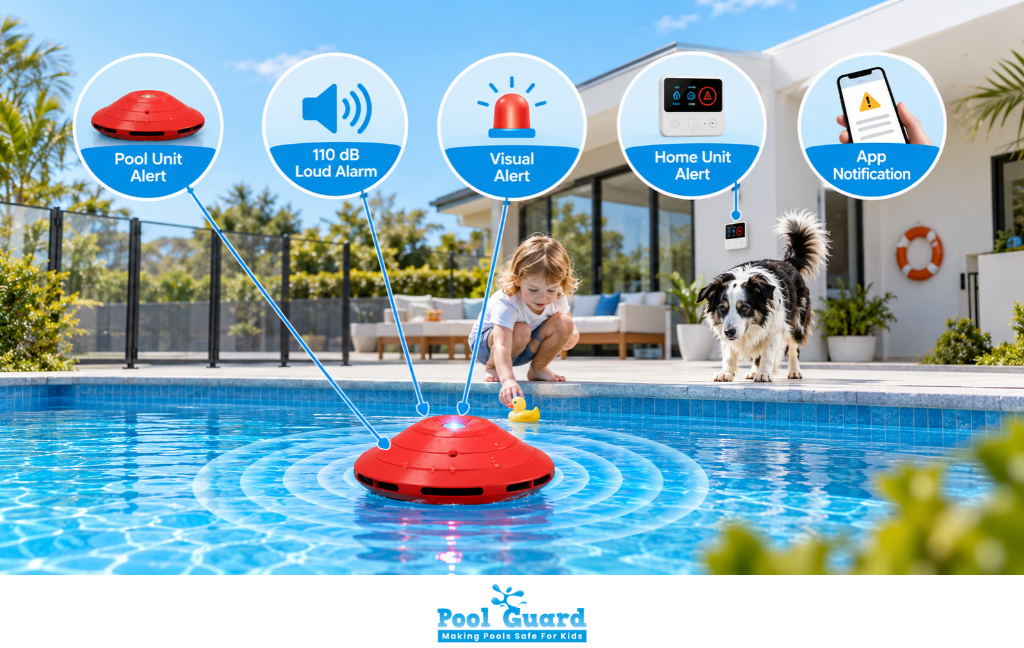
When the BCone detects a qualifying water disturbance, both the floating Pool Unit and indoor Home Unit sound an alarm. This provides audible alerts near the pool and inside the house, where water activity may not be visible.
The BCone is rated at 85 dB from 10 feet away. During testing, Hannah Selinger could hear the alarm inside her home and across her property. Actual audibility depends on distance, background noise, and building conditions.
Detection also depends on proper placement and sensitivity settings. Testing the system after installation and adjusting its sensitivity when necessary helps assess performance. Larger or irregularly shaped pools may require additional units for adequate coverage.
The BCone’s local alarm system operates without Wi-Fi. Both the Pool Unit and Home Unit can sound audible alerts independently of an internet connection. Wi-Fi is needed for smartphone notifications and remote control through the BCone app.
Bob Vila’s July 2024 review describes Wi-Fi as necessary for setup and reliable operation, although Lifebuoy confirms that the local sirens function independently of the connection. For remote notifications, users need stable Wi-Fi and the appropriate app permissions.
Smartphone notifications provide an additional warning, but they shouldn’t be the primary safety measure. Phones can be muted, disconnected, or left unattended. During swimming, a designated water watcher should maintain active supervision, regardless of whether the alarm system is enabled.
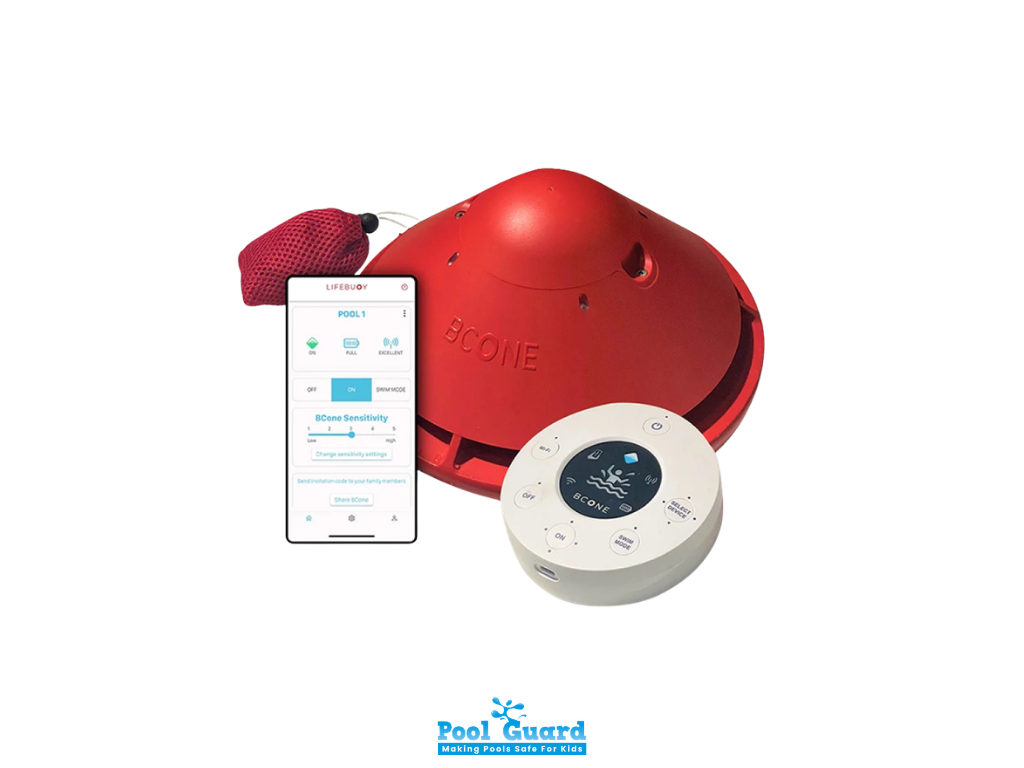
Proper placement is essential for reliable detection. Position the Pool Unit near the center of the pool, secure it with the included attachment kit, and keep it away from pump outlets and skimmers. Mount the Home Unit on a nearby wall with minimal obstructions between the devices. The stated wireless range is approximately 100 feet, although surrounding structures may affect performance.
After installation, follow Lifebuoy’s alarm-testing instructions:
This test checks basic operation, not detection throughout the entire pool. Follow the manufacturer’s guidance for larger or irregular pools, and retest after adjusting placement or sensitivity.
Swim Mode temporarily disables alerts during swimming and automatically rearms after several minutes without water movement, according to Lifebuoy. Always confirm the system has rearmed after swimming, particularly when a pool cleaner is operating.
Wind, robotic cleaners, pump outlets, and water features can trigger false alarms. Automatic cleaners may also catch the Pool Unit’s tether or overturn it. The following precautions can help reduce unwanted alerts:
For small waterfalls, the system may work if positioned away from the water feature, although sensitivity adjustments may be needed.
Lowering sensitivity can reduce false alarms but may also make smaller water disturbances harder to detect. Retest after each adjustment. Do Not Disturb temporarily disables alarm protection, so it shouldn’t be used when the pool needs active monitoring.
Although BCone is designed to reduce false alarms, there is insufficient independent testing to establish how frequently unwanted alerts occur under different pool conditions.
One BCone Pool Unit is recommended for pools up to 20 × 40 feet, while the NSF certification listing identifies testing in a 16 × 32-foot pool. Actual detection performance depends on pool shape, unit placement, and water conditions.
For larger or irregularly shaped pools, additional Pool Units may be necessary. Up to four units can connect to one Home Unit, including setups covering multiple adjacent pools. Proper positioning is essential for adequate detection coverage.
Solar covers are not compatible with BCone because they float directly on the water and interfere with its operation. Some elevated covers may be compatible if they provide sufficient clearance above the Pool Unit, which extends approximately 4.5 inches above the water. Compatibility should be confirmed for the specific cover. Different types of pool covers offer different levels of protection, and floating solar covers should never be mistaken for safety-rated barriers.
The BCone Home Unit uses external power and has a rechargeable battery, while the Pool Unit runs on two replaceable AA alkaline batteries. Lifebuoy estimates that the Pool Unit batteries can last up to 18 months, depending on usage and operating conditions. Both units provide low-battery alerts.
Lifebuoy provides a three-year manufacturer’s warranty, although buyers purchasing through third-party sellers should confirm their coverage. The smartphone app is optional, and the manufacturer doesn’t list a recurring subscription fee for standard operation.
The standard BCone System costs $449 on Lifebuoy’s US website, although promotional pricing and reseller offers may vary. Ongoing expenses mainly include replacement AA batteries and additional Pool Units for larger pools, if needed.
| Pros | Cons |
| Poolside and indoor sirens rated at 85 dB from 10 feet | Water movement can trigger false alarms |
| Local alarms operate without Wi-Fi | App notifications and remote controls require Wi-Fi |
| NSF-certified to ASTM F2208 for performance | Floating solar covers are incompatible |
| Supports up to four Pool Units | Large or irregular pools may require additional units |
| Swim Mode can automatically rearm | Alarm is temporarily inactive during Swim Mode |
| Three-year manufacturer’s warranty | Higher upfront cost than some basic entry alarms |
| Adjustable sensitivity | Lower sensitivity may affect detection; retesting is necessary |
BCone is best suited to households with pools up to approximately 20 × 40 feet, no floating solar cover, and limited water disturbances from nearby features. It provides poolside and indoor sirens, with optional phone alerts when connected to Wi-Fi. Larger pools or properties with multiple water areas may require additional Pool Units. Comparing pool alarms with different detection methods can help determine whether BCone meets your needs.
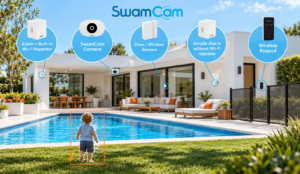
BCone is less suitable for pools with frequently used robotic cleaners, nearby waterfalls, or floating solar covers that interfere with detection. It also cannot monitor gates or access paths. Homeowners who need visual monitoring may prefer cameras designed for pool safety. Since BCone detects water disturbances rather than signs of drowning, it cannot distinguish a dangerous incident from ordinary wave movement. Regular testing and adult supervision remain essential.
This BCone pool alarm review finds a practical water-entry alarm with poolside and indoor sirens, optional app notifications, and independently documented ASTM F2208 performance certification. However, false alarms from water movement, solar-cover incompatibility, and sensitivity adjustments limit its suitability for some pools. Independent evidence of long-term reliability and false-alarm rates remains limited.
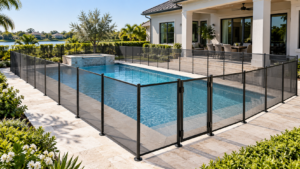
BCone is most suitable for homeowners willing to install, test, and maintain the system regularly. It adds an audible warning layer but cannot replace a secure pool barrier or active adult supervision. Before purchasing, confirm that your pool layout, existing equipment, and daily routine are compatible with its operation.
Disclosure: This article is based on manufacturer documentation, retailer listings, and one published third-party test. Pool Guard USA did not test the unit.
Find your local dealer by entering your zip code above.
Please fill out the form below with your information. Your local dealer will be notified about your inquiry.