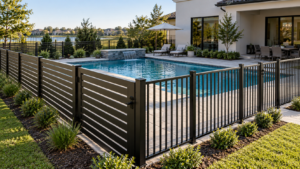
A child can lose consciousness just two minutes after slipping unnoticed into a pool. Because drowning is the leading cause of accidental death for children ages one to four, every second matters. A pool alarm cannot physically stop a fall, but it shrinks the critical gap between an accident and adult awareness from minutes to seconds.
But how does a pool alarm work to provide this vital protection? This guide explains how each major type detects danger, how to manage false alarms, and how to use these devices to build a reliable home safety system.
A pool alarm is a safety device that detects unexpected entry into a pool or pool area and sounds an alert, like audible, remote, or both, so a nearby adult can respond immediately. Unlike a fence or a cover, a pool alarm doesn’t physically stop anyone from reaching the water. It’s a detection system, not a barrier.
Pool alarms are typically used to protect:
Used correctly, a pool alarm serves as one layer in a broader pool safety plan, not a replacement for supervision, fencing, or covers.
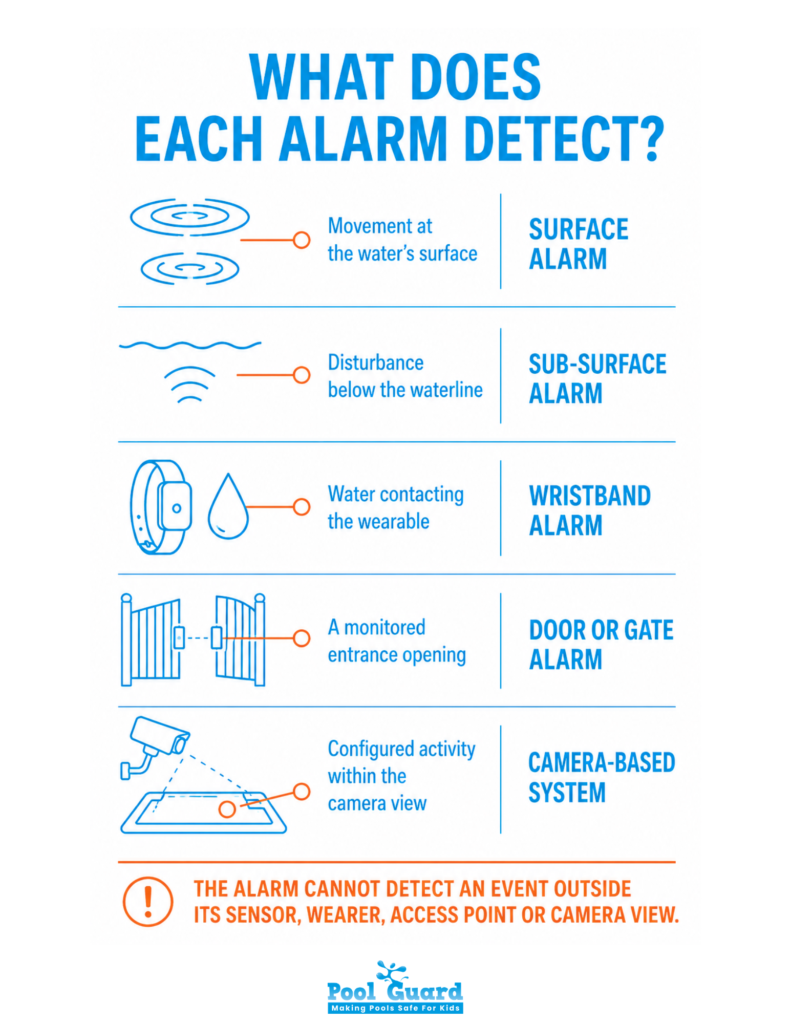
Pool alarms don’t all work the same way. The exact technology depends on what the device is designed to detect. Here is how each major category functions.
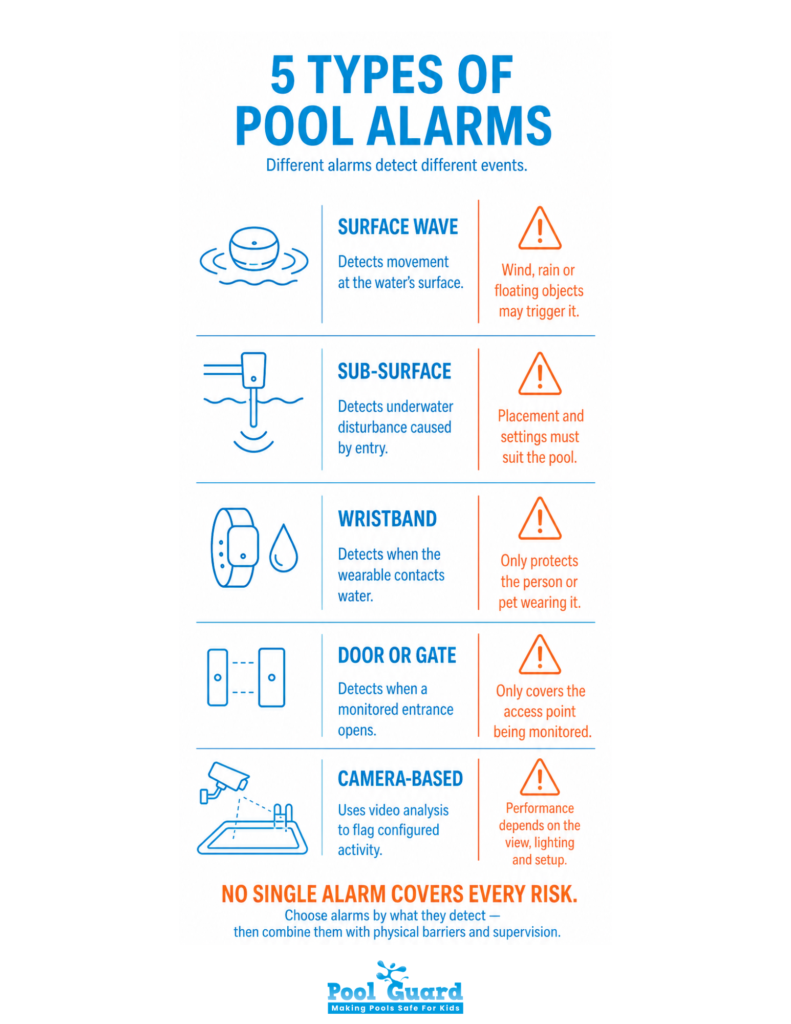
Surface wave alarms float on the water or mount to the pool’s edge with a sensor extending to the surface. When something disturbs the water, like a person jumping in, a pet falling in, or a heavy object landing, the alarm detects the resulting waves and sounds.
Best for: Above-ground pools, inflatable pools, and simple retrofits where drilling or permanent mounting isn’t ideal.
Limitation: Because they read surface movement, they can be triggered by wind, heavy rain, or floating toys, and may under-detect in very large pools without multiple units.
Sub-surface alarms use a sensor positioned below the waterline to detect changes in water pressure. When an object of sufficient weight enters the pool, the displacement changes pressure at the sensor, triggering the alarm, even from something as small as a foot dipping into the shallow end.
Best for: In-ground pools where consistent, reliable detection matters more than portability.
Limitation: Installation position matters. The sensor needs a secure mounting point, and sensitivity has to be calibrated to the pool’s size and typical use.
Designed for continuous personal protection, a small wearable sensor attaches to a child’s wrist or ankle or a pet’s collar and pairs with a central base station. The alarm triggers instantly when the wearable comes into contact with water, whether in a swimming pool, a backyard pond, or a bathtub.
Best for: Targeted protection for a specific child, senior, or pet, especially when away from home, at a relative’s house, in a rental, or at a public pool.
Limitation: It only protects the wearer. Anyone without a wristband on can still enter the water without triggering an alert, and handwashing or rain can occasionally cause false positives.
Door and gate alarms use a two-part sensor – one half mounts to the frame, the other to the door or gate itself. When the two separate, meaning the door or gate has opened, the alarm sounds, often within seconds, unless an adult uses a bypass code or button.
Best for: Pairing with a pool fence to catch someone before they even reach the water’s edge.
Limitation: It only alerts on the monitored access point. A gap in the fence, a window, or an unmonitored door bypasses it entirely.
A newer category uses safety cameras and computer vision to continuously monitor the pool and surrounding deck, distinguishing between a person, a pet, and floating debris, and flagging behavior that looks like distress, not just entry. These systems can reduce false alarms compared to motion- or pressure-based sensors, but they’re currently the most expensive option and depend heavily on camera placement, lighting, and a stable connection.
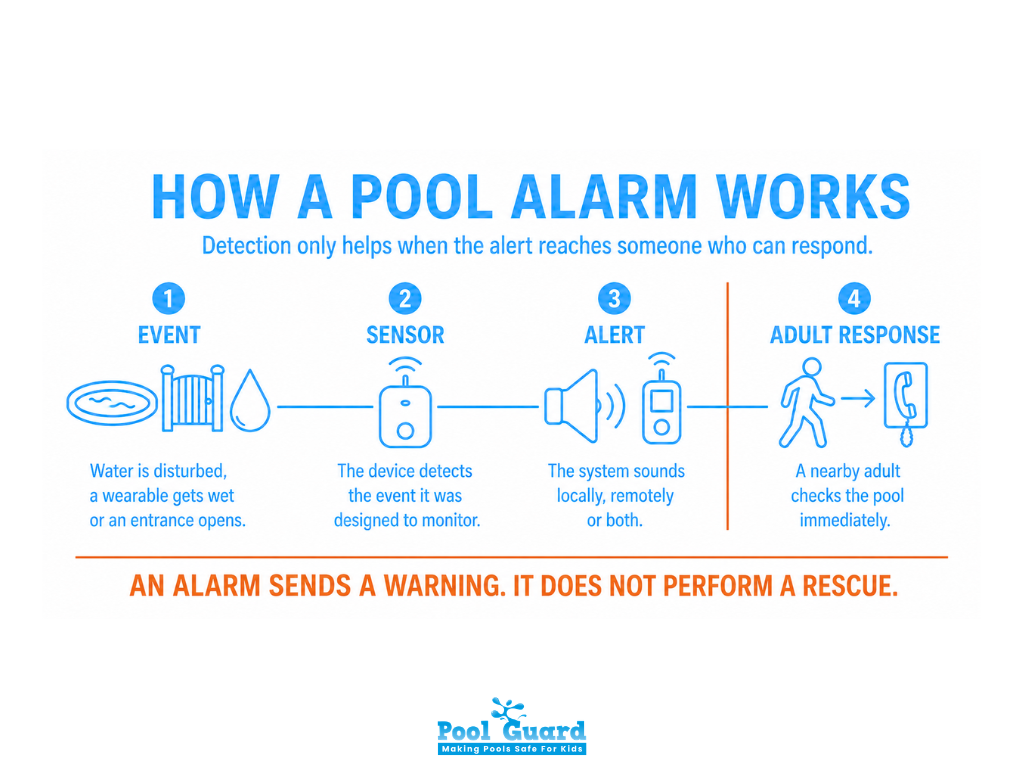
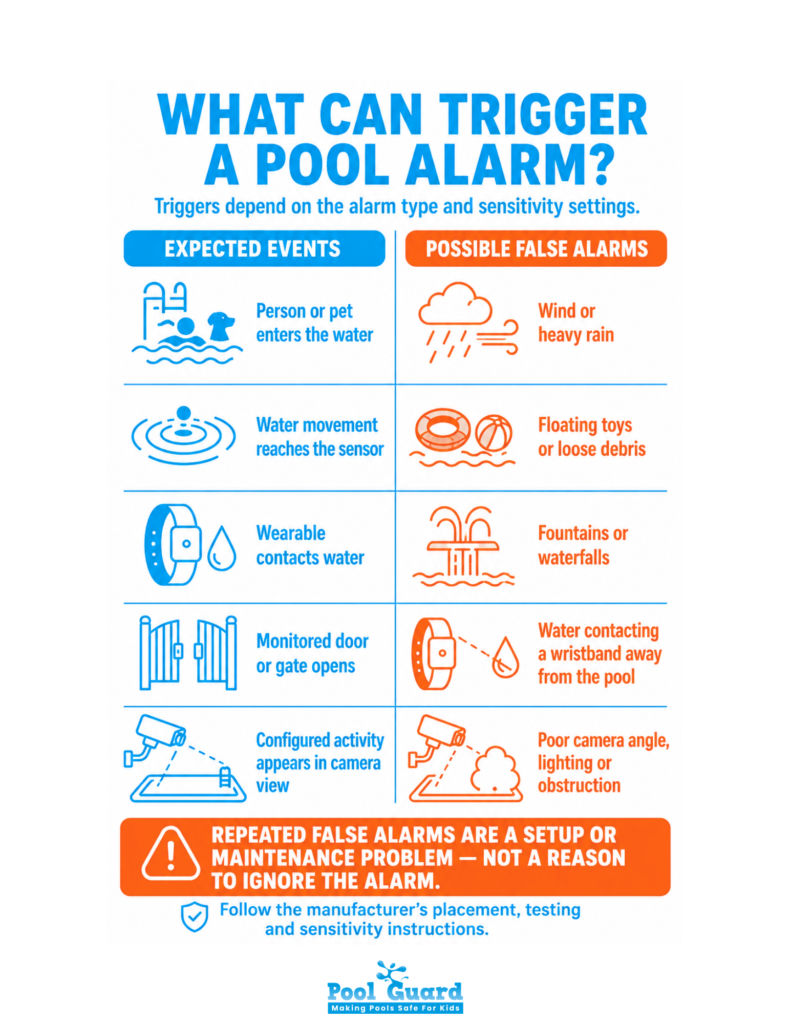
Understanding triggers helps explain when an alarm is helpful and when it might cry wolf.
Genuine triggers
Common false-alarm sources
Manufacturers recommend testing sensitivity right after installation and rechecking it at the start of every season. Finding the right balance is critical – an alarm that triggers constantly will eventually be ignored, while a system that is too forgiving will miss actual emergencies.
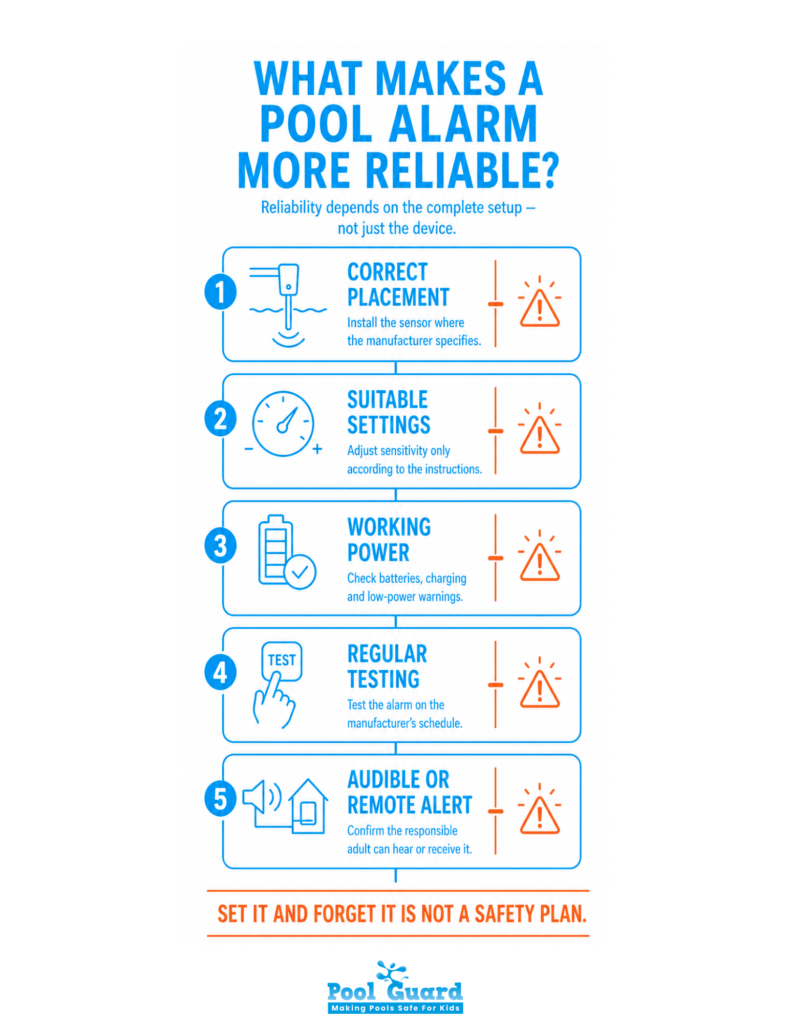
Reliability isn’t fixed. It depends on several variables working together:
No alarm compensates for a battery that died in March or a sensitivity dial nobody’s touched since installation. Treat a pool alarm as a backup alert system that buys you time, not a set-and-forget solution that buys you certainty.
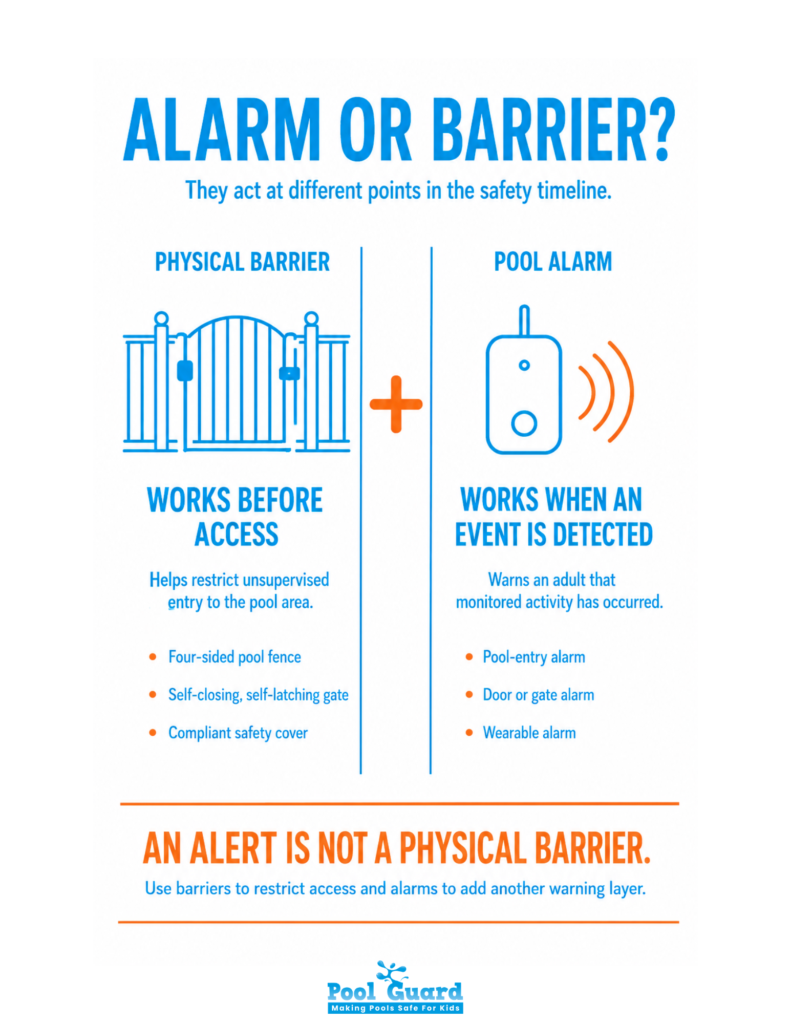
Marketing copy often blurs a critical distinction – an alarm only tells you that an event has already happened. It cannot physically stop a child or pet from reaching the water. A pool fence, a self-closing and self-latching gate, or a certified pool cover works earlier in the timeline, reducing the chance of unsupervised access.
The Consumer Product Safety Commission and pediatric safety groups consistently frame effective pool safety as layered: physical barriers first, supervision throughout, and alarms as the layer that catches what the other layers miss. None of these should stand alone.
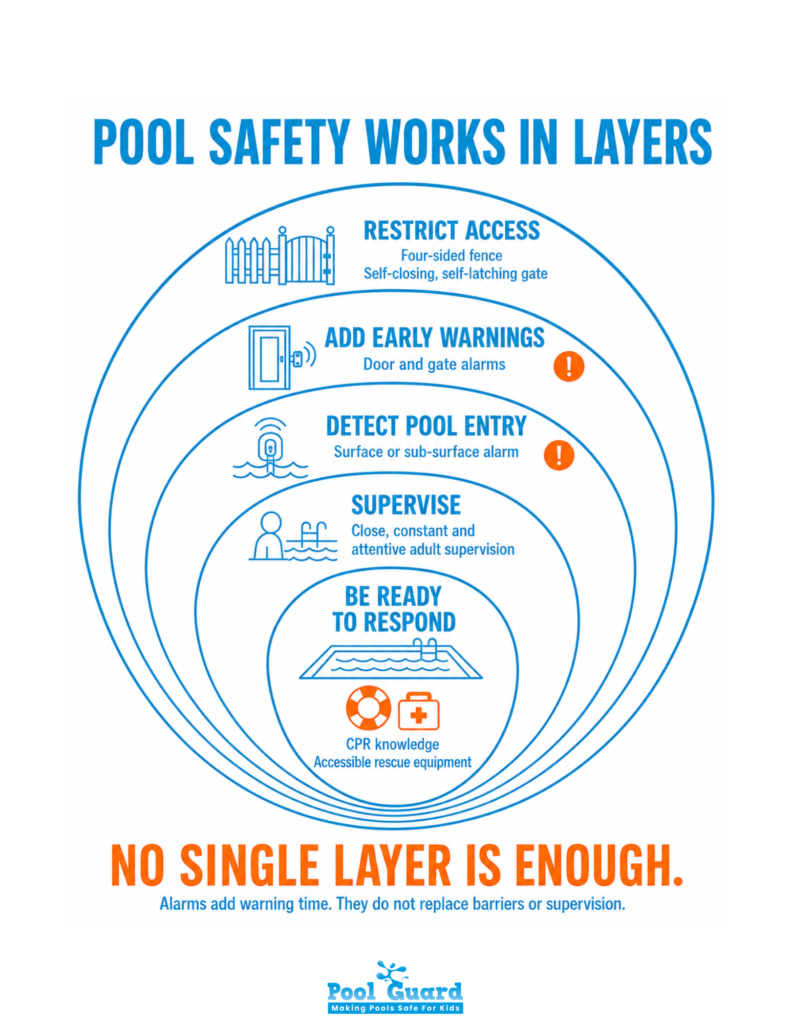
Understanding how does a pool alarm work reveals that these devices monitor water movement, surface waves, sub-surface pressure, or gate entry to alert adults as fast as possible. While an alarm provides a critical layer of protection, it serves as an alert system rather than a physical barrier against drowning.
Maximum backyard safety requires combining these sensors with active adult supervision, compliant fencing, self-latching gates, safety covers, and CPR readiness.
Explore Pool Guard USA’s lineup of pool and gate alarms to find the right safety layer for your home, and share this guide with another pool owner today.

Please fill out the form below with your information. Your local dealer will be notified about your inquiry.
Please fill out the form below with your information. Your local dealer will be notified about your inquiry.