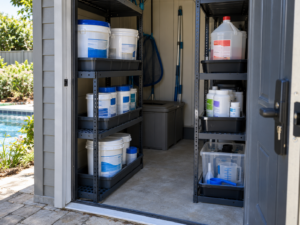
Pool chemicals help keep swimming water clean and safe, but improper handling can create serious health risks. Mixing incompatible products, storing them incorrectly, or using the wrong amounts can lead to harmful fumes, skin irritation, and other injuries. Even common pool maintenance products require careful handling to prevent accidents.
Understanding pool chemical safety helps pool owners protect themselves and others while maintaining proper water conditions. This guide covers safe chemical handling, storage, and use, along with how to dispose of old, unlabeled pool chemicals and make chemical safety part of the pool routine.
Pool chemical safety matters at every stage of maintenance, from purchasing and storing products to measuring, applying, and disposing of them. Improper handling, mixing incompatible chemicals, or leaving products accessible to children can cause serious injuries.
According to the CDC, pool chemical injuries cause approximately 4,500 emergency department visits in the U.S. each year, with children and teens accounting for more than a third of cases. These risks are preventable with proper handling and storage.
For a first time pool owner, understanding the products is an important starting point. Sanitizers like chlorine and bromine help control germs that can make swimmers sick, while other products adjust water chemistry or control algae. Used incorrectly, these chemicals can cause burns, eye injuries, breathing problems, or toxic gas exposure. Such incidents are among the preventable swimming pool injuries covered by the safety guidelines below.
Pool chemicals pose two main risks: exposure and dangerous reactions. Exposure occurs when chemicals touch your skin or eyes, are inhaled, or are swallowed. The risk is greatest when opening, measuring, and adding products. Chemical reactions, on the other hand, occur when incompatible products mix or certain chemicals come into contact with water, potentially releasing toxic gases, generating heat, or causing fires.
These risks require different precautions. Protective equipment helps prevent exposure, while proper storage and handling reduce the risk of dangerous reactions.
The New York State Department of Health documented an incident in Rockland County where a homeowner mixed pool shock with hydrochloric acid. The resulting explosion blew out a window, hospitalized two adults with breathing problems, and required four firefighters to undergo decontamination.
Incidents like this highlight the importance of following product instructions.
Each chemical has specific handling, storage, and protective equipment requirements listed on its label. The manufacturer’s safety data sheet (SDS) provides additional details about hazards, reactions, and first aid.
The guidelines below cover general pool chemical safety, but product-specific instructions always take priority.
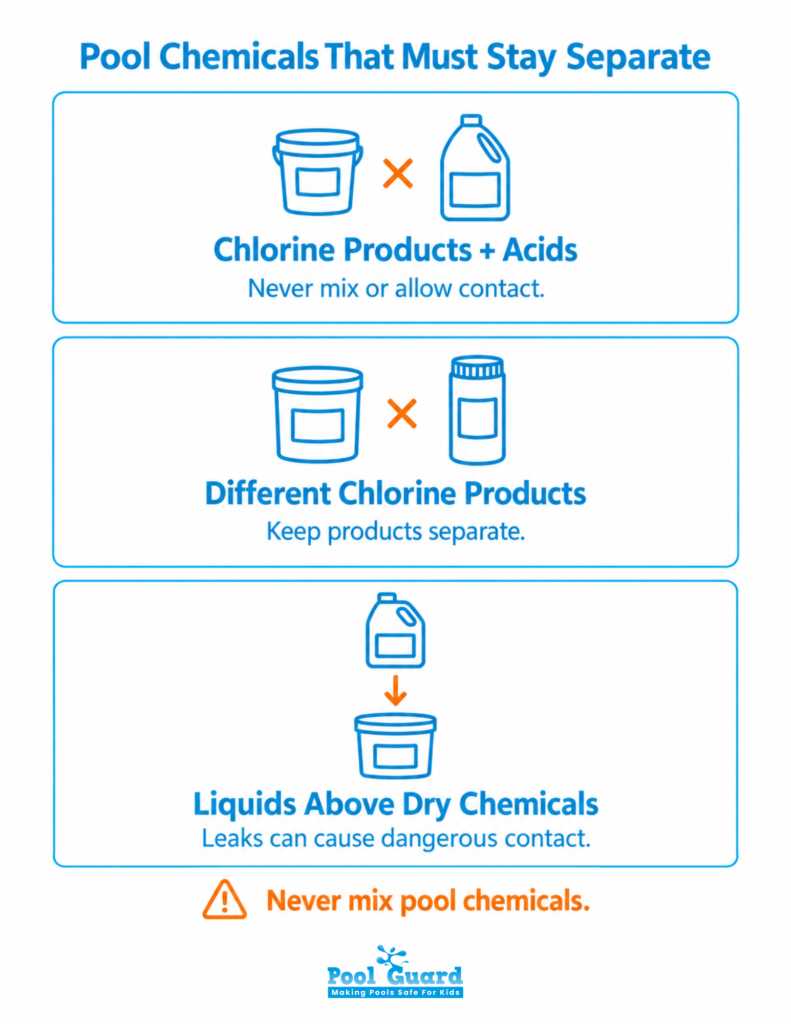
Storage requirements vary by product, so always follow the manufacturer’s instructions, especially if a separate shed isn’t available.
When preparing for the swimming season, include a check of chemical containers, labels, and storage conditions in your pool opening checklist.
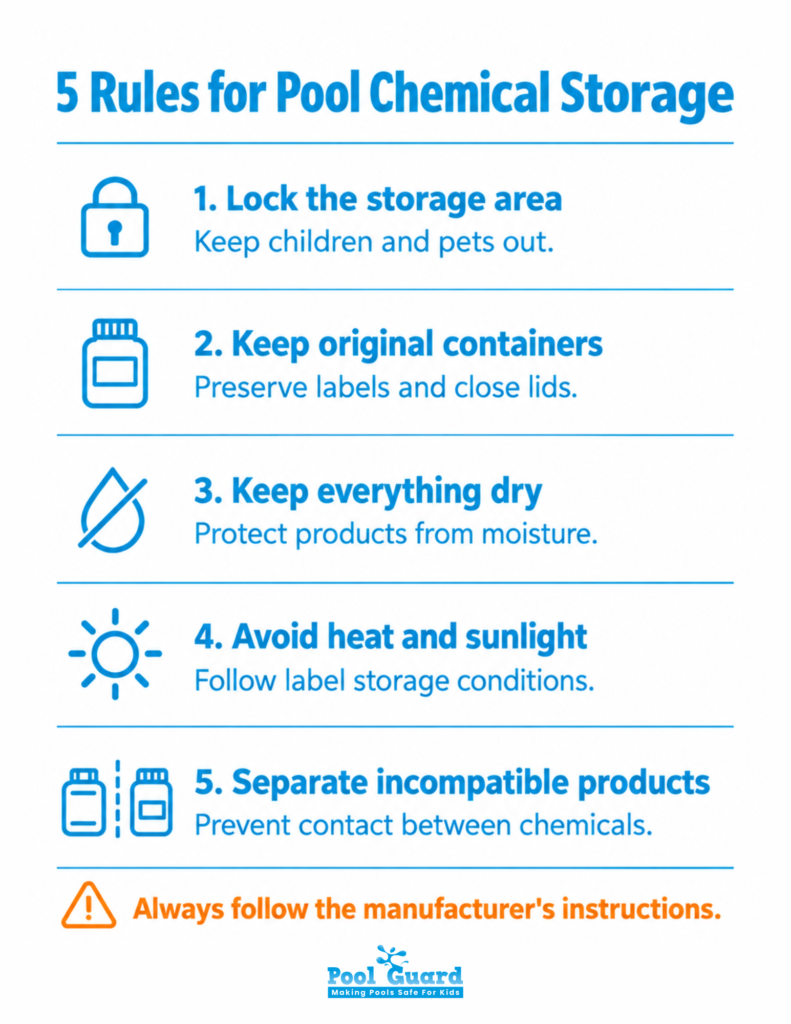
Many common pool chemicals react with one another. Chlorine products and acids are the best-known pair, but different chlorine products can also react together, so even two kinds of chlorine need their own space. The goal of separation is simple: if one container leaks, the spill should have nowhere to go but the floor, never into another product.
That logic shapes two easy rules. Never store a liquid above a dry product, because a leak drips straight onto the powder below. And never mix old product with new, even when both are the same type, since partly decomposed chemical can react with fresh chemical of the same kind.
Keep the rest of the storage area just as disciplined. Gasoline, oil, paint solvents, and gas-powered equipment don’t belong near pool chemicals, and neither do rags, trash, or loose debris that could catch a spill and turn it into a reaction. Store food and drinks somewhere else entirely, since chemical dust can settle on them.
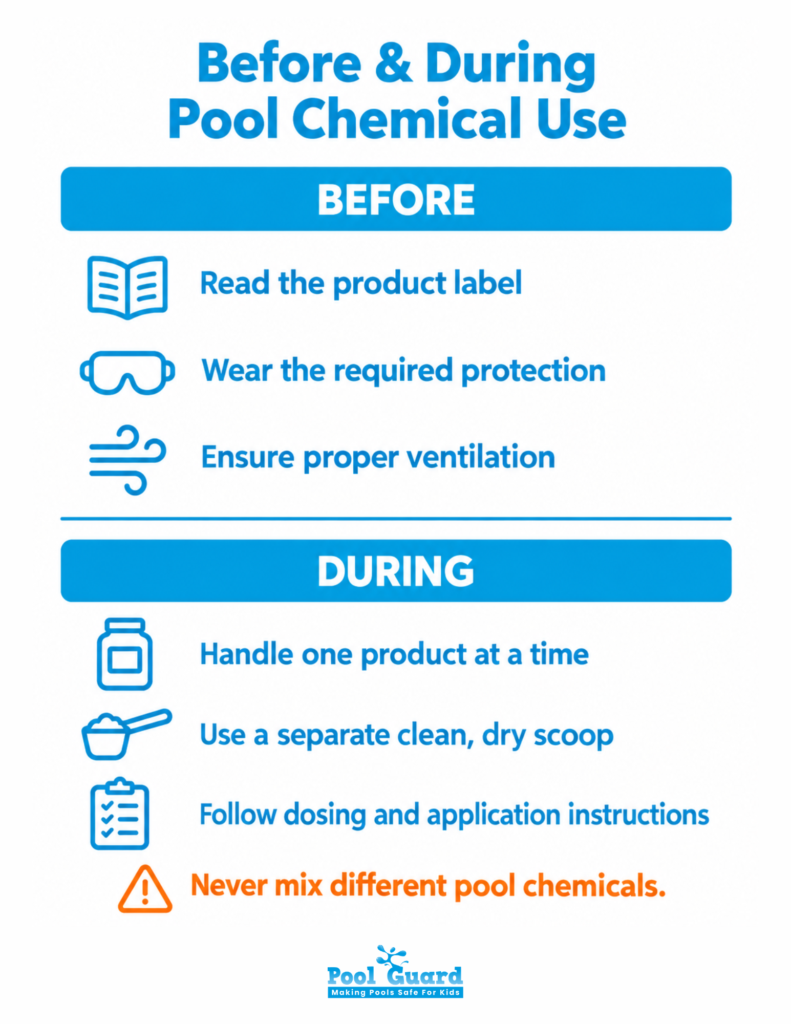
After shocking the pool, follow the product’s dosing instructions and check when it’s safe to swim again rather than relying on a fixed waiting period. Always use product-specific guidance instead of generic online recommendations, and keep children away from pool chemicals and the treatment area.
Move everyone, including pets, away from the area and into fresh air. Do not attempt to clean up reacting chemicals or combine spilled materials, as mixing residues can trigger dangerous reactions.
Follow the product label or SDS for emergency guidance and contact emergency services if fumes, a reaction, or a hazardous spill occurs. Leave cleanup to trained professionals when the situation is unsafe or uncertain.
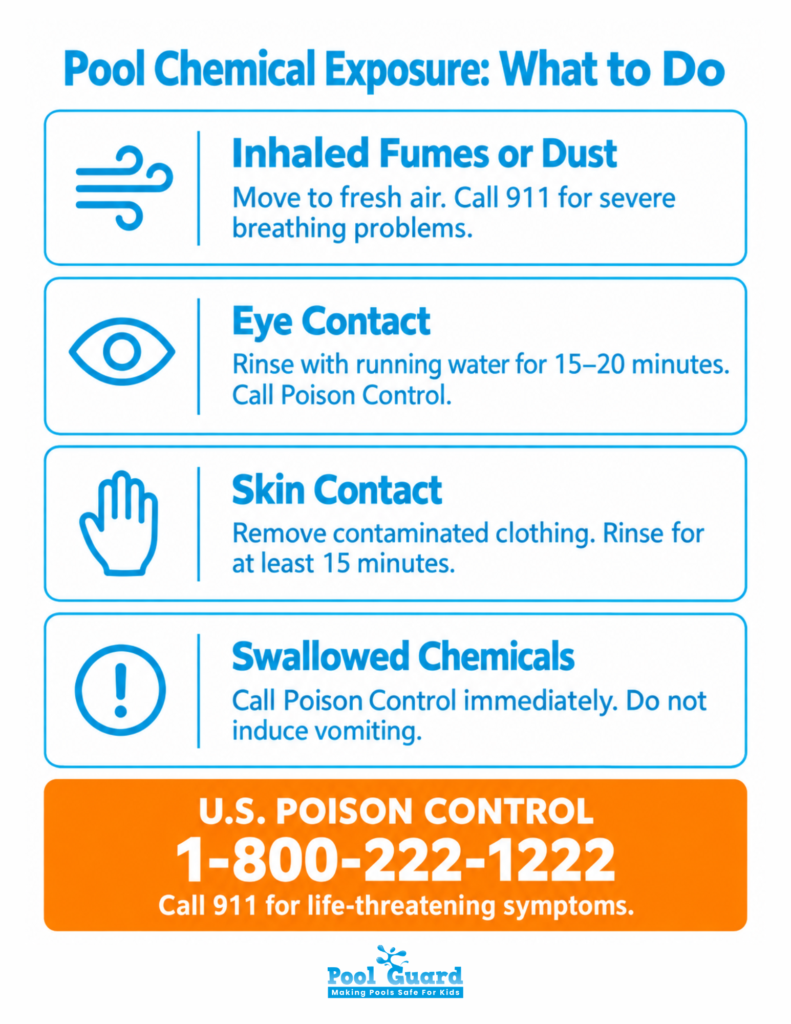
Act quickly. Poison Control (1-800-222-1222) gives free, confidential exposure guidance across the U.S., 24 hours a day. Save the number in your phone and post it near your storage area.
| Exposure | What to Do Right Away |
| Inhaled Fumes or Dust | Move the person to fresh air. Call 911 if breathing difficulty is severe, continues, or the person stops breathing. |
| Eyes | Flush immediately with running water, then call Poison Control. |
| Skin | Remove contaminated clothing and flush the skin with running water. Call Poison Control if redness, pain, or burning persists. |
| Swallowed | Call Poison Control immediately. |
If pool chemicals contact your skin or eyes, rinse immediately with running water. Poison Control recommends rinsing exposed skin for at least 15 minutes and eyes for 15-20 minutes. Call 1-800-222-1222 for further guidance.
Call 911 immediately if someone collapses, stops breathing, or has a seizure. Keep the product container or SDS available to help emergency responders identify the chemical involved.
Disposal requirements vary by product, so never assume leftover pool chemicals can go in the trash or down the drain. Start by checking the product label or contacting the manufacturer for specific disposal instructions.
Next, contact your local household hazardous waste program to confirm which chemicals they accept and when they can be dropped off. If a container is damaged, deteriorating, or unlabeled, call the program before handling or transporting it for guidance on safe disposal.
When transporting chemicals for disposal, keep products separate to prevent accidental mixing and follow the waste program’s instructions.
Four habits prevent most home accidents:
Unsafe chemical storage is one of several pool hazards homeowners need to address. Safety should always come first when handling, storing, or using pool chemicals. Just as a pool fence restricts unsupervised access to the water, a locked storage area keeps children away from hazardous chemicals. Both precautions should be part of a complete pool safety checklist, alongside active adult supervision.
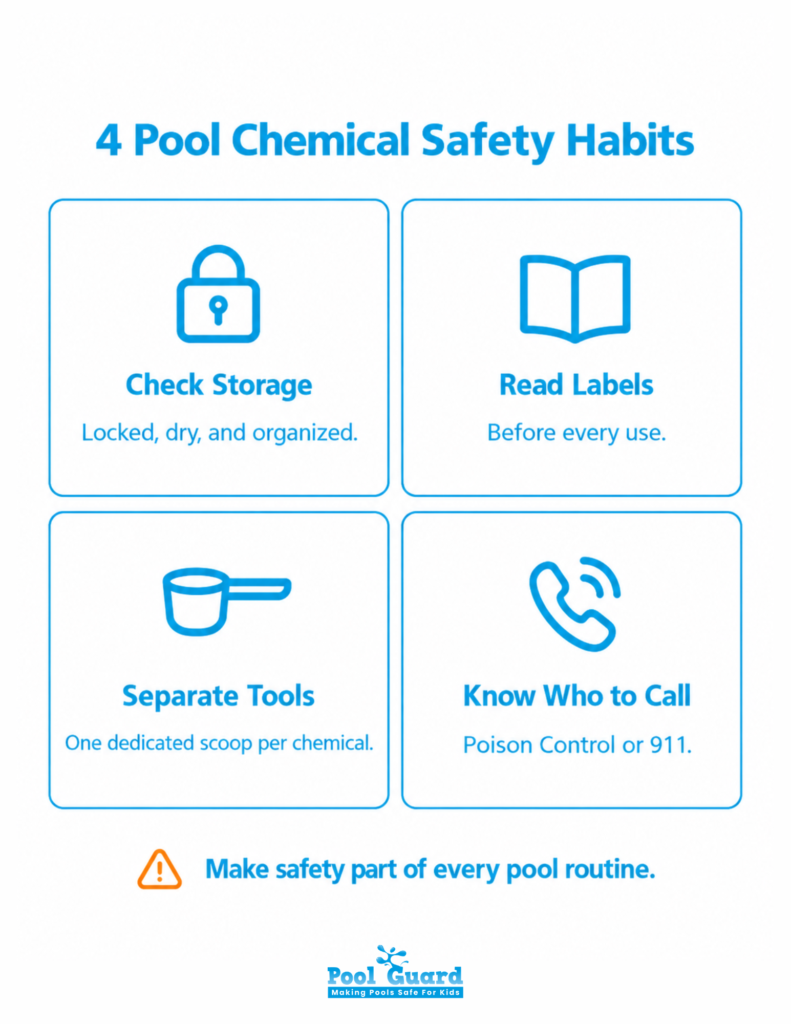
Pool chemical safety begins with proper storage, clear labeling, and careful preparation. Following product instructions, using protective equipment, and keeping incompatible chemicals separate can help prevent serious injuries. If an accident occurs, avoid handling hazardous spills yourself and seek appropriate emergency guidance.
Safe pool maintenance also means protecting everyone who uses or spends time around the pool. At Pool Guard USA, we emphasize a layered approach to pool safety, combining secure chemical storage, appropriate pool barriers, and active adult supervision to reduce preventable risks throughout the swimming season.

Please fill out the form below with your information. Your local dealer will be notified about your inquiry.
Please fill out the form below with your information. Your local dealer will be notified about your inquiry.